


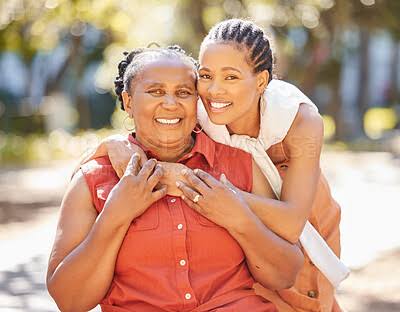
By: Chioma Madonna Ndukwu
The Way We Live: My Mother Died the Day Before My Birthday
“Chioma Nwam, have you eaten?”
I can still hear my mother asking me that question.
Tomorrow is my birthday. Today is the anniversary of the day my mother died.
For many years, I have found it difficult to separate one date from the other. People see a birthday and think of celebration, but my own birthday arrives with the memory of the woman who spent her life making sure I would be here to see it.

I never really knew my father. He died when I was still an infant, so I grew up without the memories that come from having a father around.
I did not understand the absence in the way an older child might have understood it because my mother filled the space with so much love, care and attention that I never felt as though I had been left without someone.
She was there. When I was growing up, eating swallow was a serious problem for me. My mother knew this and did not turn every meal into a battle.
“Chioma Nwam, come and eat.”
“I don’t want this one.”
“What do you want?”
“Rice.”
She would look at me, probably knowing exactly what I was doing, and still find a way to feed me. Rice, Indomie, eggs, whatever she could give me, she gave me. That was my mother.
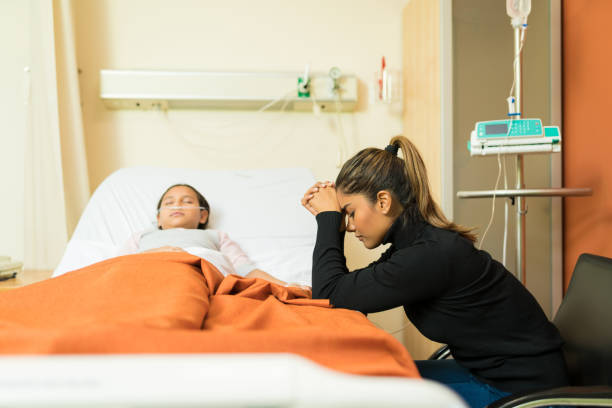
When I became seriously ill and it seemed as though I might die, I watched her ask God to take her instead of me. I was too weak to do anything, but I watched the woman who had spent her life protecting me offer herself in exchange for my life.
I survived. She continued caring for me. She saw me through my school years, through the seasons when I wondered whether I would ever get to the next stage of my life.
She made sacrifices for all her children, and I know she loved my siblings deeply, but I also knew there was something uniquely tender about the way she loved me.
She called me “Chioma Nwam.”
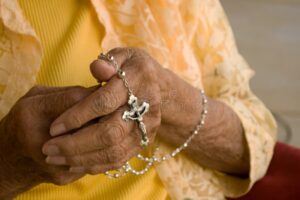
My mother was a devout Catholic. She loved her rosary, and whenever I was returning to school, she would put it in my bag. It was a small thing, but I understood what it meant. She was sending me away with something she believed would protect me.
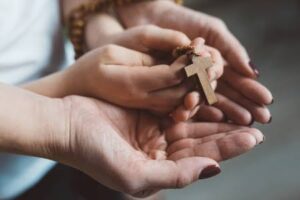
She loved people too. Sometimes, I thought she loved people to a fault. She gave herself generously, and she did not always stop to ask whether people deserved the space she made for them.
After school, I got a job. Then I learned that my mother was sick.
When I told some of my friends that I was considering resigning from my job to care for her, they tried to change my mind.
“Oma, you don’t have to leave your job.”
“There are other people who can look after her.”
“I know.”
“Then why resign?”
I understood what they were saying. They were worried about my future. They wanted me to think carefully before giving up my work. But there was something they did not fully understand.
There were other people who could care for my mother, perhaps. I knew that. But I knew myself too. I knew I could not continue working as though everything was normal while the woman who had spent her entire life caring for me was sick and needed me.
“She fought for me,” I told one of them. “I have to be there for her.”
My decision was made. I resigned from my job and went home to care for my mother.
It was not a sacrifice I thought I was making for a stranger. I was returning to the woman who had carried me through life. She had filled the space my father left behind.
She had fed me, pampered me, prayed for me, supported my education and made sure I never grew up feeling abandoned.
When she became the one who needed care, I wanted to be there. I had plans for her. She knew I had plans for her.
Even as I grew older, my mother could still carry me on her lap. She did not care that I was no longer a little child. If I sat with her, I was still her daughter. She could hold me as though the years between childhood and adulthood had simply disappeared.
“Am I not too big for this?” I might ask.
“Keep quiet and sit down,” she would say.
And I would laugh.
Those are the things grief does not allow you to prepare for. You remember the big moments, but sometimes it is the smallest ones that return with the greatest force.
The day my mother was dying, I kept calling her.
“Mummy.”
She answered.
I called again.
She answered again.
I did not want the conversation to end. Perhaps she did not want to stop answering me either. I kept calling her name because I was not ready for a world in which she would no longer answer.
When the doctors could not bring her back, I could not accept what had happened. I remember leaving the hospital in a state of unbearable grief, unable to imagine continuing without her. I had so many plans for my mother. I had believed there would be more time. There was not.
People intervened and stayed with me through that darkest period. Advice came from friends, family and people who understood that I could not be left alone with the weight of what I was feeling.
Their presence helped keep me safe when grief had become too heavy for me to carry by myself. I am grateful for those people. I am also grateful that I remained.
C.S. Lewis wrote, “No one ever told me that grief felt so like fear.” I understand that now. Grief can make the future look frightening because the person who made the world feel safe is suddenly no longer there to answer the phone, ask whether you have eaten or call you by the name only she used in that particular way.
St. Augustine wrote, “The measure of love is to love without measure.” I think of that whenever I remember my mother. She loved her children generously. She loved people generously. She gave without keeping an account of what she had given.
After she died, grief did not remain within the walls of the hospital or the streets where I had grown up with her. It followed me into every conversation.
Friends living in London, U.S.A, and other parts of the world called, sent messages and stayed on the phone with me. Some of them had never met my mother, but they knew her because I had spoken about her so often.
“Chioma, please talk to me,” one friend said from far away.
Sometimes, I had no words.
What could I tell someone sitting thousands of kilometres away? That my mother was gone? That I had spent my entire life believing there would always be one person I could return to? That distance meant very little when grief had already opened such a large space inside me?
Some friends knew my mother only through the stories I told them. They knew about the rosary she put in my school bag. They knew that she called me “Chioma Nwam.”
They knew that when I spoke about her, I was not simply talking about someone who had raised me. I was talking about home.
Even now, people who live far away remember the date. They ask how I am doing. Some may never have sat beside my mother, eaten her food or watched her carry me on her lap, but they understand that a person can become part of another person’s life through stories, memories and love.
Today, I remember a woman who did not simply raise me. She became the answer to an absence I was too young to understand.
She gave me the kind of love that made me feel protected from the world, and when she became weak, I tried to return that protection to her. I did not save her. That truth still hurts.
Tomorrow is my birthday, but I do not celebrate it the way I once might have. People may call from different countries, send messages and ask what I am doing to mark the day.
I know they mean well. I know they want me to remember that my life is worth celebrating. Perhaps they are right.
But my birthday arrives one day after the anniversary of my mother’s death, and I still find it difficult to look at the date without seeing both things at once.
Perhaps, with time, I will learn to hold both truths without feeling that celebrating my life means forgetting the woman who gave so much of hers to make that life possible. For now, I remember her.
I remember the food she made for me when I refused swallow. I remember the rosary she placed in my school bag. I remember the prayers she prayed when I was sick. I remember the woman who could still carry her grown daughter on her lap. I remember the woman who called me “Chioma Nwam.”
And I remember that I cannot say I loved my mother, because I still do. I love my mother even in death.
On the eve of my birthday, I still wish I could hear her ask me one more time, “Chioma Nwam, have you eaten?”
I would give anything to answer her.
“Yes, Mummy.”
Personal Thoughts:
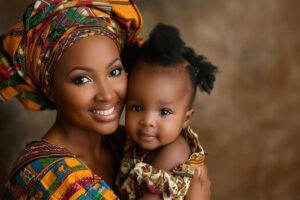
Grief does not prove that love has ended. Sometimes, it is the clearest evidence that love is still present, looking for somewhere to go.
One Thing Worth Remembering:
The person who cared for you in your most helpless years may one day become the person you desperately wish you could care for in return. If you are fortunate enough to still have that person, do not wait for a special occasion to let them know what they mean to you.
Let’s Talk:
Have you ever lost someone whose absence changed the meaning of a date, a place or an ordinary moment in your life?
Editor’s Note:
This personal episode is based on the lived experience of the writer, Chioma Madonna Ndukwu, and is published as part of THE WAY WE LIVE. It is a reflection on maternal love, grief, sacrifice and the complicated ways in which important dates can carry both memory and pain. The account of the writer’s darkest period following her mother’s death is included sensitively as part of her lived experience and in recognition of the people whose intervention helped keep her safe.










https://shorturl.fm/suk3x
A beautiful reminder that love is worth fighting for. 🥹❤️
Thank you so much
Its well Nne m! May she continue to rest in the Lord’s bossom 🌼