


“The fear of Trump is not the beginning of wisdom. But it is time to tread carefully, with clear eyes and a steady hand.”
As a child, whenever I refused to eat or take bitter traditional medicine, my mother would threaten to call Werekaci—the unstable and aggressive man who lived at the end of our street. The fear alone was enough to make me comply instantly. I simply obeyed anything out of fear.
Years later, I have come to recognise that Werekaci has many faces—on social media, in political spaces, and sometimes in the corridors of global power. The psychology remains the same: invoke a frightening name and watch people abandon their better judgment.
It is through this prism that I now view the growing anxiety in certain Nigerian circles over the posture of United States President Donald Trump toward Nigeria—and the implications this anxiety may have for our 2027 general elections.
Recently, after publishing a series of opinion articles challenging the so-called “Christian genocide” narrative promoted by separatist advocates and ethno-religious agitators, my social media pages were flooded with coordinated hostility. Within less than an hour of one post, more than 500 abusive comments appeared—attacking not only me but also my family, culture, faith, region and even my country.
Some thoughtful readers later pointed out that most of the accounts were fake, bots and faceless handles with no real constituency. Since then, I have adopted a simple rule: I welcome criticism from people of reason, but I delete reckless and bad-faith attacks from extremists.
The same psychology of manipulation appears to be shaping parts of the discourse around Nigeria and President Trump, whose derogatory remarks about our country are well-documented. In earlier writings, I addressed several of these claims, particularly his repeated references to “protecting Nigerian Christians” without acknowledging Muslim victims of violence. What is troubling is that some Nigerians now amplify such narratives for domestic political advantage.
When American forces reportedly launched a strike in Sokoto on the eve of Christmas, Trump quickly addressed a Christian audience, invoking what he claimed he could do. Yet Sokoto is neither the epicentre of terrorism nor a major banditry hotspot in Nigeria. The target appeared deliberately symbolic because of its Islamic heritage.
So far, the Nigerian government has gone to extraordinary lengths to placate Washington. Officials have repeatedly shuttled to the United States, hosted American lawmakers in Nigeria, and spent substantial sums on U.S. lobbying firms. Nigeria has also conceded ground on arms-procurement decisions, facilitated the release of Catholic schoolchildren, and even allowed American troops to operate on its soil—an unprecedented development in our history. Yet the so-called Christian-genocide campaign has continued to resurface.
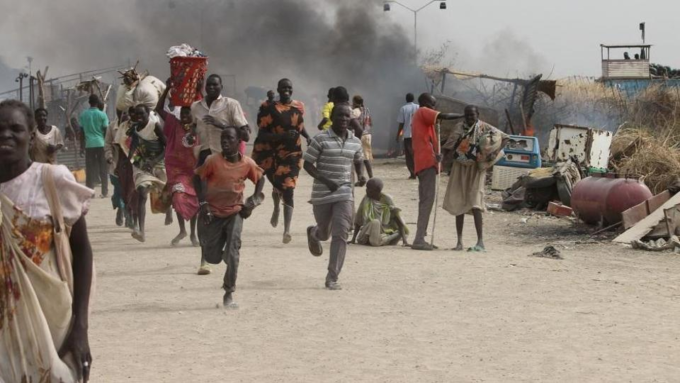
Then, on Wednesday, March 4, 2026, as Muslims were leaving a mosque after breaking their Ramadan fast in Ngoshe, Borno State, terrorists slaughtered the Imam and several worshippers while abducting more than 100 women and children. There was no comparable outcry—not from American lawmakers and certainly not from President Trump. The silence was both deafening and revealing: the tragedy simply did not fit the narrative being promoted. But the truth remains clear—Muslim lives, to them, appear not to matter.
Meanwhile, among the most reckless accusations circulating on my posts is the claim that Muslims are complicit in terrorism. I do not dignify such claims with extended debate. Long before Boko Haram became a household name, I had written extensively condemning those who falsely invoke Islam to justify violence. These writings appeared in major Nigerian newspapers.
During the ethno-religious conflicts that spread from Maiduguri to Onitsha in 2006, precisely twenty years ago, one of my articles then, titled “Killing in the Name of the Devil,” appeared in national newspapers, including The Punch, Leadership, Daily Sun, Vanguard, Financial Standard, Daily Trust, and Daily Champion, among others. The article remains accessible on my blog, with the publication dates included.
Over the years, I have written about Boko Haram, banditry, and the Nigerian state’s failures in counter-terrorism—always as a proud Northern Muslim guided by the Quranic injunction that states: “Fear a tumult which will affect not only those who caused it, but also the innocent among you.” (Qur’an 8:25).
Ironically, when I criticise my own people, some critics cheer me. But the moment I point out similar flaws in theirs, those cheers quickly turn into outrage. I have never been hypocritical on this matter. I do not tolerate bullying —whether institutional, political, or digital—and I do not argue with fools.
Northerners, contrary to certain stereotypes, are far more tolerant than the fanatics often portrayed in social media debates. The behaviour of a divisive minority should not be mistaken for the character of the majority.
General Theophilus Danjuma, for instance, is widely respected in the North for championing a united Nigeria where all citizens are equal regardless of faith or ethnicity. Similarly, when Abubakar Badaru, a Muslim from Jigawa, was replaced as Defence Minister by General Christopher Musa, a Christian from Kaduna, mainstream Northern opinion—including Islamic clerics—welcomed the development.
This acceptance was particularly strong in Sokoto and Maiduguri, where Musa had previously lived, served with distinction and protected civilian lives, leading to the surrender or neutralisation of thousands of terrorists under his watch.
Following recent global events, some commentators have interpreted the U.S.–Israel strikes on Iran as a warning for Northern Nigeria, even urging President Trump to oppose Sharia law and Muslim-Muslim tickets. While the Middle East conflict has been widely condemned by several global powers, these critics continue to frame the issue through a simplistic “us versus them” narrative.
They also overlook a geopolitical reality: Iran’s isolation was partly worsened by the silence of several neighbouring Arab Muslim states, who either ignored the attack on a fellow Muslim nation—though a non-Arab one—or appeared aligned with the aggressors. Ironically, the critics also ignore a demographic fact: Iran today has a larger Christian population than Israel.
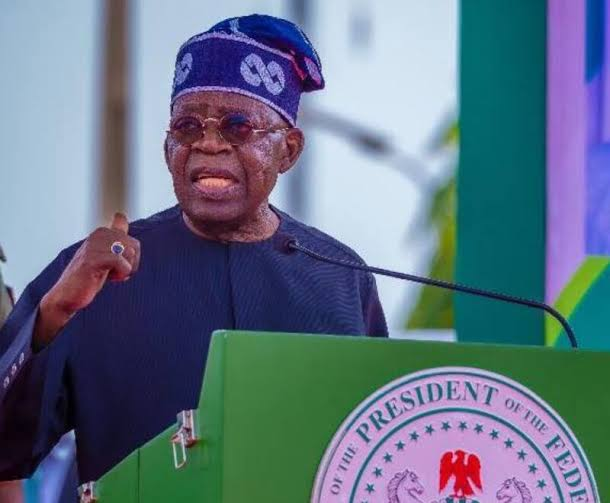
Some commentators further argue that President Bola Ahmed Tinubu may be cautious about provoking Donald Trump, citing the pressure Washington has exerted on countries such as Iran and Venezuela. They therefore predict a possible political adjustment within the Presidency, including speculation that Trump might urge Tinubu to reconsider the current joint ticket ahead of the 2027 elections.
While it would be unfair to deny Vice President Kashim Shettima the continuity enjoyed by his predecessors, Nigeria’s political choices must remain sovereign. One point must also be stated plainly: if Shettima must be compelled to sacrifice his position under foreign pressure, President Tinubu should ensure that any adjustment does not deepen the already glaring imbalance in federal appointments.
Today, several key institutions in Nigeria’s economic and financial system are disproportionately led by individuals from one geopolitical zone—and largely from one religious background. The Ministry of Finance, the Central Bank of Nigeria (CBN), the Federal Inland Revenue Service (FIRS/NRS), PenCom, NDIC, EFCC, NAICOM, AMCON, the Bank of Agriculture, and the Bank of Industry are not minor posts. They represent the commanding heights of the national economy.
When leadership of these institutions tilts toward “Yorubanisation” or “Christianisation,” it becomes more than a matter of optics—it begins to strain the fragile social contract upon which Nigeria’s unity rests. The Igbo, who also feel excluded from sensitive and lucrative positions, must likewise be considered in any recalibration aimed at strengthening national cohesion.
The global community—including sections of the American public itself—is increasingly realising that fear of Trump is not the beginning of wisdom. It may well be the beginning of capitulation.
Nigeria must resist the temptation to organise its internal politics around the moods of a foreign leader. We must engage Washington where necessary, push back where appropriate, and above all ensure that our national decisions—including decisions about who leads us in 2027—are made in Abuja, not in Mar-a-Lago.
Werekaci may be loud. But he does not live here.