

Volkswagen Set to Slash Up to 100,000 Jobs in Global Shake-Up
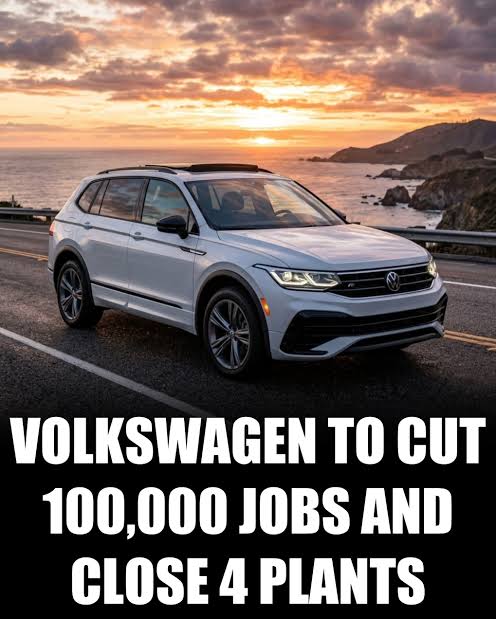
German automotive giant Volkswagen is preparing for one of the largest workforce reductions in its history, with plans to cut up to 100,000 jobs worldwide as it seeks to lower costs and strengthen its position in an increasingly competitive global market.
The proposed layoffs form part of a wide-ranging restructuring programme designed to improve efficiency after the company recorded falling profits and weaker vehicle sales across several key markets.
Volkswagen Group, which owns brands including Audi, Porsche, Skoda, Seat, Bentley and Lamborghini, said it is reviewing staffing levels across all of its brands and regional operations.
The company is also planning to significantly reduce the number of vehicle models it produces, concentrating resources on its most successful and profitable vehicles.
Chief Executive Officer Oliver Blume said the review became necessary after the company found its operating costs were considerably higher than those of many of its competitors.
According to Blume, Volkswagen must become leaner, faster and more efficient if it hopes to remain competitive as the global automotive industry undergoes rapid transformation, particularly with the growing shift toward electric vehicles.
The latest proposal goes beyond an earlier plan to eliminate about 50,000 jobs in Germany by 2030 and could nearly double the scale of the workforce reduction if approved.
The company also disclosed that it has yet to find alternative uses for four German factories previously identified for possible closure.
As part of its restructuring, Volkswagen intends to cut its vehicle lineup by about half. While the company has not revealed which models will be discontinued, industry observers expect lower-selling vehicles to be dropped while flagship models such as the Golf and Polo remain at the centre of its product strategy.
The restructuring follows a sharp decline in the company’s financial performance over recent years. Operating profits have fallen significantly, while demand has weakened in major markets, particularly China, where sales have dropped sharply.
Sales in the United States have also declined, partly because of higher tariffs on imported vehicles.
Volkswagen is also facing increasing pressure from Chinese automakers, whose lower production costs and rapid expansion in the electric vehicle market have intensified competition for established global manufacturers.
The planned job cuts have already drawn strong opposition from labour unions. Workers have staged protests outside several Volkswagen facilities in Germany, while union leaders insist they will resist any additional layoffs or factory closures beyond those already agreed.
 Discussions between company management and labour representatives are expected to continue as Volkswagen seeks to balance cost reductions with preserving jobs while navigating one of the most challenging periods in the global automobile industry.