

By: Chioma Madonna Ndukwu
The WayWe Live: Cristiano Ronaldo Married in His Sitting Room. Why Do We Spend Millions to Impress People?
“Do you really want us to do it here?”
Georgina Rodríguez looked around the sitting room and smiled. “Yes. I want the children here. I want it to feel like us.”

Cristiano Ronaldo looked at the room again. It was not difficult to imagine what the world might have expected from a man of his wealth.
A grand venue, a long guest list, celebrities arriving in designer clothes, cameras everywhere and a celebration that would dominate social media for days.
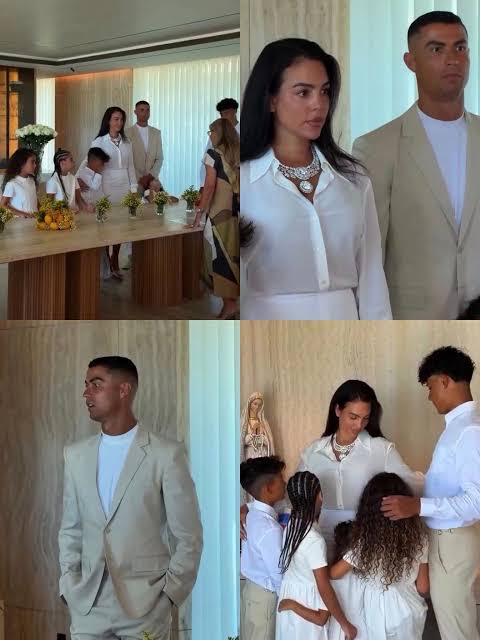
But that was not what was happening. On August 11, 2026, Ronaldo and Georgina were married in the living room of their home in Cascais, Portugal, with their five children present.
The date was also meaningful because it marked ten years since they first met at a Gucci store in Madrid.
Georgina later explained that the living room was important to her because it was where the family lived its ordinary life.
They ate there, spent time there and created memories there. She had once imagined a more traditional fairy-tale wedding, but as life changed, what mattered to her changed too.
She wanted her children to remember their parents getting married in the middle of the life they already shared, rather than remembering only a grand occasion created for everyone else.

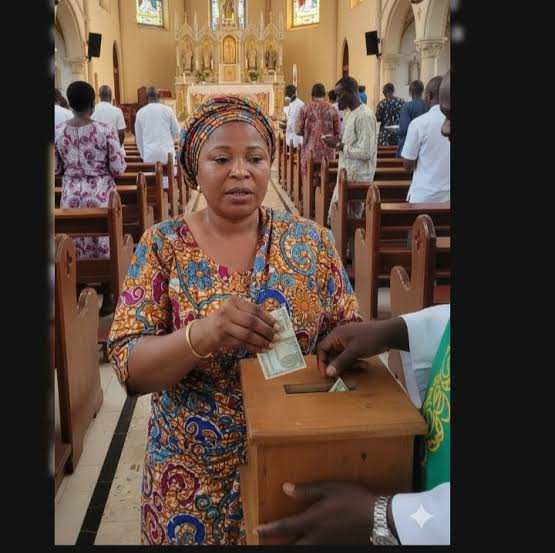
That conversation took me somewhere else. I remembered sitting at a wedding reception some time ago, watching the groom receive envelopes from guests. At first, there was nothing unusual about it.
People were coming forward, presenting their gifts and congratulating the newly married couple. Then I noticed something that made me pay closer attention.
The groom would open an envelope, look inside and, almost immediately, decide what kind of gift to give the person who had brought it.
I watched another envelope arrive. He opened it. looked at the money, then he reached for a gift. I remember thinking, Is this what we have turned weddings into?
The person had come because he was invited. He had dressed up, travelled, bought a gift and given up part of his day to celebrate somebody else’s happiness.
Yet the amount in the envelope seemed to determine what his own generosity was worth in return.
That memory has stayed with me because it speaks to something larger about the way we celebrate weddings.
We have become very interested in what people will see, what they will say and how impressive the occasion will appear.
A bride wants the gown that will make people stare. A couple wants a hall that will make people talk. The cake must be impressive, the decorations must look expensive, the food must be enough to feed an army and the souvenirs must leave guests wondering how much was spent.
“Did you hear how much they paid for the hall?”
“Really? How much?”
“They said millions.”
“And the gown?”
“Don’t even ask.”
I have heard conversations like these, and I suspect many of us have. There is nothing wrong with discussing a beautiful wedding, but somewhere along the line we began to measure the success of a marriage by the amount spent on its opening ceremony.
That is where Ronaldo’s wedding becomes interesting.
He is not a man who had to choose his living room because he could not afford a better venue. If he wanted a wedding in a palace, a luxury resort or almost anywhere else in the world, money would hardly have been the obstacle.
Yet he and Georgina chose a place that already belonged to their family. Their decision was not a rejection of celebration; it was a decision about what they wanted that particular moment to mean. They have indicated that a larger celebration with family and friends may still come later.
That made me wonder about the young couple who cannot afford the wedding they are planning but are afraid to make it smaller.
“People will talk,” the bride may say.
Her mother may answer, “Let them talk. You know what you have.”
But sometimes nobody says that. Instead, the pressure grows. The gown must cost more. The hall must be bigger. The guest list must expand. The family must provide more food. The couple must make sure nobody goes home saying the wedding was ordinary.
And before they realise it, the money that should have helped them settle into marriage has disappeared into one day.
I am not against grand weddings. If you can afford a beautiful celebration without putting your future under pressure, celebrate it.
Wear the gown you love, invite your family and friends, feed them well and dance until you are tired. There is joy in bringing people together, and there is nothing wrong with enjoying that joy.
What troubles me is when people who are already struggling begin to borrow heavily because they are afraid of being judged.
A five-million-naira hall will not make a marriage stronger. A one-million-naira gown will not make a bride a better wife.
An expensive cake will not teach a couple how to communicate, and an enormous guest list will not sit beside them when a medical emergency arrives.
That is the conversation I wish we had more often before weddings.
“Can we really afford this?”
“Will we still have money left for our home?”
“What happens if one of us loses a job?”
“What happens when the children come?”
Those questions may not sound as exciting as choosing decorations, but they may matter much longer.
Pope Francis once reminded married couples that marriage is not simply about the ceremony, the flowers, the clothes and the photographs; it is about the life that follows and the commitment required to live it.
That life can be beautiful, but it can also be demanding. There will be rent, food, school fees, electricity bills, medical expenses and unexpected responsibilities. There will be seasons when one person earns less than expected and the other has to carry more.
There will be children who need attention, parents who may need help and moments when the couple must choose between what they want and what the family actually needs. None of that is visible in a wedding photograph.
Across the world, the details may change, but the pressure to display success is not unique to Nigeria. From Lagos to London, Johannesburg to New York, couples now see other people’s weddings almost instantly through social media.
A bride in one country can wake up and compare her planned wedding with another woman’s ceremony thousands of kilometres away.
What she sees is the beautiful dress, the flowers and the smiling photographs. What she does not see is the bank account behind the celebration.
And perhaps that is why Ronaldo and Georgina’s choice has caused so much discussion. Their decision does not tell everybody to get married at home.
It simply reminds us that people with the means to create a spectacle can still decide that intimacy matters more at a particular moment.
Maybe the rest of us can learn something from that without copying the ceremony itself.
If your money can carry a grand wedding, have your grand wedding. If it cannot, there is no shame in making it smaller. Invite the people who genuinely matter. Feed the number you can comfortably afford.
Choose a beautiful gown without turning it into a financial burden. Spend what you can spend and keep something for the life waiting on the other side of the celebration.
Desmond Tutu’s philosophy of Ubuntu placed great emphasis on our shared humanity and our responsibility to one another.
That spirit should also shape the way communities approach weddings. We should be able to celebrate a couple without making them feel that their worth depends on how much they can spend in front of us.
I keep returning to that groom I watched opening envelopes. It could be that he was only being practical. Maybe he was joking. Perhaps I misunderstood the moment.
But what I saw made me ask myself whether we have allowed money to become too central to occasions that are supposed to be about love.
Because when the guests eventually leave, the couple will remain.
When the photographs are printed, the couple will remain.
When the music stops and the decorations are removed, the couple will remain.
And that is when the real wedding begins.
Years from now, nobody may remember exactly how much the cake cost or how much was paid for the hall.
What may remain is the home the couple built, the children they raised, the difficult seasons they survived and the way they treated each other when nobody was watching.
Perhaps that is why Georgina’s answer about the sitting room stayed with me. She did not choose it because it was the grandest place available to her. She chose it because it was already part of her family’s life.
Maybe that is what we should ask ourselves too: not, “How much can we spend so that people will remember our wedding?”, but “How much can we spend and still give our marriage the life it deserves?”
Because you are not marrying the crowd. You are not marrying the people who will discuss your wedding on their way home.
You are marrying one person, and that person is the one who will sit beside you when the applause has disappeared and ordinary life has returned. That is where the real celebration begins.

Personal Thoughts
I have nothing against grand weddings. What I question is the pressure to spend beyond our means simply because we want people to admire us for a few hours. I would rather see a couple begin marriage with financial peace than begin it with the burden of recovering from a celebration they could not afford.
One Thing Worth Remembering
The wedding may introduce the marriage, but it is the life that follows that tells us whether the celebration was worth it.
Let’s Talk
If you had to choose between a grand wedding that would impress everyone and a modest wedding that would leave you financially secure afterwards, which would you choose?
Editor’s Note
This episode was inspired by Cristiano Ronaldo and Georgina Rodríguez’s intimate August 2026 wedding and the writer’s reflections on wedding culture, financial pressure and social expectations. The dialogue and personal wedding scene are literary reconstruction.