

Food Prices Rise Again as Inflation Gives False Relief
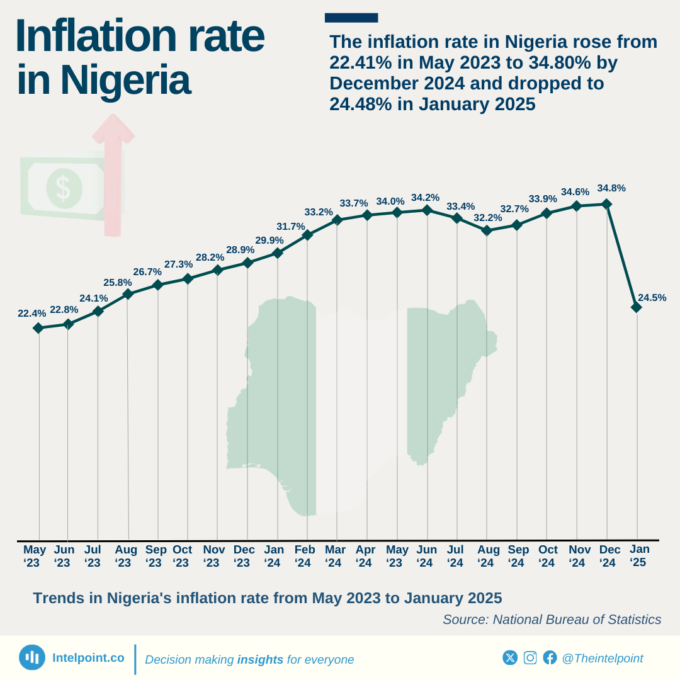
Nigeria’s latest inflation figures may offer some relief on paper, but the reality in markets across the country remains difficult, with food prices continuing to climb and households struggling to stretch their incomes.

The National Bureau of Statistics (NBS), in its July 2026 Consumer Price Index report, said headline inflation dropped to 15.43 per cent in July from 15.91 per cent in June. On a month-on-month basis, it also fell from 1.66 per cent to 1.57 per cent.
But food inflation moved in the opposite direction.
The food inflation rate rose to 5.56 per cent in July from 3.75 per cent in June, an increase of 1.82 percentage points.
Although the year-on-year food inflation rate fell from 26.20 per cent in July 2025 to 20.31 per cent in July 2026, the latest monthly increase means consumers are still facing higher prices for many of the foods they buy regularly.
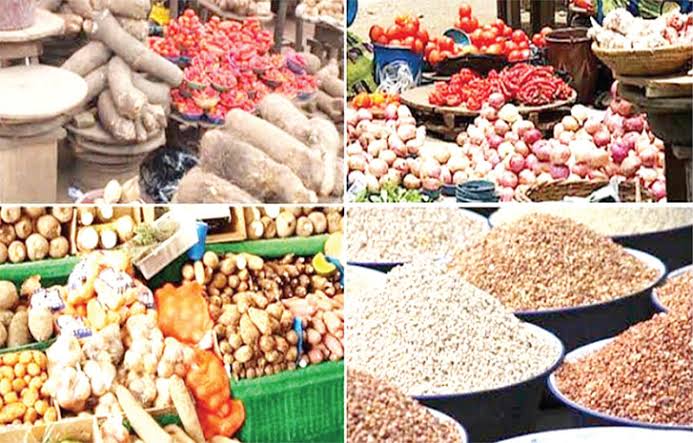
The NBS attributed the increase to rising prices of commodities including crayfish, fresh pepper, onions, carrots, rice, water yam, tomatoes, garri, plantain, beef, eggs, guinea corn, ginger and flour.
Adamawa recorded the highest month-on-month food inflation at 17.02 per cent, followed by Lagos at 13.48 per cent and Borno at 13.26 per cent. Jigawa, Kebbi and Bauchi, however, recorded declines of 3.68 per cent, 3.67 per cent and 1.85 per cent respectively.
For many consumers, however, the official decline in headline inflation provides little comfort when the amount required to fill a shopping basket continues to increase.
In Lagos, David Atoni said the situation was becoming worrying despite the fact that farmers were already harvesting their crops.
“If prices of foods are this high during harvesting season, then Nigeria is heading into harsher economic reality,” he said.
Another Lagos resident, Funmi Alaba of Ojodu-Berger, said she recently went to the market intending to buy groceries but returned with much less than she had planned because of the prices.
In Maiduguri, residents are equally struggling with the cost of basic food items.
Muhammad Abubakar, a resident of Bulunkutu, said while some commodities had recorded slight reductions, others had continued to rise.
“Some prices have dropped slightly, but others have stubbornly risen. For instance, a bag of foreign rice, which was previously sold for N60,000, is now going for N67,000,” he said.
Aisha Tanimu, a resident of Damboa Road, said the price of local rice had increased from N120,000 to N130,000, although beans and maize had dropped considerably.
Amina Yusuf said the rising cost of cooking essentials was also affecting households.
“A bottle of Thailand vegetable oil has jumped from N1,700 to N2,000, making it very difficult for average consumers to afford,” she said.
Malam Shehu Lawan said fresh vegetables had become particularly expensive.
“It is not easy. We aren’t getting friendly prices these days. Buying vegetables like tomatoes, onions, and pepper has become a major problem for households in Maiduguri,” he said.
According to him, some consumers had resorted to tomato paste because they could no longer afford fresh tomatoes, onions and pepper.
The food crisis is also being worsened by other household expenses, particularly transportation.
“People are struggling just to feed themselves, but half of their daily earnings are now being swallowed by transportation costs,” Lawan added.
In Adamawa State, Abubakar Usman, popularly known as Abu Fari, said food prices had reached levels he had never experienced.
He said a measure of rice that previously sold for about N1,600 now costs approximately N2,100.
He called on the government to take urgent measures to reduce the burden on families whose incomes had not risen at the same pace as food prices.
For Hajiya Mairo Suleiman, a resident of Jalingo Street in Jimeta, Yola, the situation is particularly difficult for single mothers.
Suleiman said she had tried buying directly from farmers and local markets to reduce household expenses, but farmers themselves were dealing with higher production costs.
She cited the rising prices of farming equipment and insecticides, saying a measure of beans that previously cost between N800 and N1,200 now sells for around N2,000 or more.
She also said maize and millet had become more expensive and urged the government to provide greater support to farmers.
In Ilorin, Yahaya Obadare said even seemingly small increases were gradually eating into household incomes.
He recalled his wife recently discovering that an item she wanted to purchase had increased by N150.
According to him, such increases may appear insignificant when considered individually, but become substantial when several food items are purchased at once.
“Sometimes, the increase is between N50 and N100, depending on the item, but at the end of the day, you discover that it has taken a toll on your finances,” he said.
Insecurity Adds to the Pressure
Economist Dr Marcel Okeke identified insecurity as one of the major factors preventing food prices from falling.
He said farmers in several parts of the country had been displaced or prevented from safely accessing their farms, reducing agricultural output.
According to him, the problem also extends beyond production. Poor roads and insecurity make it more expensive and difficult to move farm produce from rural communities to urban markets.
“When you talk to farmers, the level of insecurity in every part of this country has displaced them and if they farm, what about movement of the products when the roads are bad? So, those are the serious constraints,” he said.
Okeke also cautioned against expecting immediate results from government programmes involving tractors, mechanisation and farmer training.
He argued that such interventions would require time before they could substantially increase food production and influence prices.
The economist further questioned whether official inflation figures fully reflected what Nigerians were experiencing in their daily lives.
“There is no other way of measuring inflation than going to the market to buy things,” he said.
He argued that consumers should be able to identify the goods whose prices had actually fallen if inflation was truly easing.
FG Lists Measures to Tackle Food Crisis
The Federal Government has introduced several measures aimed at increasing domestic food production and reducing pressure along the agricultural value chain.
Among them are reductions in import tariffs on selected agricultural inputs and commodities, support for farmers, access to farm inputs, mechanisation programmes and assistance to agro-processors.
The government has also encouraged businesses to invest in backward integration by linking agricultural production with processing and manufacturing.
Speaking during a Ministerial Policy Dialogue at the Nigeria Public Relations Week in April, the Minister of Agriculture and Food Security, Senator Abubakar Kyari, said the government was working to correct market distortions while improving domestic production.
Kyari, who was represented by the Executive Secretary of the National Agricultural Development Fund, Mohammed Ibrahim, said farmers and agro-processors were receiving support through input programmes and other interventions.
“We have focused on farm input support programmes and agro-processing. We are providing subsidised inputs to processors with backward integration models. Strengthening both the farm and the factory is critical to ensuring agricultural policies succeed,” he said.
The minister acknowledged that farmers were still facing high production costs but maintained that some food prices were beginning to ease.
“Food prices are beginning to abate, although challenges remain, particularly around the high cost of inputs. Farmers are still feeling the pressure,” he said.
For millions of Nigerians, however, the real measure of economic recovery will not be the decline in an inflation percentage but whether the money in their pockets can buy more food than it did yesterday.