



Nigeria Gets Another $500m World Bank Loan Amid Rising Debt
The World Bank has approved another $500 million in financing for Nigeria to tackle flooding, restore degraded farmland and reduce conflicts over natural resources across northern communities.
The funding will support the Agro-Climatic Resilience in Semi-Arid Landscapes (ACReSAL) project, targeting climate adaptation and agricultural development across 19 northern states.
The Federal Capital Territory is also covered, with the programme expected to restore 1.4 million hectares of degraded land and benefit 6.6 million people by 2031.
According to a statement published on the bank’s website, the intervention will finance watershed rehabilitation, erosion control and improved natural resource management in vulnerable communities.
The investment is expected to improve household incomes, strengthen food production, reduce flooding and ease disputes involving farmers, herders and other rural community groups.
Other projected benefits include healthier vegetation, improved soil conditions, fewer flood-related deaths and increased agricultural productivity across communities facing environmental challenges in northern Nigeria.
The latest approval expands an existing programme launched in 2022 to address environmental degradation and climate-related risks affecting rural communities across northern Nigeria.
The World Bank disclosed that ACReSAL has already introduced sustainable land management practices across approximately 550,000 hectares, reaching more than 4.4 million beneficiaries.
The project has also exceeded its target for improved catchment management, providing a foundation for wider investments in climate adaptation and environmental protection.
World Bank Country Director for Nigeria, Mathew Verghis, said the additional financing would enable the government to expand interventions that had delivered positive results.
He explained that climate-resilient landscape investments could improve livelihoods, strengthen food and water security, and protect communities exposed to increasingly severe environmental challenges.
Verghis added that the new funding would expand proven solutions, restore degraded land, increase agricultural productivity and strengthen institutions responsible for sustaining long-term progress.
Similarly, ACReSAL Task Team Leader, Iganya Agene, said the financing would translate earlier planning and institutional reforms into larger investments supporting economic opportunities.
According to Agene, the programme would strengthen climate adaptation, food security, water security, employment and livelihoods while creating opportunities for rural economic development.
The project is being implemented by the Federal Ministry of Environment in collaboration with the ministries responsible for water resources, sanitation, agriculture and food security.
Beyond environmental restoration, the programme seeks to address declining agricultural productivity, water insecurity and competition over natural resources that frequently contribute to rural disputes.
The approval comes approximately four months after the World Bank authorised another $1.25 billion financing package for Nigeria on June 29, 2026.
That package, approved under the Nigeria Actions for Investment and Jobs Acceleration programme, comprised a $750 million credit and a separate $500 million loan.
The two facilities came from the International Development Association and International Bank for Reconstruction and Development, respectively, to support economic reforms and employment generation.
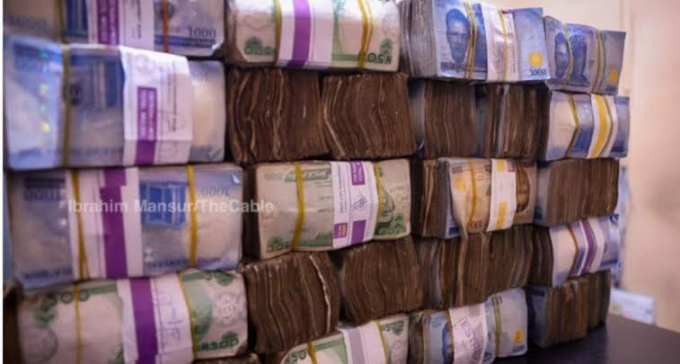
Meanwhile, Nigeria’s growing debt obligations to the World Bank have continued to attract attention amid the country’s increasing reliance on external development financing.
Debt Management Office figures show that Nigeria’s outstanding World Bank debt increased from $14.34 billion in March 2023 to $20.73 billion in June 2026.
The difference represents an increase of approximately $6.39 billion, equivalent to 44.6 per cent, within the period following President Bola Tinubu’s inauguration.
Of the outstanding amount, $19.12 billion was owed to the International Development Association, while $1.61 billion was owed to the International Bank for Reconstruction and Development.
The figures further indicate that the World Bank accounted for 38.02 per cent of Nigeria’s $54.52 billion external debt stock at June 2026.
This made the institution Nigeria’s largest multilateral creditor, highlighting its significant position in the country’s external borrowing arrangements and development financing.

The latest approval adds another financing commitment as Nigeria pursues investments in environmental protection, agricultural recovery and climate resilience across vulnerable northern communities.

















Leave a comment