

By: Chioma Madonna Ndukwu
The Way We Live: Daniel’s Morning Greeting Never Came That Day
They used to call him “small engineer” in the compound, not because he was trained, not even because anyone taught him anything.
But because Daniel always tried to fix what adults had already given up on, a broken bucket, a torn rubber sandal, a leaking tap that had been dripping for weeks.
He would crouch beside it like it mattered, turn it over in his hands, and say with full confidence, “It will hold.”
Emeka used to laugh from the corridor. “Small engineer! Come and repair this life again!”
And Daniel would laugh back, already moving on to the next thing like nothing in the world was heavy.
That morning started the same way, or so everyone thought.
“Daniel!” Emeka called. “Are you sleeping inside there?”
No answer.
Mama Chika’s voice followed immediately from the kitchen. “Daniel, come here now.”
Footsteps came slowly.
He appeared at the doorway rubbing his eyes.
“You didn’t finish washing plates,” Mama Chika said.
“I will finish,” Daniel replied quickly, like he already knew delay was dangerous.
Emeka didn’t look up from his phone.
“This boy talks too much for somebody who doesn’t listen.”
Mama Chika pointed toward the kitchen. “Go and do it properly.”
Daniel turned without arguing.
But something about the air in the house had already changed. Not loudly. Just tight, like everyone was speaking a little faster than their thoughts.
“Why are you always like this?” Mama Chika snapped from behind him.
“I’m not,” Daniel said softly.
“Then what are you doing every day?”
Emeka finally spoke without looking up. “Just correct him and let’s move on.”
“Correct him,” Mama Chika repeated, almost to herself.
Daniel stopped near the kitchen door.
“Go inside,” Mama Chika said again.
And then the moment stretched, too long, too unclear.
Just voices rising, a chair moving, someone shouting for something to stop, someone else insisting it was “discipline.”
A neighbour outside paused mid-sweep.
“Did you hear that?” she asked.
Another neighbour answered without turning. “It’s their house. They are correcting the boy again.”
“Correcting?” the first voice hesitated.
But no one moved closer fast enough.
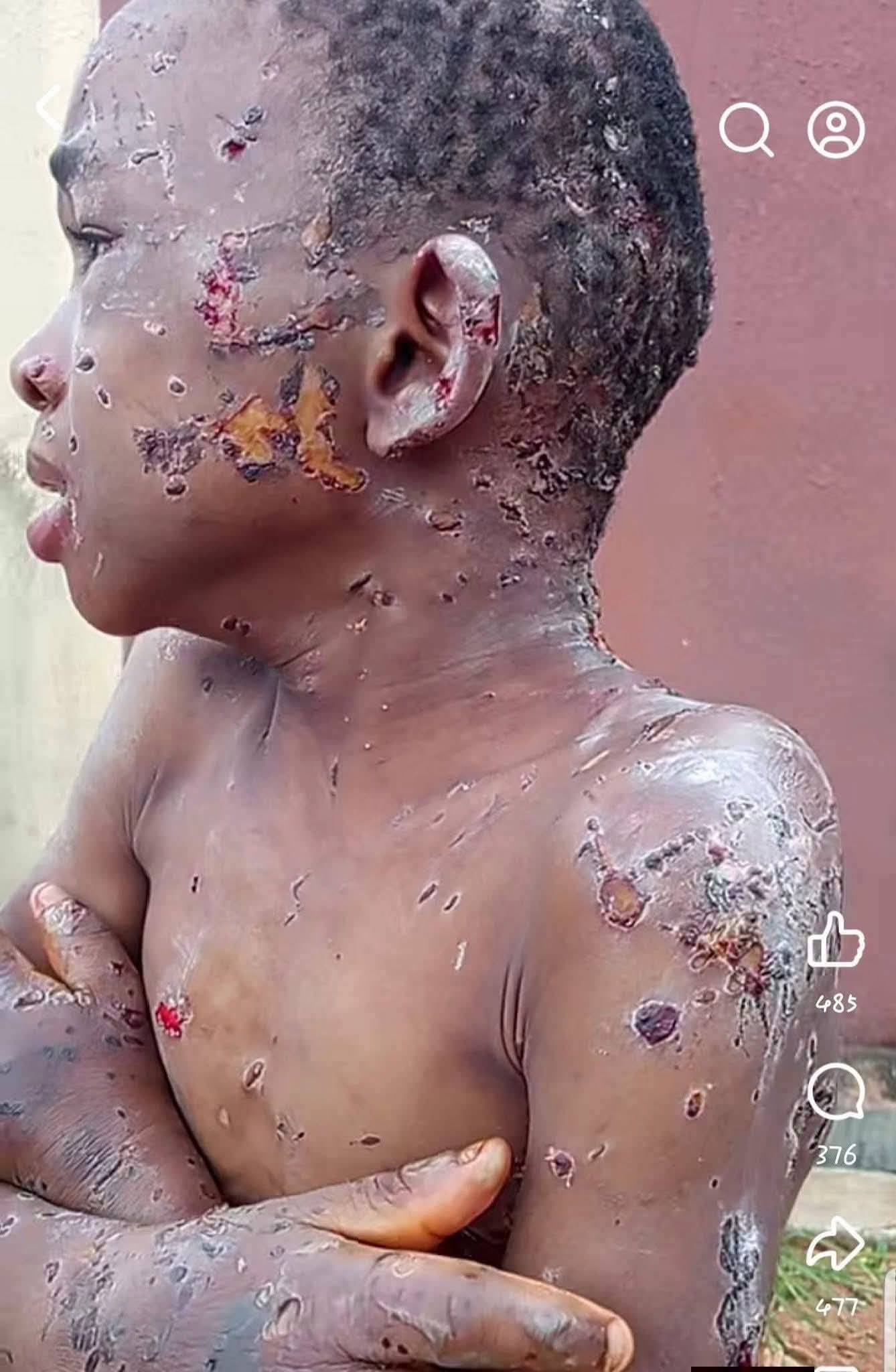
When the door finally opened again, people only saw movement, panic. A child being carried too quickly, wrapped too tightly, silence where a voice should have been.
No one heard “good morning” that day.
At the clinic, Nurse Ifeoma stood up immediately.
“What happened to him?” she asked as they brought him in.
No one answered properly.
She pulled the cloth back slightly and froze.
“Who did this to this child?” she asked again, lower this time.
Daniel’s eyes were open, but not reaching anyone in the room.
“Stay with me,” she said quickly, adjusting him. “You’re in a hospital now.”
Dr Nonye entered a few minutes later. She didn’t ask for explanations first. She looked at Daniel. Then at the adults.
“This is not an accident,” she said flatly.
Emeka opened his mouth. “It was discipline that went wrong…”
Dr Nonye cut in immediately. “A child does not arrive here by discipline going wrong.”
Later, while writing her report, she spoke without looking up.
“Eleanor Roosevelt once asked, ‘Where, after all, do universal human rights begin?’”
She paused, then finished it without softening it.
“In small places, close to home.”
The room did not respond, because there was nothing to argue with.
Social worker Chinyere arrived later. She didn’t begin with questions, she only pulled a chair and sat beside Daniel.
“Hi,” she said gently.
“You’re not in trouble,” she added.
Daniel blinked slowly, like that sentence was unfamiliar.
Outside the room, voices tried to make sense of what they had seen.
“I saw something like this in Texas once on the news,” one neighbour said quietly. “They said people always think a child is fine because they still smile outside.”
Another voice answered, lower, “In Mumbai, a school driver noticed burns on a child and reported it. That child is alive today.”
Chinyere listened, then turned to them.
“It’s the little things citizens do that will make the difference,” she said, quoting Wangari Maathai.
No one responded this time, because it didn’t feel like advice anymore. It felt like something everyone had failed.
Mama Chika stood near the wall later, shaking her head.
“We were correcting him… we were just correcting him…”
But the sentence no longer explained anything. It only revealed how long people had been calling harm by a softer name.
Later that evening, Daniel spoke for the first time since everything stopped.
“Can I go home?”
The room went quiet immediately.
Dr Nonye answered carefully. “Not yet.”
Chinyere added, “You will go somewhere safe first.”
Daniel turned his face slightly away, not crying, just still.
Outside, the compound no longer felt like the same place. People didn’t lean on walls to gossip. They didn’t even laugh loudly, they only looked at each other longer than before. As if learning how to notice again.
And somewhere in that silence, a boy who once fixed broken things was now the one being held together by people who were finally forced to see him.
8e632d00-2228-4e50-8782-e573d1d0cd0d
Moral: When a community normalizes a child’s pain, even the truth begins to arrive too late.
Engagement hook: What do we call “discipline” that nobody dares to interrupt?