

Somba K’e Park Chosen as Likely Site for Residential School Monument in Yellowknife
In the heart of Yellowknife, where Frame Lake meets the rhythm of daily civic life, Somba K’e Park is emerging as a deeply symbolic location for a national act of remembrance.
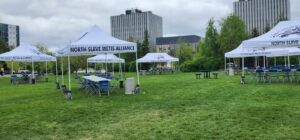
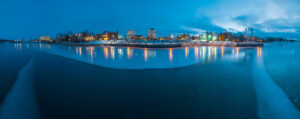
The grassy waterfront space, sitting beside City Hall and overlooking the quiet waters of Frame Lake, has long served as a shared gathering ground for community life in Yellowknife.
From open-air markets in summer to cultural celebrations and winter light displays, the park has become a place where public life and personal memory often meet.
Now, it is also being considered as the likely site for a residential school monument in the Northwest Territories.
The plan aligns with the Truth and Reconciliation Commission’s Call to Action 82, which urges every capital city in Canada to establish a permanent monument honouring survivors and children who never returned home.
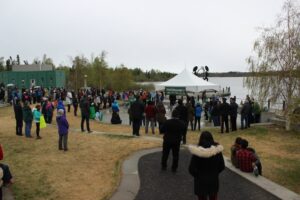
In the case of the Northwest Territories, officials have confirmed that early planning documents point to Somba K’e Park, near the playground area, as the preferred location.
For many survivors and advocates, the choice carries emotional weight. The monument project has been shaped over several years through consultations led by residential school survivors themselves, many of whom say remembrance must be both visible and lived in everyday public space.
Survivors involved in the process have described the need for a site that does more than mark history. They envision a place that encourages reflection, supports healing, and allows future generations to understand what was lost.
The park’s natural setting, water, rock, and trees, was repeatedly highlighted as part of that vision.
Officials say the project, which began development around 2021, has faced delays linked to wildfires and political transitions in the territory. Despite setbacks, planning has continued, with a goal of completing the monument by 2027.
Community voices, including advocates working closely with survivors, have also stressed that awareness remains uneven, especially among younger residents. For them, the monument is not only about memory, but about education and responsibility.
Somba K’e Park already holds a central place in public life, hosting Canada Day celebrations, Indigenous gatherings, music performances, and seasonal community events. If the monument proceeds, it would add a deeper layer to a space already tied to collective experience.
It is expected that Indigenous artists from the region will be invited to contribute ideas for the design, ensuring that the final work reflects cultural identity and survivor perspectives.
As plans move forward, Somba K’e stands at the intersection of celebration and remembrance—where a city’s everyday life may soon share space with one of the country’s most important acts of reconciliation.