

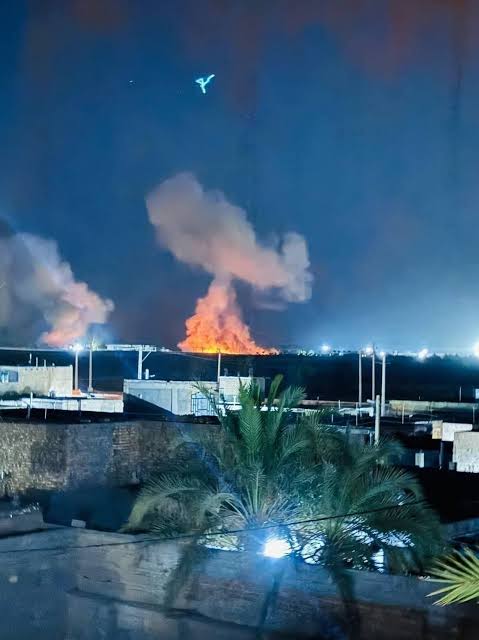
Hormuz Tensions Explode as US Launches New Wave of Strikes on Iran
The United States has intensified its military campaign against Iran, launching a fresh wave of airstrikes that has pushed the Gulf region closer to a wider conflict and raised fresh fears over the security of the strategically vital Strait of Hormuz.
The latest operation, carried out late Sunday, targeted Iranian military positions that Washington says have been used to threaten commercial shipping and civilian vessels passing through the narrow waterway.
The US Central Command (CENTCOM) said the strikes were aimed at weakening Iran’s ability to disrupt international maritime trade.
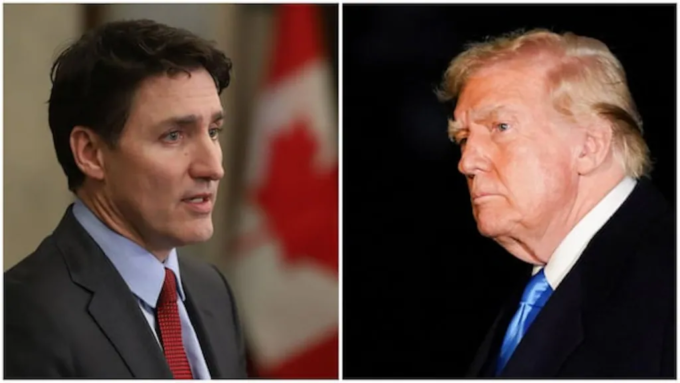
President Donald Trump defended the offensive, saying the attacks were intended to hold Iran responsible for what Washington describes as repeated aggression in the Gulf. He declared that US forces were “beating them up.”
Iran responded with missile and drone attacks aimed at countries hosting American military facilities across the region.
Jordan’s military said it intercepted four Iranian missiles, while Kuwait reported engaging hostile aerial targets. Air defence systems were also activated in parts of the Gulf as tensions continued to escalate.
The exchange marks one of the most intense confrontations since fighting over the Strait of Hormuz intensified earlier this year.
CENTCOM disclosed that nearly 140 strikes were carried out on Saturday night alone, adding to hundreds of operations conducted over recent days.
The renewed violence has cast serious doubt on the future of the fragile truce reached between Washington and Tehran last month.
Although some commercial vessels continue to transit the Strait of Hormuz, security concerns have increased significantly as both countries harden their positions.
Iran widened the conflict by extending retaliatory strikes to areas linked to US interests, including Qatar, a country that has played a key role in mediating ceasefire negotiations.
The United Arab Emirates also confirmed that its air defence systems intercepted Iranian missiles and drones after weeks without direct attacks.
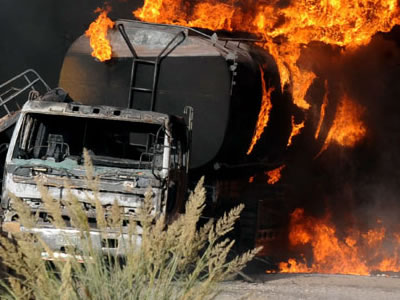
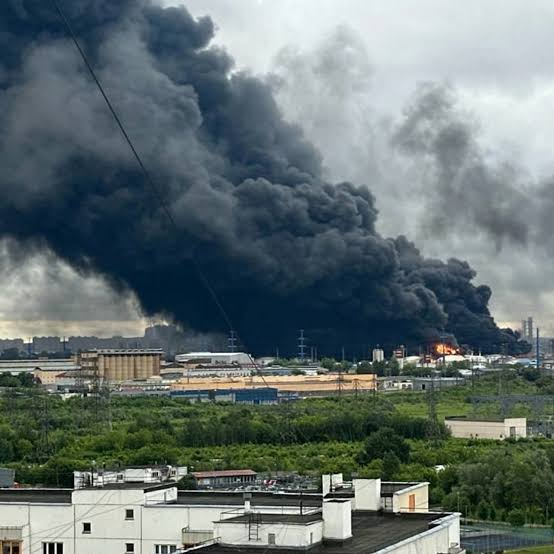
Iranian state media reported explosions around the strategic port cities of Bandar Abbas and Sirik, as well as Qeshm Island, all of which host military facilities overlooking the Strait of Hormuz.
Tehran condemned the latest American offensive, accusing Washington of destroying months of diplomatic efforts aimed at reducing tensions in the region. Iran’s Foreign Ministry said the US attacks had reignited instability in the Strait of Hormuz and disrupted international commercial shipping.
Iran also claimed that talks held in Muscat, Oman, on arrangements for managing navigation through the strait failed because of what it described as direct and indirect pressure from the United States.
The renewed hostilities have further weakened hopes that last month’s interim agreement could restore stability to one of the world’s most important energy corridors.
Since the conflict began earlier this year, uncertainty over oil supplies has driven global energy prices higher, adding to inflationary pressures in many economies.
Financial markets reacted swiftly, with oil prices climbing sharply when trading opened in Asia. US benchmark West Texas Intermediate crude rose above 74 dollars a barrel as investors weighed the possibility of prolonged disruption to global energy supplies.
Iran has continued to push for a system requiring vessels to obtain official authorisation before passing through the Strait of Hormuz. Its newly established Persian Gulf Strait Authority announced that commercial transit would remain suspended until security conditions improve.
The United States rejected Tehran’s position, insisting its forces remain committed to protecting freedom of navigation. American officials accused Iran of intimidation and unlawful attempts to control one of the world’s busiest maritime trade routes.
Meanwhile, the US Navy-led Joint Maritime Information Centre advised shipping companies that, despite the heightened security risks, an expanded southern route near Oman remains open for two-way maritime traffic.
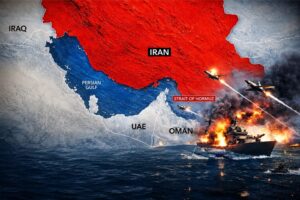
As both nations continue to exchange military strikes and diplomatic rhetoric grows increasingly confrontational, fears are mounting that the conflict could spread further across the Middle East, with potentially far-reaching consequences for global trade, energy markets and regional stability.