


Chasing a US Master’s or PhD? Here’s What Your Academic CV Must Get Right
For Nigerians seeking admission to universities in the United States, the difference between a résumé and an academic CV can become important long before an application reaches an admissions committee.

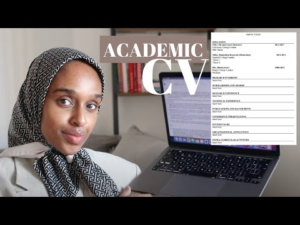
A corporate résumé is designed to highlight professional skills and achievements. An academic CV, however, gives universities a broader picture of a candidate’s education, research experience, publications, teaching and academic interests.
For applicants pursuing research-based master’s or PhD programmes, the document should quickly show how their academic background has prepared them for advanced study.
Put your academic background first
An academic CV should generally begin with education rather than a personal profile or a long employment history.
Your degree, university, dates of study and relevant thesis should be easy to find. Research experience, academic presentations and publications should then receive prominent attention.
This does not mean every job you have held must disappear.
Research assistantships, teaching positions, laboratory work and internships connected to your proposed field can strengthen an application and should be clearly presented.
Unrelated employment, however, may need to be shortened or removed if it takes attention away from your academic preparation.
The guiding question should be simple: does this experience help explain why you are prepared for the programme?
Show exactly what you did
Admissions reviewers need more than a list of responsibilities.
Instead of writing that you “participated in a research project,” explain the part you actually handled.
Strong academic CVs use precise action words such as “analysed,” “conducted,” “examined,” “designed,” “collected,” “developed,” “presented” and “led.”
For example, rather than saying you assisted with an environmental study, you could state that you analysed soil contamination across 12 sites using a particular research method.
That wording immediately tells the reader what you contributed and what skills you developed.
The same principle applies when the research was conducted by a team.
Do not claim ownership of work carried out collectively. Instead, identify the part you personally completed, whether that involved gathering data, analysing findings, conducting interviews or writing a section of the research.
Do not overlook your undergraduate thesis
An undergraduate thesis can be valuable on an academic CV, particularly if its subject connects with the master’s or PhD programme you want to study.
The thesis can be listed under the Education section with its title, supervisor and year of completion.
If the research was later presented at a conference or submitted for publication, that development can be mentioned under the appropriate academic section.
An unpublished thesis, however, should not be described as a published paper.
Accuracy matters because admissions committees need to understand exactly what academic work a candidate has completed and what has actually been published.
Keep the most recent work visible
Within individual sections, academic CV entries should generally appear in reverse chronological order.
Your newest qualification, research project, publication or academic position should come before older entries.
Consistency also matters.
Dates, university names, degree titles and section headings should follow the same format throughout the document.
A reviewer should not have to search through several pages to find your latest and most relevant academic experience.
How long should the CV be?
There is no universal page limit for an academic CV because expectations vary between programmes and applicants.
For master’s applications, however, two to three pages can provide enough room to present substantial academic experience without unnecessary padding.
A doctoral or faculty-level CV may be considerably longer because candidates often have extensive publications, teaching experience, conference presentations and research records.
The aim should not be to reach a particular page count.
Every section should earn its place by showing something useful about your academic preparation.
What about a low undergraduate GPA?
Applicants may wonder whether a low GPA should be left off an academic CV.
For graduate applications, the official transcript will normally provide the university with that information anyway.
Where appropriate, applicants can provide useful context elsewhere in the application.
For example, a stronger performance in the student’s major, an improvement during the final years of study or other relevant academic developments may provide a clearer picture of their record.
Such explanations are generally better suited to an application statement than a lengthy defence inside the CV.
Check everything before submission
Before submitting an academic CV, check every date, institution, qualification and research title.
Correct spelling mistakes and remove unnecessary personal information.
Most importantly, tailor the document to the programme.
A research project that strongly supports an application in one discipline may have little relevance to another.
For Nigerian applicants accustomed to conventional job CVs, the biggest adjustment may be understanding that an academic CV is not simply a longer résumé.
It is a record of academic preparation, research ability and scholarly development.
The strongest version should therefore leave the admissions committee with a clear understanding of what the applicant has studied, what they have researched and why they are prepared for the next stage of their academic journey.



















Leave a comment