


World Leaders Converge on Asia for Crucial Summits
Asia is preparing for an important week of international diplomacy as world leaders converge on China, the Philippines and Cambodia for a series of high-level meetings expected to address global trade, technological competition and regional security.
The diplomatic engagements come amid growing competition between the United States and China, with both countries seeking to strengthen their influence across the strategically important Asian region.
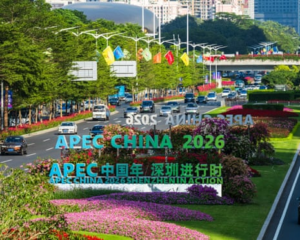
One of the major events will be the Asia-Pacific Economic Cooperation (APEC) summit in Shenzhen, China, where US President Donald Trump is expected to meet Chinese President Xi Jinping and Russian President Vladimir Putin.
The gathering, scheduled to begin on Wednesday, will place Beijing at the centre of international attention, particularly as Washington and Beijing continue to navigate disagreements over trade, technology and geopolitical interests.
APEC economies account for more than 60 per cent of global Gross Domestic Product (GDP), making the organisation an influential platform for discussions on international commerce, economic cooperation and multilateral relations.
The proposed meeting involving Trump, Xi and Putin has attracted considerable attention, with comparisons being drawn to the 1945 Yalta Conference, where major Allied leaders discussed the post-war political arrangement in Europe.
However, international relations experts have cautioned against expecting a similar outcome, particularly regarding the future of Ukraine and Taiwan, whose interests could be affected by discussions involving the three powerful nations.
Xiaoyu Pu, an associate professor of political science at the University of Nevada, observed that the proposed trilateral engagement could carry more symbolic than practical significance, although symbolism remains important in relations between major powers.
According to him, Trump may be interested in nuclear arms control, while Xi is likely to prioritise stable relations with Washington without weakening China’s partnership with Russia.
Putin, meanwhile, is expected to use the engagement to strengthen his negotiating position concerning the ongoing conflict in Ukraine.
Before the APEC gathering, Trump will attend the Association of Southeast Asian Nations (ASEAN) summit in the Philippines, beginning on Sunday.
The meeting is expected to address several regional challenges, including maritime disputes in the South China Sea, the political crisis in Myanmar and economic cooperation among member countries.
The Philippines will also host discussions involving the Quadrilateral Security Dialogue, popularly known as the Quad, bringing together representatives of the United States, Australia, India and Japan.
Meanwhile, Cambodia will host the Francophone summit, which is expected to attract French President Emmanuel Macron and Canadian Prime Minister Mark Carney, alongside other international representatives.
Across the different diplomatic gatherings, artificial intelligence governance, technology supply chains, tariff reductions and renewable energy development are expected to feature prominently.
Security concerns will also remain high on the agenda, particularly tensions surrounding the South China Sea, where China has established military installations in disputed maritime territories.
The territorial disagreements involve China, Brunei, Malaysia, the Philippines, Taiwan and Vietnam, with competing claims over an area believed to contain significant oil and natural gas resources.
Although the United States has continued to conduct freedom of navigation operations in the waterway, Washington’s attention has also been divided by other international crises involving Iran, Ukraine, Venezuela and the conflict between Israel and Palestine.
Efforts to establish a binding agreement governing activities in the South China Sea are unlikely to produce a breakthrough at this year’s ASEAN summit, meaning negotiations could extend into next year.
Myanmar will equally remain a difficult issue for ASEAN members as the country continues to grapple with political instability following the military takeover.
The regional organisation has restricted the participation of Myanmar’s military leader, Min Aung Hlaing, although the country is permitted to send a representative to its meetings.
The diplomatic discussions are taking place as the International Court of Justice prepares to deliver a judgment on Thursday in a case concerning allegations of genocide against Myanmar.
Beyond the immediate security concerns, the gatherings reflect a changing relationship between Southeast Asian countries and the world’s major economic powers.
For more than a decade, successive American administrations have pursued stronger engagement with Asia, particularly in response to China’s growing economic and military influence.
Former US President Barack Obama reinforced the country’s commitment to the region during a 2011 address to Australia’s parliament, declaring that America was a Pacific power and intended to remain one.
His administration’s strategy, popularly described as the pivot to Asia, was subsequently maintained through diplomatic and economic engagements under President Joe Biden.
However, Trump’s unpredictable foreign policy and willingness to use tariffs as an economic bargaining instrument have raised concerns among smaller Asian countries about their dependence on Washington.
Jayant Menon, an economist at Singapore’s ISEAS-Yusof Ishak Institute, noted that Southeast Asian countries were increasingly exploring alternative economic partnerships to reduce their dependence on the American market.
He argued that stronger regional cooperation and diversified trade relationships would help countries withstand possible disruptions arising from another round of American tariffs.
Nevertheless, China’s growing influence has not removed existing disagreements with its neighbours, particularly the Philippines, where maritime tensions continue to strain bilateral relations.
China’s Foreign Minister, Wang Yi, recently criticised Filipino politicians over their statements concerning Beijing, urging Manila to address what he described as repeated attacks against China.
The outcome of this week’s diplomatic engagements could therefore offer important indications of how Asian countries intend to manage their relationships with Washington and Beijing while protecting their economic and security interests.
The series of meetings will be followed next month by the G20 summit in Miami, Florida, where Xi Jinping is expected to participate if diplomatic relations between China and the United States remain stable.























Leave a comment