


A Teenager Turns Potato Peels Into Weedkiller and Gives 15 Acres of Land a New Lease of Life
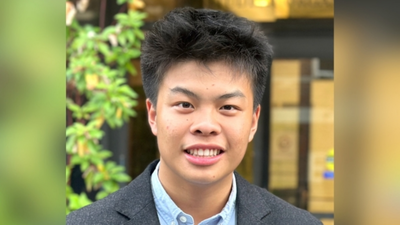
Most people see potato peels and used coffee grounds as kitchen waste. Sixteen-year-old Leo Toake, however, saw something worth exploring in these discarded materials.

The teenager from New Jersey, United States, has developed an experimental weedkiller using potato peels and used coffee grounds, giving ordinary kitchen waste another purpose.
His innovation, known as S.A.F.E., is being explored as an alternative approach to controlling invasive plants that threaten native vegetation and natural habitats.
For Leo, the idea goes beyond finding another use for household waste. He wants discarded materials to contribute meaningfully to protecting the environment.
Through his nonprofit organisation, Re:Imagine Inc., he has combined scientific curiosity, environmental awareness and community participation in an initiative attracting considerable attention.
Early tests of S.A.F.E. recorded an 82.5 per cent inhibition rate against Japanese stilt grass, an invasive species that competes with native vegetation.
Although the product remains experimental, these preliminary findings offer an interesting starting point for further scientific investigation into alternative weed-control methods.
The project also addresses another environmental concern: food waste. Re:Imagine Inc. has reportedly diverted more than 500 pounds of food waste from landfills.
However, Leo’s ambition extends beyond the development of an experimental weedkiller. His work has also taken him into environmental restoration and community mobilisation.
Working with more than 70 volunteers, he has helped restore 15 acres of land, remove over two tons of invasive vegetation and plant native species.
The group has planted more than 100 native plant species, helping to give local green spaces an opportunity to recover and support biodiversity.
Invasive plants can spread aggressively, competing with native vegetation for sunlight, water and nutrients. Their unchecked growth can gradually alter entire natural habitats.
Restoring affected areas requires patience and consistent effort. Removing unwanted vegetation is only the beginning; suitable native plants must also be introduced and maintained.
Through Re:Imagine Inc., Leo demonstrates that environmental protection need not remain the responsibility of government agencies and professional conservationists alone.
Young people, schools, businesses and ordinary residents can also contribute meaningfully to preserving the natural environment through practical community-based initiatives.
The organisation was co-founded by Leo and fellow students Muhammad El-Sherbiny, Elle Kim and Justin Ahn, who share an interest in environmental improvement.
Their collective efforts have earned recognition beyond their local community. Leo was named a 2026 runner-up for the Gloria Barron Prize for Young Heroes.
The award recognises young people making positive contributions to their communities and the environment, bringing further attention to the teenager’s conservation activities.
His journey reminds us that age does not necessarily determine the size of a person’s contribution or the difference their ideas can make.
At 16, Leo has transformed an idea involving everyday kitchen scraps into a wider conservation project supported by volunteers and community participation.
There is another important lesson in his work. Food waste remains a familiar problem in households, restaurants and businesses across the world.
Yet, materials considered useless in one setting may have value elsewhere. Finding responsible ways to reuse them could reduce landfill pressure and encourage sustainability.
Leo’s experimental weedkiller is not yet a proven replacement for conventional products. Further scientific assessment is necessary to establish its effectiveness and environmental safety.
Nevertheless, his work offers an interesting direction for young innovators, researchers and communities searching for practical approaches to environmental protection.
Sometimes, promising ideas begin with curiosity, a willingness to experiment and the courage to look at ordinary things from another perspective.
For Leo Toake, two discarded kitchen materials have become the starting point of an environmental project that has united volunteers and supported conservation.
His story offers a valuable reminder: the future of environmental protection may depend partly on recognising possibilities in things we routinely throw away.




















Leave a comment