


By: Chioma Madonna Ndukwu
History Made as Pope Leo XIV Casts US Election Vote, But Does Spiritual Leadership Demand Political Distance?
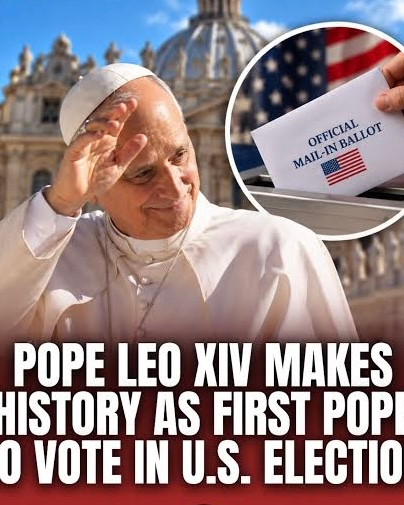
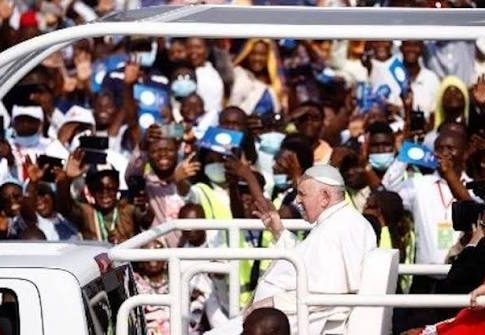
A pope has entered the voting booth, and for the first time, the Catholic Church has a sitting pontiff participating in a United States election.
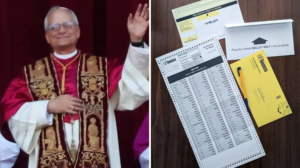
Pope Leo XIV has made history after submitting an absentee ballot in Chicago, Illinois, ahead of the November 3, 2026, US midterm elections.
The Vatican confirmed the development on October 30, explaining that the Chicago-born pontiff exercised his voting rights as an American citizen.
However, beyond the historical significance lies an interesting question about religion, citizenship and the boundaries of political participation.
Should the spiritual leader of more than a billion Catholics participate in the electoral affairs of his country of origin?
Or does occupying the highest office in the Catholic Church demand a certain distance from the political interests of individual nations?
The Vatican explained that Leo had consistently exercised his voting rights whenever eligible, including during his years living in Peru.
The Holy See also reaffirmed his belief that citizens have both the right and responsibility to participate in democratic processes.
The development has also resonated with Catholics beyond the United States, including Nigeria, where one worshipper says the Pope’s decision has strengthened his enthusiasm for electoral participation.
Speaking to OBT News, Mr Paul Anyanso, a Lagos-based sportsman and Catholic worshipper, said seeing the pontiff vote had inspired him to participate in elections in his own country.
According to Anyanso, the Pope’s example has given him another reason to reject voter apathy and take his civic responsibilities seriously.
“If the Pope can vote, who am I not to? Why should I display voter apathy?” he asked.
He explained that seeing the leader of the Catholic Church exercise his democratic rights had encouraged him, as an ardent Catholic, to approach voting with renewed enthusiasm.
For Anyanso, the significance of the development extends beyond the Pope’s American citizenship. It also demonstrates how the actions of religious leaders can influence how ordinary worshippers view their responsibilities as citizens.
Interestingly, this is not simply a question of whether priests and religious leaders are allowed to vote. Catholic teaching provides some important answers.
Paragraph 2240 of the Catechism of the Catholic Church identifies exercising the right to vote as a moral obligation of citizens.
It places voting alongside other civic responsibilities, including paying taxes and contributing towards the common good.
However, the Church also maintains boundaries concerning the involvement of its clergy in partisan politics.
Canon 287 of the Code of Canon Law directs clerics to promote peace and harmony while avoiding active participation in political parties.
It provides limited exceptions where competent Church authorities consider such involvement necessary to protect Church rights or promote the common good.
Importantly, the canon does not expressly prohibit priests or other clerics from voting in elections.
This distinction is essential because casting a private ballot is different from campaigning for candidates, joining political parties or publicly endorsing partisan interests.
Consequently, Pope Leo’s decision does not automatically constitute a violation of Catholic Church teaching.
Nevertheless, his position makes the development particularly interesting because the papacy carries responsibilities beyond the nationality of its occupant.
A pope speaks to Catholics across different countries, political systems and ideological backgrounds.
His spiritual responsibilities extend to believers who may support opposing candidates, governments and political movements.
This raises another question about whether a pontiff’s personal political participation could influence how people interpret his public positions.
The concern is not necessarily that voting compromises religious authority, but that political associations could create perceptions of institutional preference.
The Vatican has not disclosed which candidates or political positions received the pope’s support.
His ballot remains a private expression of his citizenship, not a public endorsement of any political party.
The historical dimension also deserves attention because no previous sitting pope is known to have voted in a United States election.
His immediate predecessors, Pope Francis, Benedict XVI and John Paul II, retained connections to their countries of origin.
However, there is no established public record of these three pontiffs voting in their respective national elections while serving as pope.
Leo’s decision therefore introduces a new chapter in the relationship between papal leadership and personal civic participation.
There is also an interesting question surrounding his American and Peruvian citizenship.
His election as pope did not erase his American identity, and the Vatican has confirmed his continued participation in eligible elections.
This situation highlights the distinction between the individual who occupies the papal office and the worldwide religious institution he leads.
The Catholic Church itself recognises that religious and political institutions have different responsibilities.
Paragraph 2245 of its Catechism states that the Church must not be confused with the political community.
It also affirms that the Church respects and encourages citizens’ political freedom and responsibility.
However, this separation does not mean the Church must remain silent whenever political decisions affect human dignity or fundamental rights.
Paragraph 2246 recognises its responsibility to make moral judgments on political matters when fundamental human rights or the salvation of souls require it.
The challenge, therefore, is maintaining moral independence without becoming an instrument of partisan political interests.
Pope Leo’s historic ballot has brought this delicate relationship into public conversation, even though voting itself is consistent with Catholic teaching.
Perhaps the more important discussion concerns how religious leaders can exercise their personal rights without compromising the independence expected of their spiritual offices.
So, what do you think? Should a sitting pope exercise his voting rights like every other eligible citizen, or should the leader of a worldwide Church maintain greater distance from electoral politics?












Leave a comment