


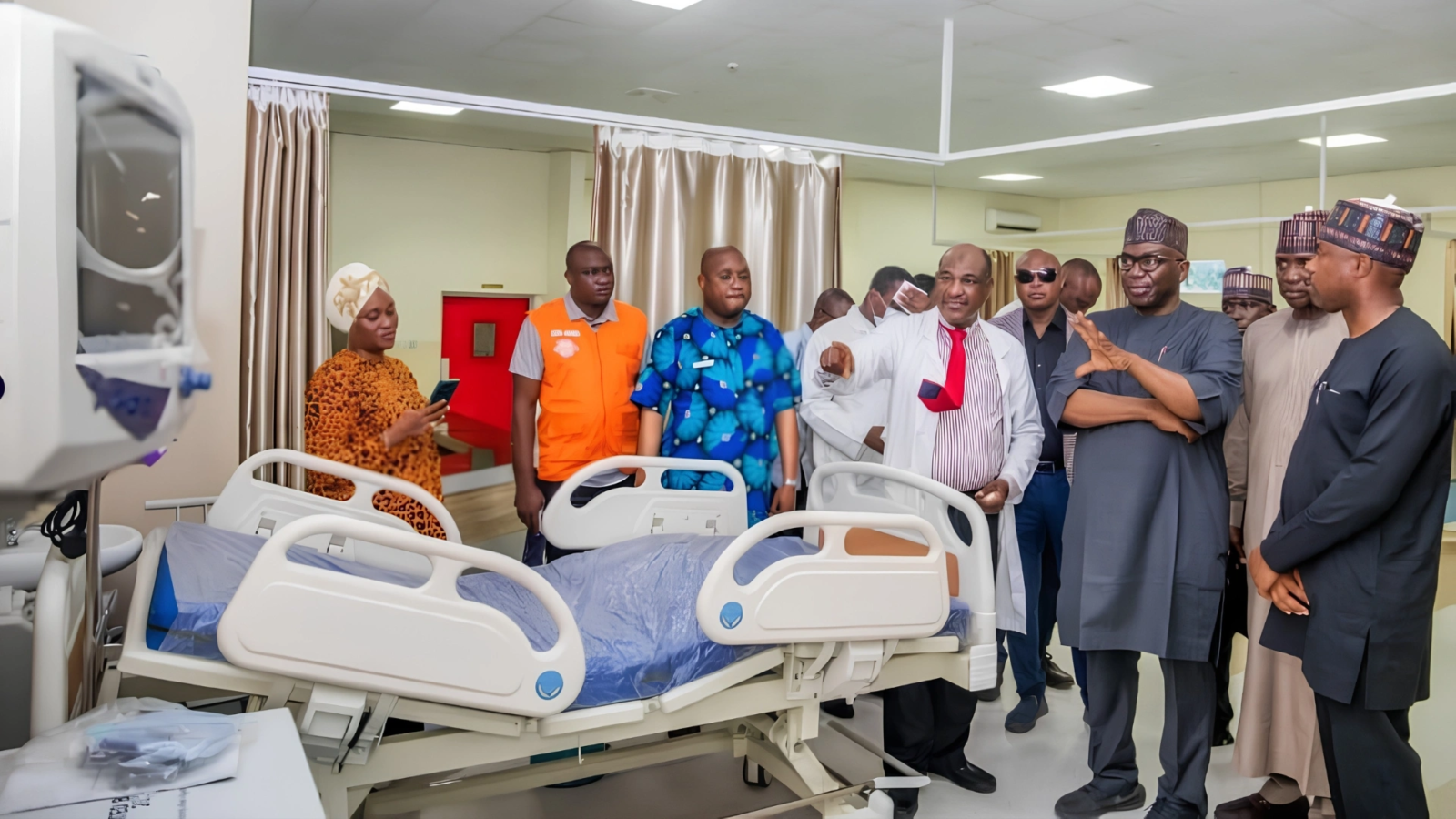
EU Health Programme Gives Free Medical Care to 10,000 Kwara Residents
About 10,000 residents of Kwara State have received free healthcare services through a health intervention supported by the European Union, as the state government says it is increasing its own investment in the sector.
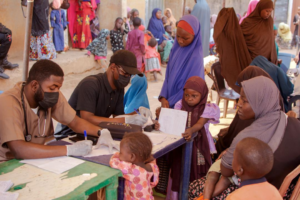
The programme has also reached 35,796 people through community mobilisation and generated 12,264 referrals to health facilities, according to figures presented at a review of the EU-SARAH partnership in Kwara.
The review examined the progress made under the programme and discussed ways of sustaining the gains through stronger government funding, better coordination and increased local ownership.
Kwara State Commissioner for Health, Dr Amina Ahmed El-Imam, said government funding for health had increased significantly, with the sector receiving 15 per cent of the state’s 2026 budget, compared with about four per cent previously.
“Kwara has made consistent progress from about 4 per cent of the budget and, in 2026, it’s 15 per cent of the budget,” El-Imam said.
She, however, noted that budget allocations did not always translate into full releases, adding that actual funding released to the health sector had nevertheless grown from year to year over the past seven years.
According to the commissioner, the state was also moving towards a partnership model in which government and development partners would contribute jointly, rather than relying heavily on external assistance.
The Director of Public Health in the state Ministry of Health, Dr Oluwatosin Fakayode, said the programme had helped bring more residents into contact with health services.
Fakayode said 35,796 people were reached through community mobilisation, while 12,264 were referred to health facilities for further care. He added that about 10,000 people received healthcare at no cost through the project.
Other areas of support, he said, included the deployment of 100 community midwives, expansion of nursing education, family planning services, enrolment of vulnerable residents into health insurance schemes and mentorship for primary healthcare facilities.
The programme has also supported the state’s transition from paper-based health records to digital systems, with health data increasingly being used to identify areas requiring urgent attention.
Fakayode identified Ilorin and Moro local government areas as areas requiring particular attention because of their contribution to maternal mortality in the state.
He said a roadmap had been developed to guide the transition towards digital health systems across the state.
Speaking on behalf of the European Union, the Head of Partnerships at the EU Delegation to Nigeria and ECOWAS, Massimo De Luca, said the review offered an opportunity to assess the partnership’s achievements and consider how wider EU engagement could support Kwara’s development priorities.
“Part of the objectives of this visit is to understand how we work on the broader partnership between the European Union and Kwara,” De Luca said.
He explained that EU and EU Member State programmes in Kwara extended beyond healthcare to areas such as energy, agriculture, skills development, civil society, peace and security.
De Luca commended the state for increasing its financial commitment to healthcare and stressed the importance of building systems that can remain effective beyond individual development projects.
He also highlighted accountability and local ownership as important factors in sustaining the benefits of development partnerships.
Young people were also represented during the review, with the Speaker of the Kwara State Children’s Parliament and representative of adolescents in the state, Fauziyyah Alaaya, welcoming their involvement in health programmes.
“I want to acknowledge the European Union for this laudable initiative,” Alaaya said.
She urged stakeholders to maintain youth participation in health planning and implementation, noting that the state’s growing young population requires timely and responsive healthcare policies.
“Our population is getting younger, and we cannot afford the luxury of time,” she said.
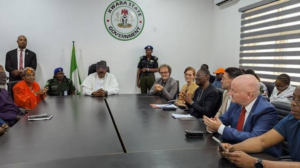
The review ended with renewed emphasis on domestic health financing, stronger primary healthcare systems, improved use of health data and greater state ownership of programmes supported by development partners.





















Leave a comment