


Saudi Arabia Halts Key Oil Pipeline As Houthi Threat Reaches Red Sea
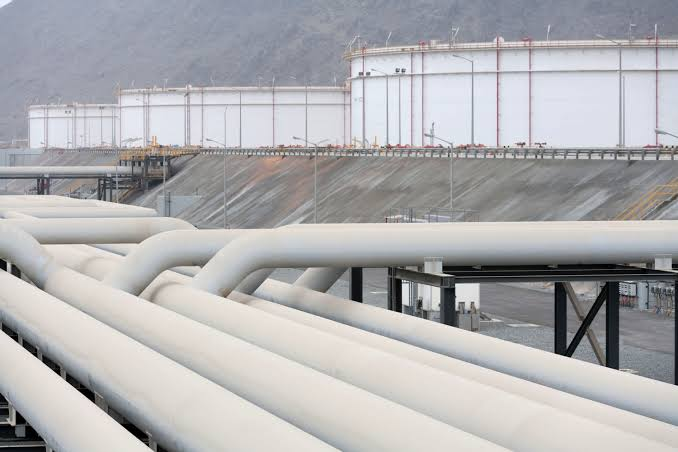
Saudi Arabia has suspended operations on its major East-West oil pipeline following an aerial attack, raising fresh concerns over global crude supplies amid escalating tensions across the Middle East.
The 1,200-kilometre pipeline, which stretches across the Arabian Peninsula, has become increasingly important as shipping through the Strait of Hormuz has slowed sharply during the six-month war between the United States and Iran.
Saudi Arabia’s Energy Ministry said the pipeline was shut as a precaution after it came under attack on Thursday in the Riyadh and Medina regions.
The pipeline has reportedly transported between four million and five million barrels of crude daily in recent months, representing roughly four to five per cent of global oil supply.
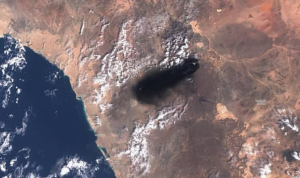
Satellite imagery showed dark smoke rising from a section of the facility south of Medina following the attack.
The Saudi Foreign Ministry said the incident caused some injuries and damaged the facility, while authorities continued assessing the extent of the impact.
The attack has also heightened pressure on Iraq after Saudi Arabia and Baghdad said the drone strike originated from Iraqi territory.
Iraq subsequently dismissed a military commander responsible for operations in Maysan province, a southeastern region bordering Iran where Iranian-backed Shiite militias have maintained considerable influence.
The Iraqi government condemned the attack and began a wider operation to identify those behind it.
Saudi Arabia has so far refrained from retaliating after Baghdad urged restraint, although Riyadh said it retained the right to take necessary measures to protect its interests.
The development came as Iran-aligned Houthi forces expanded their presence along Yemen’s Red Sea coastline.
Four Yemeni government sources said the Houthis seized Perim Island on Friday, giving the group greater strategic influence around the Bab el-Mandeb Strait, one of the world’s important maritime gateways.
The reported capture has added another layer of uncertainty to commercial shipping already affected by attacks linked to the Houthis.
Saudi crude supplies have fallen to their lowest level in more than three decades, according to the International Energy Agency, partly because of disruptions involving vessels passing through the Bab el-Mandeb.
Global oil prices have consequently climbed above $100 per barrel, increasing pressure on energy markets and raising concerns about further rises if the disruptions continue.
Saudi Arabia has reportedly sought military assistance from the United States as the Houthi advance gathers momentum.
Crown Prince Mohammed bin Salman contacted U.S. President Donald Trump at least twice on Thursday to request American military support, according to people familiar with the discussions.
Washington, however, has indicated that it is not prepared to launch direct military action against the Houthis for now.
Instead, the United States has offered to assist Riyadh through intelligence sharing and targeting support, the sources said.
The White House did not confirm the reported calls between Trump and the Saudi crown prince, but a senior U.S. administration official said Washington remained in close contact with Saudi Arabia and Yemen’s internationally recognised government.
The Houthis have maintained that maritime navigation remains safe for vessels in the Red Sea, except Saudi ships covered by an earlier ban.
The group’s growing presence around the Bab el-Mandeb has nevertheless raised fears that Iran could gain an important strategic advantage if the Houthis establish lasting control over the waterway.
Yemeni government forces have indicated that they intend to launch counterattacks against territory captured by the Houthis during their rapid advance along the Red Sea coast.
The latest developments have also complicated diplomatic efforts to end the wider conflict, with tensions rising simultaneously around the Red Sea and Strait of Hormuz.
Iran is expected to meet Gulf states in Oman on Monday for talks concerning the Strait of Hormuz, according to Iran’s Foreign Ministry.
For Saudi Arabia, the shutdown of the East-West pipeline adds another challenge to an already strained energy network, while any prolonged disruption could reverberate far beyond the region and deepen pressure on global oil markets.

























Leave a comment