

By : Chioma Madonna Ndukwu
Why Some Adults Struggle To Feel Joy: Scientists Uncover The Hidden Link
A person can have a good job, a loving family and reasons to be happy, yet still feel strangely empty inside.
Good news comes, but the excitement does not. Friends make plans, but the desire to join them is gone. Even things that once brought happiness can begin to feel ordinary.
It is easy to call such a person ungrateful, withdrawn or simply tired of life. Scientists are finding that, in some cases, there may be much more behind it.
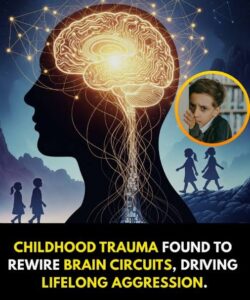
New research suggests that childhood trauma may be connected to changes in brain pathways involved in motivation and pleasure, helping to explain why some adults struggle to experience joy later in life.
The study, led by Kathleen O’Brien of Temple University and Vishnu Murty of the University of Oregon, examined the relationship between childhood trauma, the brain and anhedonia, the reduced ability to experience pleasure from things that would normally feel rewarding.
The researchers studied a large group of people using questionnaires that explored childhood trauma and their ability to experience pleasure.
They then used functional magnetic resonance imaging, or fMRI, to examine how the hippocampus interacted with other areas of the brain involved in motivation.
The finding caught attention because the hippocampus is usually known for its role in memory.
Researchers found that among people who had experienced childhood trauma, those with disrupted connections between the hippocampus and motivation-related brain regions experienced more anhedonia than those whose pathways were less disrupted.
In simple terms, the experience of childhood trauma appeared to matter differently depending on how these brain pathways were functioning. That distinction is important.
The study does not say that everyone who experiences trauma during childhood will struggle to feel joy as an adult.
It does not suggest that childhood trauma permanently damages every person’s brain either. Rather, the findings point to a possible vulnerability.
Childhood experiences may interact with the developing brain in ways that influence how some people respond to reward, motivation and pleasure years later.
The hippocampus is particularly interesting because of its role in memory. It helps the brain form and retrieve memories, but scientists now understand that it does much more than simply store the past.
Its connections with other brain systems appear to influence how past experiences affect behaviour in the present.
Childhood is a sensitive period. A child who repeatedly experiences fear, neglect, violence, humiliation or severe emotional distress does not have the same ability as an adult to leave the situation or make sense of what is happening.
That the child’s brain is still developing, does not mean every difficult childhood produces the same outcome.
People respond differently to adversity, and supportive relationships, a safe environment and other protective factors can make a significant difference.
But researchers are increasingly interested in what happens when early stress becomes part of a child’s everyday environment.
Previous research has already connected childhood trauma with anhedonia and changes in the brain’s reward systems.
The new study adds another piece by pointing specifically toward the interaction between the hippocampus and mesolimbic pathways involved in motivation and reward.
The result may eventually help researchers understand why some people who experience childhood trauma develop difficulties with pleasure while others do not.

Psychiatrist and trauma researcher Bessel van der Kolk has long argued that trauma can continue to affect people after the original danger has passed.
His work has drawn attention to the way traumatic experiences can influence the brain and body long after childhood.
As he has put it, “The problem with trauma is that it starts off with something that happens to us, but that’s not where it stops.”
That idea is worth considering when we look at adults who seem emotionally distant. Sometimes the person who cannot celebrate an achievement may not be ungrateful.
The person who constantly turns down invitations may not hate people. The person who says, “I don’t feel anything anymore,” may not simply be looking for attention. There may be a history behind the response.
Anhedonia can occur in several conditions, including depression, and it can also appear in people without a formal diagnosis of a mental disorder.
It is therefore important not to diagnose someone simply because they appear withdrawn or less enthusiastic.
A brain scan cannot tell the complete story of a person’s emotional life.
The researchers themselves are interested in going further. Understanding the brain pathways involved could eventually help scientists identify possible targets for treatment and better understand the relationship between memory, motivation and pleasure.
There is still much to learn. But the research raises an uncomfortable question: what if some of the adults we describe as cold, lazy or unmotivated are actually carrying the effects of experiences they had no power to escape as children?
A painful childhood does not automatically determine the adult a person will become. The brain is capable of change, and recovery is possible.
Still, the findings remind us that childhood does not simply disappear because a person grows older. Sometimes, the past follows the brain into adulthood.
And sometimes, the person who appears to have lost the ability to enjoy life may simply be living with a wound nobody can see.
Not every unhappy adult has suffered childhood trauma, and not every person who experienced childhood trauma will struggle with joy.

But understanding the possible connection can help us replace quick judgment with compassion—and perhaps encourage people who are struggling to seek help rather than suffer silently.