


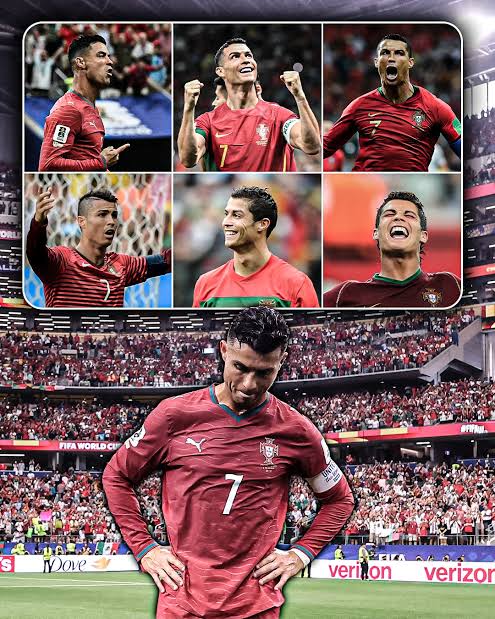
Cristiano Ronaldo: The Man Who Conquered Football but Never Captured the World Cup
When the final whistle confirmed Portugal’s 1–0 defeat to Spain at the 2026 FIFA World Cup, Cristiano Ronaldo stood quietly as a dream that had driven him for more than two decades finally came to an end. There were no excuses, no attempts to blame fate or fortune.
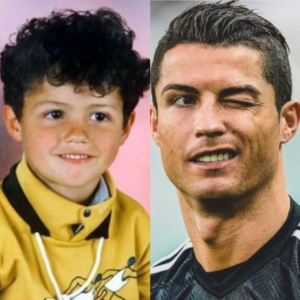
“It was my last World Cup,” he said afterwards, adding that he left the tournament “with a clear conscience” because he had given everything he could to his country.
His words revived a debate that has followed him throughout his career: can a player who never won the FIFA World Cup truly be regarded as the greatest footballer of all time?
It is a compelling question, but perhaps it asks us to judge one extraordinary career by the only prize it never contained instead of the remarkable legacy it built.
Born on February 5, 1985, in Funchal on the Portuguese island of Madeira, Ronaldo’s journey was never destined to be easy. Leaving home at a young age to pursue football demanded courage long before it brought fame.
Years later, he would capture the philosophy that shaped his rise in a simple sentence: “Talent without work is nothing.” It was not a slogan. It was the standard by which he lived.
That mindset caught the attention of Sir Alex Ferguson, who brought the teenage winger to Manchester United in 2003.
Under Ferguson’s guidance, Ronaldo evolved from a dazzling prospect into one of the world’s finest footballers, winning three Premier League titles, the UEFA Champions League and his first Ballon d’Or.
For many players, that would have been the defining chapter of a career. For Ronaldo, it was merely the beginning.
His move to Real Madrid transformed greatness into legend. Wearing the famous white shirt, he became the club’s all-time leading scorer with 450 goals in just 438 appearances and inspired Madrid to four UEFA Champions League titles.
If the World Cup was the summit that remained beyond reach, Europe’s biggest club competition became the mountain Ronaldo conquered more convincingly than anyone else. On the grandest nights, pressure rarely diminished him; it revealed him.
New challenges followed at Juventus and later in Saudi Arabia, where he continued to score with astonishing consistency. Few athletes have reinvented themselves so successfully across different leagues, cultures and generations.
Ronaldo once said, “I don’t chase records; the records chase me.” Over time, what sounded like supreme confidence became an undeniable statement of fact.
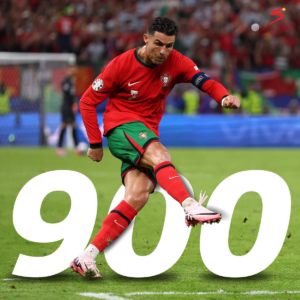
By then, counting his achievements had become less important than appreciating their scale. Five Ballon d’Or awards, five UEFA Champions League titles, league crowns in England, Spain and Italy, more than 900 senior career goals, and records for both international goals and appearances placed him among football’s most accomplished players. Yet statistics alone never explained his success.
“I’ve always believed that dreams are not what you see in your sleep; dreams are things which do not let you sleep.” Ronaldo’s relentless pursuit of improvement became his greatest advantage. While talent introduced him to the world, discipline kept him there.
His obsessive commitment to training, recovery and self-improvement allowed him to remain among football’s elite long after many of his contemporaries had stepped away from the highest level.
Away from the pitch, Ronaldo built the CR7 brand into a global business spanning hospitality, fashion, fitness and lifestyle.
He also used his influence to support children’s hospitals, disaster relief efforts and families facing medical hardship, often away from the glare of publicity. Those quieter acts revealed another side of a man more commonly measured by goals than generosity.
Internationally, Ronaldo transformed Portuguese football. He captained his country to its first major international trophy at UEFA Euro 2016 before adding two UEFA Nations League titles, achievements that permanently changed Portugal’s place in the game.
Looking back, he suggested that Euro 2016 carried the same emotional significance for him as winning a World Cup because it fulfilled a dream generations of Portuguese players had pursued.
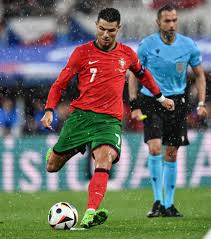
Even so, football’s greatest prize remained elusive. Across six World Cup appearances, Ronaldo delivered unforgettable goals, iconic celebrations and moments that enriched the tournament’s history.
Yet the famous golden trophy never found its way into his hands. Portugal’s defeat to Spain in 2026 marked the end of that pursuit, but it did not diminish everything that came before it.
Football has never been an individual sport. Johan Cruyff never won the World Cup. Ferenc Puskás never lifted it.
George Best never even played in one. Their greatness was never measured by a single competition but by the extraordinary impact they had on the game. The same standard should apply to Cristiano Ronaldo.
The World Cup may be the one jewel missing from Ronaldo’s crown, but crowns are not defined by what they lack. They are defined by everything they contain.
He redefined professionalism, expanded football’s understanding of longevity and inspired millions to believe that relentless work could carry ordinary beginnings to extraordinary heights.
The World Cup never found its way into Cristiano Ronaldo’s hands. But football did. It embraced his ambition, celebrated his brilliance and surrendered countless records to his relentless pursuit of excellence.
The greatest careers are not defined by a single trophy but by the lives they change, the standards they set and the history they leave behind. By that measure, Cristiano Ronaldo did not simply play football, he reshaped it. The World Cup was the one dream that escaped him. Greatness never did.














Wow that’s good
That’s why the debate never dies. Messi has the World Cup. Ronaldo has the insane club dominance and longevity.
One conquered nations. The other conquered clubs and time itself.
It makes him more human too. Even the most relentless winner in football history has one mountain he couldn’t climb. And he still kept coming back for it until he was 40.
He’s still the GOAT