


US and Iran Exchange Fresh Missile and Drone Strikes as Ceasefire Talks Stall
The United States and Iran have carried out fresh military strikes against each other, escalating tensions and further weakening ongoing efforts to secure a ceasefire agreement between both sides.
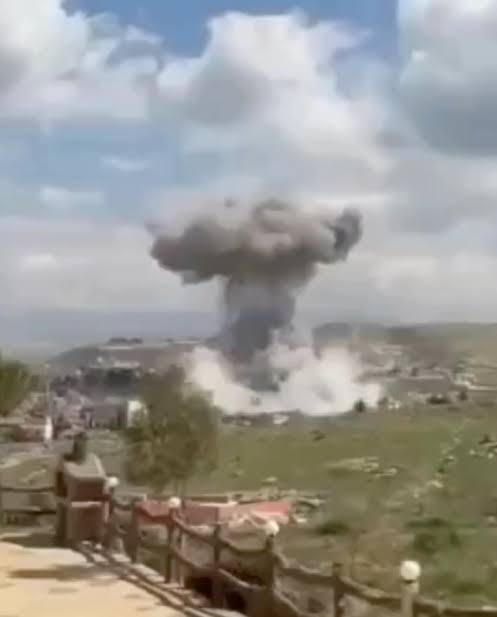
The latest confrontation involved missile and drone attacks across key strategic locations in the Gulf region, including waters near the Strait of Hormuz and Iranian-controlled areas.
US Central Command (Centcom) said it launched a Hellfire missile strike that disabled an unladen tanker attempting to breach what it described as a blockade near the Strait of Hormuz.
The vessel, identified as the Botswana-flagged M/T Lexie, was reportedly heading toward Iranian waters after ignoring repeated warnings.
Centcom also confirmed further operations targeting sites on Iran’s Qeshm Island, including a military ground control station, as well as defensive actions against incoming Iranian missile and drone attacks directed at US positions in Kuwait and Bahrain.
According to US military statements, air defences in coordination with regional allies intercepted multiple missiles and drones, with some failing to reach their targets or breaking apart mid-air.
Officials said no US personnel were killed or injured in the incidents.
In response, Iran’s Islamic Revolutionary Guards Corps (IRGC) claimed it had struck the US Fifth Fleet headquarters in Bahrain using missiles and drones, describing the attack as retaliation for the strike on Qeshm Island.
However, the US military denied that any such hit was successful.
Kuwait and Bahrain activated air defence systems during the exchange, with authorities urging residents to avoid debris and remain cautious amid ongoing interceptions of aerial threats.
The renewed violence underscores the growing instability in the region and the continued breakdown of diplomatic efforts aimed at reaching a ceasefire agreement between Washington and Tehran.
US officials insist negotiations remain possible, with Secretary of State Marco Rubio stating that progress had been made in discussions over Iran’s nuclear programme.
However, Iranian officials have signalled growing resistance, linking the breakdown in talks to wider regional military actions.
Iranian Foreign Minister Abbas Araghchi said ceasefire commitments were being undermined by continued strikes, warning that violations on one front would affect broader negotiations.
The escalation comes amid wider unrest in the Middle East, including ongoing Israeli air operations in Lebanon and tensions across several flashpoints involving regional and international forces.
Analysts warn that the latest exchange of strikes reflects a dangerous stalemate, with diplomacy stalled and military confrontations expanding across multiple theatres in the region.