


By: Chioma Madonna Ndukwu
The Way We Live: Lunch Was Still on the Way

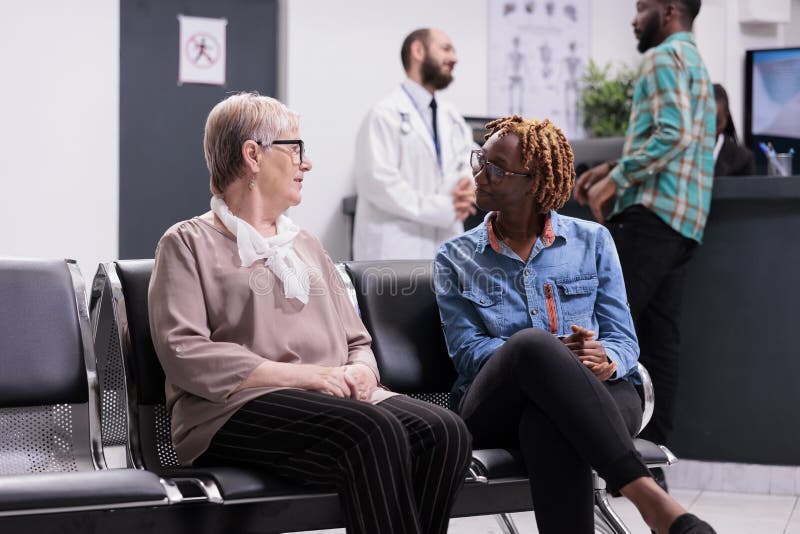
The waiting room was unusually quiet for a Monday morning. Every few minutes, a nurse opened the consulting room door, called a name and disappeared again, while everyone else returned to the silent ritual of staring at phones or pretending not to notice one another.
James glanced at the empty chair beside him just as a woman walked over.
“Is this seat taken?”
He shook his head.
She thanked him, sat down and immediately answered a ringing phone.
“No, don’t postpone the meeting,” she said confidently. “I’ll be back before noon. Just send the documents to my email.”
She ended the call only for another to come through.
Then another.
By the fourth call, James smiled.
“You must be the busiest person in this hospital.”
She laughed.
“I wish my body knew that.”
“My name’s James.”
“I’m Rachel.”
The conversation unfolded as though they had known each other much longer than fifteen minutes. Rachel spoke about work with the enthusiasm of someone who genuinely loved what she did.
She complained about traffic, joked about hospital waiting times and rolled her eyes when her phone rang again.
James couldn’t help laughing.
“You’re popular.”
She sighed dramatically.
“Or everyone suddenly remembers me when I finally sit down.”
A moment later, her expression changed. Another call. She answered without looking at the screen.
“I’ve already told you I’m at the hospital.”
There was silence.
“No… I’m not angry.”
Another pause.
“I just wish we didn’t have this conversation every time something goes wrong.”
She listened for a few seconds before ending the call.
James looked away, giving her space.
After a while she smiled, though this one came with tired eyes.
“My husband,” she said quietly. “We’ll sort it out.”
Before James could reply, Rachel placed a hand on her stomach.
“I’ve just realised something.”
“What?”
“I’m starving.”
They both laughed. Without hesitation, she picked up her phone and ordered lunch.
“If the doctor takes too long,” she joked, “at least my food will arrive before I lose all my patience.”

For a while they spoke about ordinary things that rarely make headlines. Childhood memories. Favourite meals. The strange way adults keep promising themselves they’ll slow down after the next busy week.
Then Rachel became unusually quiet. She stared ahead without really looking at anything.
“You ever get tired in a way sleep can’t fix?” she asked.
James nodded slowly.
“Sometimes.”
She breathed deeply.
“I don’t know why, but lately I feel as though life is running ahead of me while I’m trying to catch up.”
The words stayed between them.
James wasn’t someone who forced conversations toward faith, but he had learned to recognise moments when people weren’t asking for answers. They were asking not to feel alone.
“Would it be alright,” he asked gently, “if I prayed with you?”
Rachel looked at him for a second before smiling.
“I’d like that.”
There, in a hospital waiting room filled with strangers, they bowed their heads. The prayer lasted less than a minute.
No dramatic words, no raised voices, just a quiet request for strength, peace and hope.
When they looked up, the nurse was already standing by the door.
“Rachel?”
She stood, smiled warmly at James and said, “Thank you. Maybe we were meant to meet today.”
“I think so too.”
She disappeared behind the consulting room door. James picked up the novel he had been pretending to read all morning. He never reached the next page.
A cry echoed through the corridor. It wasn’t loud at first, but it carried something that made everyone in the waiting room look up at once.
Within seconds, nurses hurried past. A doctor called for emergency equipment. Footsteps replaced silence.
Nobody spoke. Everyone understood enough not to ask questions. Several minutes later, a nurse approached James.
“Were you with the lady who just went in?”
He stood instinctively.
“We were talking while we waited.”
The nurse lowered her voice.
“Would you mind coming with me?”
James followed her, his heart beating faster with every step. Inside the consulting room, Rachel lay perfectly still.
Only minutes earlier she had been laughing about lunch. Now the room had fallen into a silence no words could disturb.
James remained where he was, unable to move. Then a phone began to ring. One of the nurses answered.
“Hello?”
She listened briefly before saying, “Yes… we’re at the hospital.”
When she ended the call, she looked at James.
“It was the delivery rider.”
Neither of them said anything.
The lunch had arrived exactly on time. Its owner never would. A few moments later, the phone rang again. This time, it was her husband.
The nurse answered softly.
“Please come to the hospital as soon as you can.”
She said nothing more. Some news is too heavy to be carried over a telephone line.
James remained there until Rachel’s family arrived. He realised something that still unsettled him years later.
In a city full of people who had loved her for decades, a stranger had unknowingly shared her final conversation.
He had been the last person to hear her laugh. The last to hear her talk about tomorrow. The last to hold her hand in prayer.
That evening, James called an old friend in Glasgow.
“I can’t stop thinking about today,” he admitted.
His friend was quiet before replying.
“My neighbour died last winter. We spent weeks arguing over a parking space. I always assumed we’d laugh about it one day. We never got that day.”
Days later, James spoke with his cousin in Adelaide, who told him about an elderly customer at her café.
“He always ordered two coffees every Friday,” she said. “One for himself and one for the friend he kept promising to bring. One Friday, the friend came alone.”
Not long afterwards, a colleague in Halifax shared another story.
“A man in our office never left without calling his mother. One evening he was rushing to catch a flight and said he’d call her after he landed. He never did.”
James realised those stories were never really about hospitals, cafés or airports, they were about tomorrow.
Human beings treat tomorrow as though it belongs to us. We postpone forgiveness until tempers cool. We delay visits because next weekend looks easier. We silence calls, thinking there will be another opportunity. Sometimes there is, and sometimes there isn’t.
As James reflected on Rachel’s final morning, he remembered something Maya Angelou once said: “People will forget what you said, people will forget what you did, but people will never forget how you made them feel.” Rachel’s warmth had outlived every phone call she answered.
Another thought came from Viktor Frankl, who wrote, “Everything can be taken from a man but one thing: the last of the human freedoms, to choose one’s attitude.”
Even with worries she never fully explained, Rachel had chosen kindness toward a stranger she would never meet again.
James still thinks about the lunch that arrived on time.
Not because of the food, but because it reminds him how ordinary life can change without asking anyone’s permission.
We wake up believing the day belongs to us. We make appointments, argue over small things, postpone apologies and promise to return a missed call after we’re less busy. Most days, those plans work out exactly as we expect.
Then there are the days that quietly remind us we were never promised ownership of tomorrow, only the responsibility to live today with grace.

Moral:
The conversations we postpone often feel unimportant until life reveals they were never guaranteed another chance. Live with kindness, make peace while you can, and never underestimate the value of an ordinary moment.
Comment Hook:
Who was the last person whose ordinary words stayed with you long after they were gone? Without revealing private details, share the lesson they left behind. Your story may encourage someone to make a call, offer forgiveness or cherish a conversation before tomorrow arrives.





















Wow nice outline
https://shorturl.fm/acNA8