


South Africa Admits Xenophobia Backlash Is Hurting Businesses, Entertainers Across Africa
South Africa’s government has acknowledged that growing accusations of xenophobia are beginning to take a toll on its citizens and businesses across Africa, with some entertainers reportedly losing major sources of income as resentment spreads beyond its borders.
The country’s Minister of Justice and Constitutional Development, Mmamoloko Kubayi, said authorities are increasingly concerned about the economic and reputational consequences of recent events that have sparked outrage in several African countries.
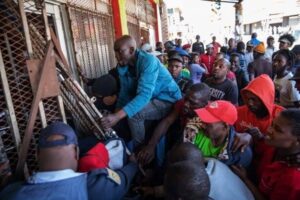
Speaking during an interview with South African broadcaster SABC on Sunday, Kubayi insisted that recent operations targeting undocumented migrants were not driven by xenophobia but were aimed at addressing illegal immigration.
According to her, the government is now working to contain the fallout, particularly for South African companies and citizens operating in other parts of Africa.
“We cannot deny that there has been a backlash,” Kubayi said, explaining that government agencies have begun engaging businesses affected by the growing hostility.
She added that support and consular assistance are being provided to South African firms facing challenges abroad.
The minister revealed that several South African entertainers have also become unintended victims of the controversy.
She said many artists who depend heavily on performances across Africa are now seeing bookings cancelled, resulting in significant financial losses.
Kubayi disclosed that one performer personally informed her that all scheduled shows on the continent had been called off.
The development comes amid renewed criticism of South Africa following reports of hostility towards foreign nationals and periodic anti-immigrant campaigns that have triggered concern across the continent.
Over the years, incidents of violence and intimidation directed at migrants have strained relations between South Africa and several African nations, including Nigeria, Ghana, Malawi and Zimbabwe.
The latest tensions have fueled fresh calls for African unity and protection of migrants living legally in foreign countries.
Kubayi stressed that migrants who reside lawfully in any country deserve protection, urging African nations to safeguard South Africans within their borders just as South Africa is expected to protect foreign nationals who live there legally.
The controversy has also spilled into the sporting arena. Last week, South Africa captain Ronwen Williams expressed disappointment after noticing what he believed was a lack of support from fellow Africans during Bafana Bafana’s opening match at the 2026 FIFA World Cup.
Following South Africa’s 2-0 defeat to Mexico, Williams said he was saddened to see many African fans cheering for the opposition rather than backing an African representative on football’s biggest stage.
He noted that African countries have historically rallied behind one another during World Cup tournaments and questioned why South Africa appeared to be experiencing a different reality.
The goalkeeper suggested that lingering resentment linked to xenophobia may be contributing to the apparent lack of continental solidarity.
As diplomatic efforts continue, South African authorities face the challenge of repairing strained relationships and convincing neighbouring countries that recent immigration enforcement measures should not be viewed as hostility toward fellow Africans.