

“I Know Say One Day You Go Make Me Proud”: Papilo Inspires Barça’s Next Dreamers
John Bash never waited for my question to end.
“The goal was sweet,” he said, stretching out both hands to show how he had celebrated. “I scored today. I see myself replacing Messi when he leaves the stage.”

His teammates laughed, because they had watched the celebration already. One of them nudged him playfully before chasing another ball across the pitch. Training had officially ended, yet nobody seemed interested in leaving.
That is the privilege of childhood. The final whistle only signals the beginning of another game.
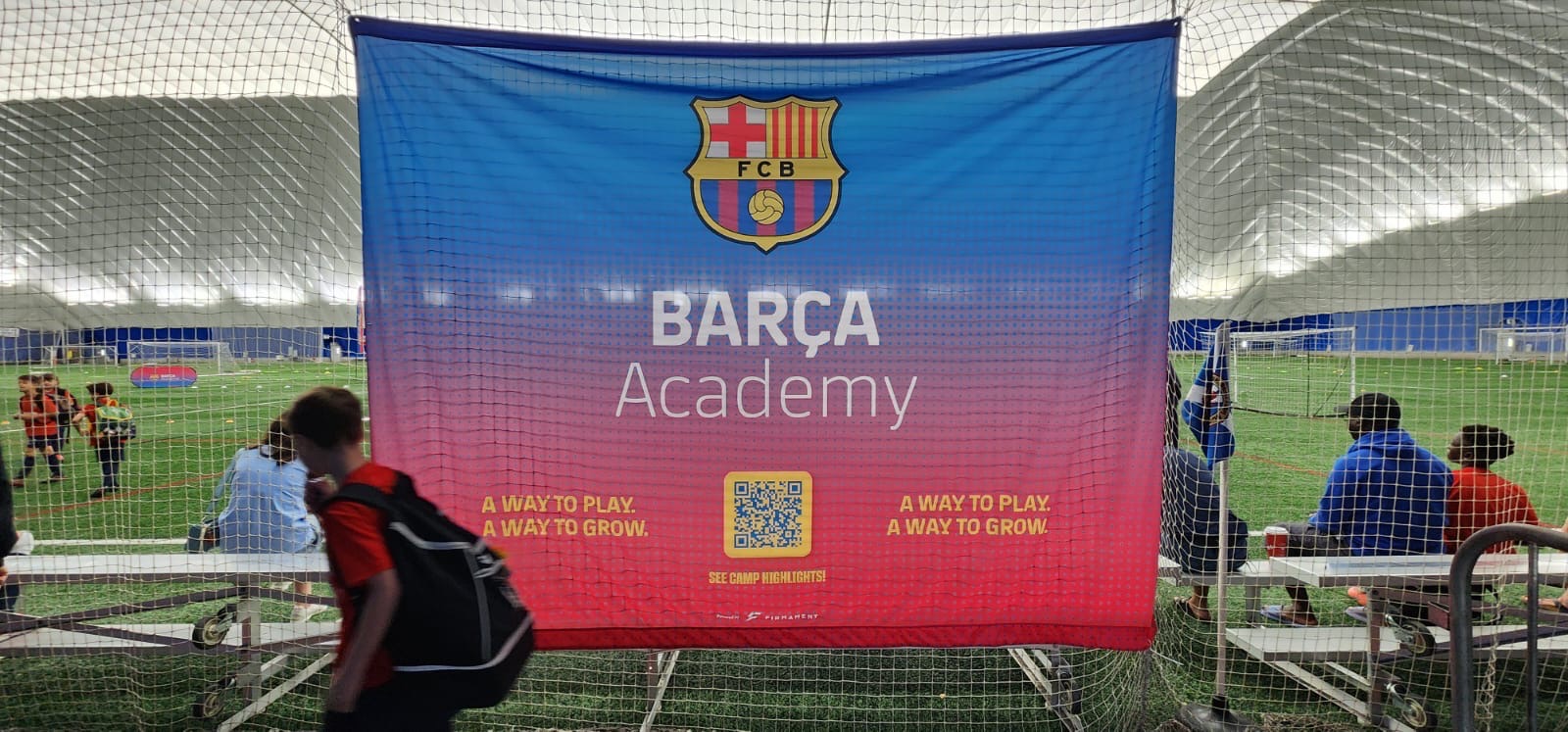
The Barça Academy camp in Canada was filled with scenes like that. Coaches gathered small groups of children to explain movement and positioning before sending them back to try again.
Parents stood a few metres away, applauding neat passes, missed chances and every brave attempt to dribble past an opponent.
Nobody measured the afternoon by the scoreline. The smiles around the field suggested everyone had already won something.
A young voice called my attention again.
“I know Papilo. I know Okocha.”
It was Chimdire Nnamdi, a Nigerian boy whose parents now live in Canada.
When I asked which footballer he hoped to become, he looked at me as though the answer had always been obvious.
“I want to be the two of them in one.”

I laughed. Not at the ambition, but at the certainty. Children have a way of speaking about tomorrow as though they have already visited it.
His answer followed me around the pitch for the rest of the afternoon. Then another sentence quietly joined it.
“Papilo, I know say one day you go make us proud.”
Millions of Nigerians still remember those words from the famous Peak Milk television commercial.
Time has done something remarkable with that slogan. The advert faded from our screens, but the sentence refused to disappear.

It travelled with Nwankwo Kanu from Ajax to Arsenal, through Olympic glory in Atlanta and onto every stage where Nigerians proudly called him Papilo.
Watching children chase footballs in Canada, it became easy to understand why those words have refused to grow old.
Football rarely introduces its future stars with grand announcements. It usually begins like this.
A child stays behind after training because one more shot feels necessary. Another refuses to stop talking about the goal he has just scored.
Someone else tells a reporter he wants to combine the brilliance of Papilo with the magic of Jay-Jay Okocha. Years later, the world describes those same children as extraordinary.
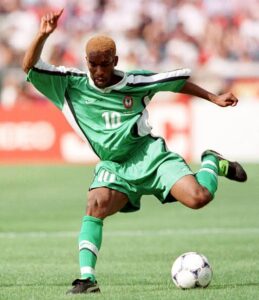
Long before Austin Okocha became the player defenders dreaded, he was entertaining friends on neighbourhood pitches in Nigeria.
Victor Osimhen first learned resilience in Lagos, where football shared space with the everyday demands of survival.
Lionel Messi spent part of his childhood fighting doubts about his physical growth before dazzling the world from Barcelona.
Cristiano Ronaldo left Madeira carrying little more than extraordinary discipline.
Sadio Mané’s journey began in Bambali, a village that had never imagined it would one day become part of football’s global conversation.
Their careers eventually crossed continents. Their childhoods were much closer than geography should suggest
Whether it was Lagos, Rosario, Madeira or Bambali, the routine hardly changed. Find a ball, gather a few friends and play until somebody called you home.
Listening to the coaches at Barça Academy, I found myself thinking about children back home.
Around sunset in Ajegunle, Aba, Owerri, Kano, Jos, Uyo and countless other communities, football still pulls children out of their houses.
Goalposts appear almost magically, marked by slippers, stones or school bags. Somebody volunteers to keep time.
Another insists he was fouled. The smallest player usually argues the loudest.
Nothing about those scenes looks expensive. Everything about them looks familiar.
The distance between those neighbourhoods and a professionally organised academy in Canada stretches across oceans, yet the excitement in a child’s face refuses to recognise borders.
John Bash reminded me of that every time he replayed his goal. Chimdire reminded me every time he mentioned Papilo and Okocha.
Neither boy was trying to deliver an inspirational speech. They were simply talking about football.
Sometimes adults complicate what children understand instinctively. A football dream does not begin inside a packed stadium.
It begins on afternoons like this one, where a coach patiently explains a misplaced pass, teammates celebrate an ordinary goal as though it belongs in a World Cup final, and parents clap for effort just as loudly as they clap for success.
As I prepared to leave, the children had already started another match of their own. The coaches were packing equipment. Parents were calling out that it was time to go home. Hardly anyone listened.
As I prepared to leave, the session was over, but the children had already organised another game. Parents smiled patiently from the sidelines, knowing it would take several more calls before anyone agreed to go home.
The old Papilo slogan returned again, carrying the same warmth it had carried for years.
“I know say one day you go make us proud.”
John Bash ran after another loose ball before disappearing into the crowd. Chimdire Nnamdi was still talking football.

The afternoon ended, but the conversations did not. Somewhere between those young voices, another football story had begun.