


By: Chioma Madonna Ndukwu
The Way We Live: I Was About to Cross the Expressway Until Strangers Shouted at Me
“Hey! Hey! Don’t cross! Go back!”
I stopped immediately. Several women were shouting in my direction along Oshodi Road, around Ladipo bus stop in Lagos. Their voices carried enough urgency to make me reconsider my next step.
I had been trying to cross the busy expressway on my way to school. I did not understand the Yoruba words some women were using, but their gestures and worried expressions were clear.
For a moment, I wondered whether a vehicle was approaching or something dangerous had happened ahead. I withdrew from the roadside, abandoning my attempt to cross.
One of the women walking nearby turned towards me. “Ah, you didn’t see them?”
“See who?” I asked, still trying to understand why crossing the road had suddenly become such a serious matter.
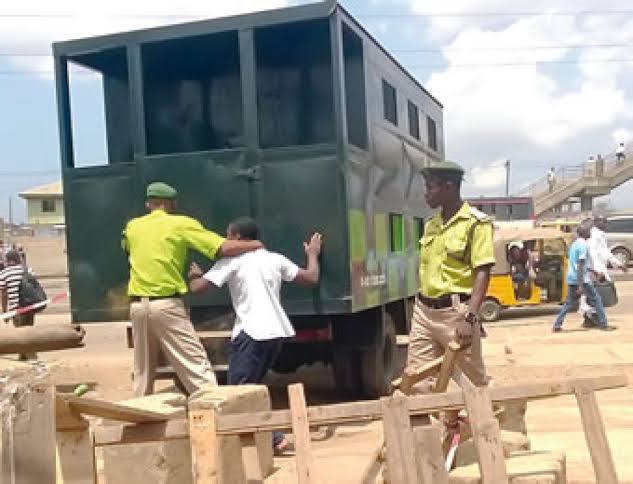
She pointed towards a green vehicle parked nearby. Inside were men belonging to the enforcement team popularly known as Kick Against Indiscipline, or KAI.
Some pedestrians had already been taken into the vehicle, while others were arguing with the officials or attempting to get away. The scene looked more like an arrest operation than the ordinary afternoon traffic I had expected.
“My dear, if they had caught you, you might have spent between ₦30,000 and ₦40,000 trying to secure your release,” the woman told me.
I stared at her in disbelief. I had not even realised that the authorities were enforcing the rule against crossing the expressway outside designated places.
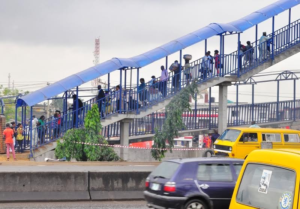
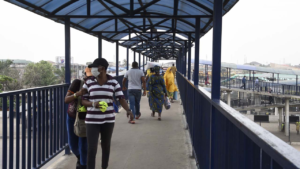
We eventually joined other pedestrians and climbed the footbridge. As I made my way across, one thought stayed with me: what I had considered an ordinary shortcut could have landed me in serious trouble or exposed me to a life-threatening accident.
Why Do People Risk TheiLagos is a city where almost everyone seems to be racing against time. Workers hurry to catch buses, traders rush to their shops, students try to beat lateness, and passengers grow impatient when traffic refuses to move.
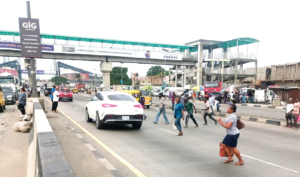
In that daily struggle, a pedestrian bridge can look like an unnecessary delay. Instead of climbing the steps, some people wait for a gap in traffic and dash across several lanes.
But a moving vehicle does not always give a pedestrian enough time to escape. One misjudgment, a driver’s inability to brake quickly or a sudden movement can turn a hurried crossing into a tragedy.
Benjamin Franklin’s familiar warning, “An ounce of prevention is worth a pound of cure,” captures the importance of avoiding danger before it happens.
Using a pedestrian bridge may take extra minutes and physical effort, but those minutes are a small price to pay for reaching one’s destination alive.
The Lagos State Government has repeatedly warned pedestrians against crossing highways illegally and directed enforcement agencies to apprehend offenders. Such enforcement is intended to discourage dangerous behaviour and protect lives.
Yet, the question remains: if the bridge is the safer option, why do some people still prefer the road?
The answer is not always laziness or indiscipline. In some places, pedestrians have raised concerns about robbery, harassment and other security problems around pedestrian bridges.
A person who has been threatened or robbed on a bridge may become reluctant to use it again. Another person who has heard frightening accounts from neighbours may choose the dangerous road crossing, believing it offers a quicker escape.
This creates a difficult situation. The road exposes pedestrians to speeding vehicles, while an unsafe bridge can expose them to criminals who take advantage of isolated areas or vulnerable commuters.
A pedestrian should not have to choose between risking a collision with a vehicle and worrying about being attacked while using public infrastructure.
That is why enforcement alone cannot solve the problem. The authorities must continue to discourage illegal crossings while improving security around pedestrian bridges and responding to credible reports of criminal activity.
Adequate lighting, visible security patrols and prompt attention to complaints could help restore confidence in bridges where commuters fear attacks.
Pedestrians also have a responsibility to report suspicious activity and avoid treating frightening rumours as proof that every bridge is unsafe. Practical precautions and reliable information are better than abandoning safety altogether.
As I reflected on what happened at Ladipo, I realised how easily the afternoon could have taken a different turn. I had been focused on getting to school, not considering the risks of the route I was about to take.
The women who shouted at me did not know me. They had no personal reason to stop me, yet their warning made me retreat before I understood what was happening.
Their intervention gave me an opportunity to reconsider my decision. It also reminded me that people around us sometimes notice dangers we are too distracted, hurried or confident to recognise.
In Nigeria, we often hear the expression, “Prevention is better than cure.” It is a familiar saying, but its meaning becomes clearer when a moment of caution separates us from a possible disaster.
The lesson is not limited to pedestrian bridges. We take similar risks when we rush across roads, board moving buses, ignore warning signs or make decisions simply because everyone around us appears to be doing the same thing.
A shortcut can save a few minutes, but it can also create consequences that last a lifetime. Being careful is not cowardice, and choosing a safer route is not a sign of weakness.
The government must enforce safety regulations fairly and address genuine security concerns. Commuters, in turn, must recognise that rules intended to protect lives cannot work if everyone treats them as optional.
That afternoon at Ladipo, I went back because strangers shouted at me. I left with a lesson worth remembering: sometimes, the safest decision is not the fastest one, and listening to a warning can make all the difference.


















Leave a comment