


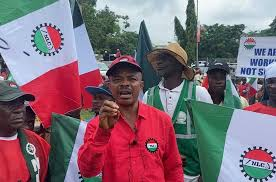
NLC Gives Tinubu Two Weeks to Cut Petrol Price, Review Minimum Wage
The Nigeria Labour Congress (NLC) has given President Bola Tinubu’s administration until October 23 to reduce petrol prices, begin negotiations for a new national minimum wage and implement outstanding agreements with organised labour.

The ultimatum, which takes effect on Friday, October 9, followed a joint meeting of the union’s National Executive Council and Central Working Committee at Labour House in Abuja.
In a communiqué signed by NLC President Joe Ajaero and released on Thursday, the union warned that the Federal Government would face further action if it failed to meet the demands within two weeks.
The labour union wants petrol prices reduced to the level they were when the N70,000 national minimum wage was signed into law in 2024.
It also called for negotiations on a new minimum wage to begin immediately, insisting that the current earnings of Nigerian workers can no longer cover basic household expenses.
According to the NLC, the continued depreciation of the naira and rising living costs have weakened the purchasing power of workers, leaving many struggling to afford food, housing, healthcare, transportation and education.
The Congress further demanded that the Federal Government begin minimum wage renegotiations before the end of October.
It said the high cost of petrol had contributed significantly to rising transportation fares, food prices and the cost of other essential goods, worsening the financial difficulties facing workers and the wider population.
Beyond fuel price reduction and minimum wage negotiations, the NLC asked the government to implement the February 5, 2026, Terms of Settlement reached with the Joint Health Sector Unions and Assembly of Healthcare Professionals.
The union also called for action on demands presented by the Joint Public Sector Negotiating Council, alongside tax relief and immediate wage awards for workers.
It described the proposed relief measures as necessary steps towards easing economic hardship and protecting workers’ living standards.
The latest ultimatum comes days after public-sector workers under the Joint National Public Service Negotiating Council staged a three-day warning strike over rising living costs, petrol prices, wage awards and delays in minimum wage negotiations.
The NLC had also raised concerns in September about the declining value of the N70,000 minimum wage, arguing that rising expenses had made it increasingly difficult for workers to meet their daily needs.
President Tinubu approved the N70,000 minimum wage in July 2024 after negotiations involving the Federal Government, organised labour and the private sector. The agreement also provided for a review of the wage after three years.
Meanwhile, the Federal Government has announced measures aimed at reducing pressure from rising petrol prices.
The Minister of Finance and Coordinating Minister of the Economy, Taiwo Oyedele, said on Thursday that the government was negotiating a ceiling of N1,350 per litre on petrol’s ex-gantry or landing cost, subject to monthly reviews.
However, the proposed ceiling does not guarantee that petrol will sell for N1,350 per litre at filling stations.
The government also announced a 30-day petrol discount through the Nigerian National Petroleum Company Limited, with public transport operators given priority.
Oyedele maintained that the arrangement was not a return to fuel subsidy but an effort to sell petrol at cost.
The NLC, however, is demanding a more substantial reduction in pump prices, insisting that petrol should return to the level recorded when the current minimum wage was approved in 2024.
The union warned that failure to address its demands within the stipulated period could trigger further action, directing its affiliates and allies to remain prepared.
The Congress also reaffirmed its commitment to resisting policies it considers harmful to workers and the public.
The ultimatum comes amid additional labour tensions in Abuja, where the Federal Capital Territory council of the NLC began an indefinite strike over disagreements with the FCT Administration concerning teachers’ promotion policies.
The council had directed workers in public and private establishments to withdraw their services following the expiration of a seven-day ultimatum.
With the two-week deadline now in effect, the Federal Government faces renewed pressure from organised labour to address petrol prices, minimum wage concerns and outstanding agreements as the cost of living continues to weigh on Nigerian households.


















Leave a comment