


By: Chioma Madonna Ndukwu
The Way We Live: The Worship God Hears After Church Closes
“Jesuo, Jesuooo, Oloruko Aperire ooo, Jesu…”
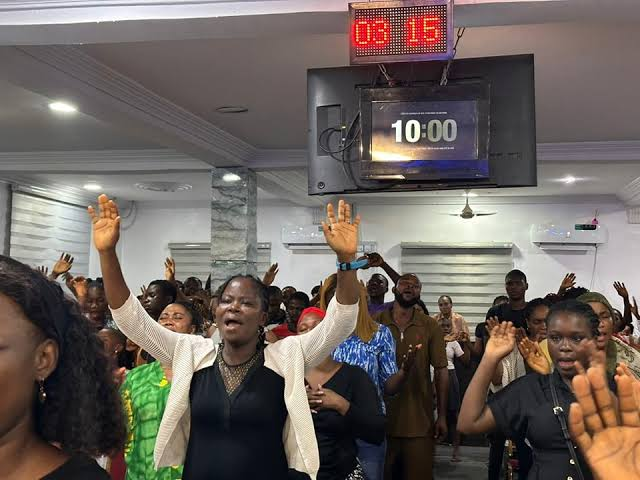
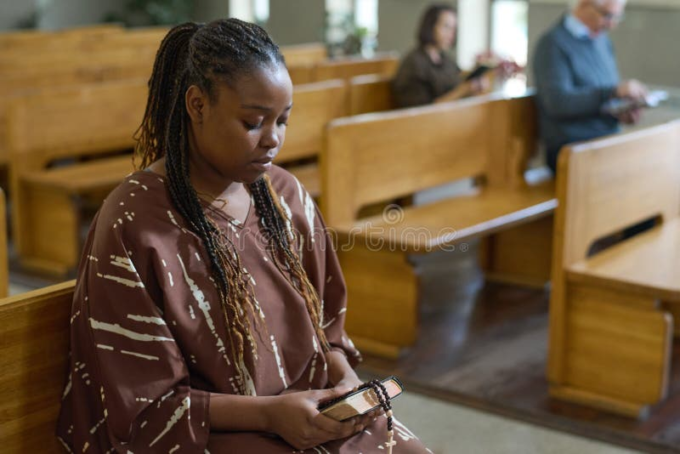
The song came from every corner of Dominion City, Amuwo-Odofin, Lagos State, this Sunday, and before I realised it, I was singing with everyone else, eyes closed, hands lifted.
I had not felt that close to God in a long time. I did not want anybody to interrupt the moment, and I certainly did not want the service to end. The worship was deep and sincere, and the praise was high and exuberant.
A woman standing close to me noticed my expression and asked, “Are you okay?”
“Yes,” I told her. “I just don’t want to leave.”
She smiled. “Then don’t think about leaving. Just worship.”
I laughed softly and turned back toward the altar. There are moments in church when you stop watching the clock because you are simply grateful to be there.
That was how I felt that morning. For a while, some of the things I had been carrying became lighter. I was still aware of them, but they no longer occupied every corner of my mind.
Then the resident Pastor, Pst CJAY spoke about the sovereignty of God and asked the congregation to consider Amos 3:3: “Can two walk together, unless they are agreed?”
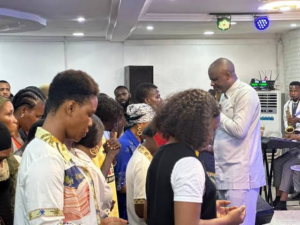
I had heard that verse before, but I heard it differently that day. Walking with God requires more than saying we belong to Him. Our choices have to say it too.
He later said, “Our lives must touch lives.”
That sentence brought church closer to home for me. Doctors, lecturers, politicians, artisans, students, business owners and other professionals who meet people every day.
A doctor may have the opportunity to encourage a frightened patient. A lecturer may change how a student sees herself. A trader may treat a difficult customer with patience.
Those things may never make headlines, but they say something about the person doing them.
I began thinking about how easy it is to worship sincerely inside church and then forget what we have heard once we step outside.
Pastor also told us not to make God our last option, after every human solution has failed, but to make Him our first option.
That one hit me.
How often do we run everywhere first, make every phone call, ask everybody for help, worry ourselves sick, and remember prayer only after everything else has failed?
The Word and prayer sessions continued, and afterward, people began sharing testimonies of healing. Some accounts were met with applause; others left people quietly taking everything in.
I watched faces change as the testimonies were told. Some people clapped. Some raised their hands. Others simply sat there, listening carefully, as though waiting for their own answer.
A man behind me asked someone, “Do you believe these miracles still happen?”
The other person replied, “Why shouldn’t they? People are testifying about what happened to them.”
I did not turn around, but I heard them clearly.
The conversation reminded me of something Pastor CJAY had said earlier about believing God and being specific in prayer. Mark 11:24 says that whatever we ask for in prayer, we should believe.
He also reminded us that miracles do not always make sense to human beings. Isaiah 53:1 asks, “Who has believed our report?”
Sometimes there is no neat explanation for what people experience in faith. Luke 1:37 gives Christians a simple answer: “For with God nothing shall be impossible.”
Still, I kept thinking about what happens after the testimony.
A person can receive a miracle and return to the same bitterness. Someone can cry during worship and still treat people badly on Monday. Another person can pray for favour and then cheat a customer.
That is where Christian life becomes serious.
Desmond Tutu once wrote, “My humanity is bound up in yours, for we can only be human together.”
I thought about those words because people are part of our everyday worship, whether we realise it or not. We meet them at work, in traffic, at school, in shops and inside our homes.
Martin Luther King Jr. said, “Love is the greatest power in all the world.”
That sounds simple until somebody insults you, a customer refuses to listen, a colleague annoys you, or someone online says something that gets under your skin. Then love becomes a decision. So does dignity.
A young woman who hopes to marry should not have to abandon good judgment simply because social media rewards attention. The things we post also say something about us.
The same applies to the marketplace. Good customer relationships matter. Respect matters. The way we speak to people matters. Christian faith should not disappear whenever business becomes difficult.
James 2:26 says faith without works is dead. Paul also writes in 2 Corinthians 5:17 that anyone in Christ is a new creation.
Those verses make me think about ordinary things rather than grand religious gestures. How do I speak? How do I respond? How do I behave when nobody is clapping?
Hebrews 11:11 also speaks about faith and consistency. Trusting God is not only for the days when everything works out exactly as we hoped.
By the time the service ended, I still wanted to remain inside that atmosphere. I wanted the singing to continue and the prayers to continue.
But people were already leaving. Phones came out, and even conversations resumed. As cars waited outside, Lagos was waiting too.
I walked out slowly. The song from earlier was still somewhere in my head:
“Jesuo, Jesuooo, Oloruko Aperire ooo, Jesu…”
I had entered church wanting to stay in God’s presence. I left wondering what I would do with that presence once I returned to ordinary life. Maybe that is where Sunday worship really begins to speak.
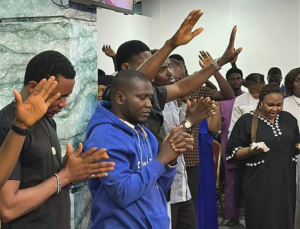
Church closes. The music stops. People go home. Then Monday comes, and nobody knows what you sang on Sunday. They only see how you treat them.
Personal Thoughts:
I went to church wanting to worship, but I left with something else to think about. The singing moved me, the prayers lifted my heart, and the testimonies strengthened my faith.
Still, what stayed with me most was the reminder that God should not only have a place in my Sunday. He should have a place in the way I speak, work, treat people, make choices and handle ordinary days. I am still thinking about that.
One Thing Worth Remembering:
Church may close, but worship does not have to end. What we do after the final song may say more about what we truly believe than everything we said while the music was playing.
Let’s Talk:
Have you ever left church feeling deeply connected to God, only to wonder later whether that feeling would change anything about the way you live? What does worship look like in your life after the music stops?




















Leave a comment