

By: Chioma Madonna Ndukwu
The Way We Live: Oma Thought It Was a Bush Baby. Then She Found a Newborn
“Did you hear that?”
Oma stopped and listened.
It was around 8 p.m. at the National Broadcasting Academy in Lagos, and a strange cry was coming from the direction of the bush path, very close to the hostel.

“Maybe it’s a bush baby,” someone said.
Nobody was certain. The sound came again, louder this time.
“No,” another woman said. “That sounds like a baby.”
We looked at one another. The evening suddenly felt different.
“Let’s go and check,” Madam Grace said.
She began moving towards the bush, praying as she went, while the rest of us followed cautiously. We had gone out looking for the source of a mysterious cry, not knowing what we would find.
Then we saw him.
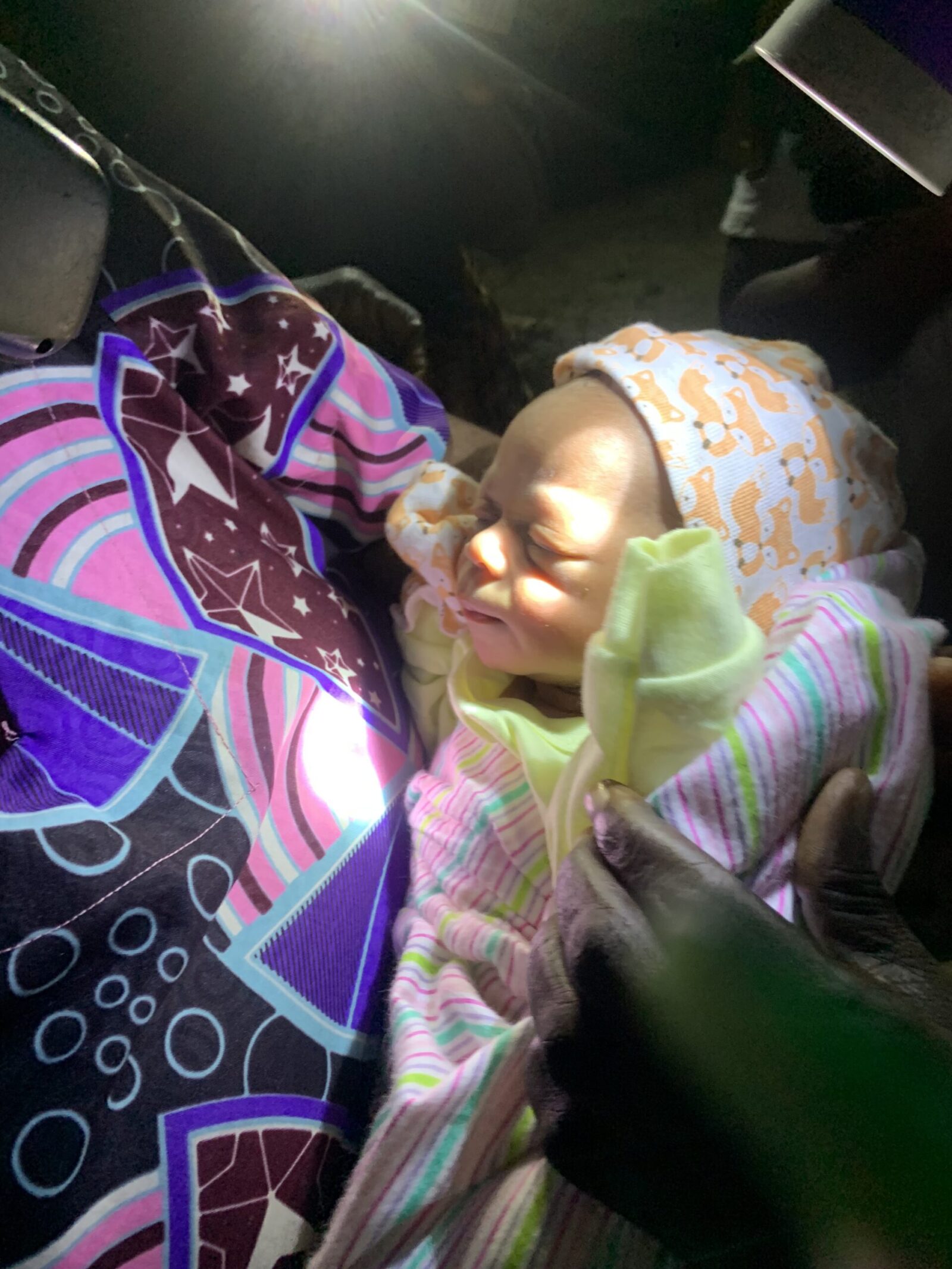
A newborn baby boy was lying beside the bush path, crying continuously.
For a moment, nobody spoke.
Madam Grace moved closer, still praying, and courageously picked up the baby. Other women gathered around her, trying to understand what had happened. I checked the baby’s pulse and noticed that he was weak.
He had cried for so long that his tiny body appeared exhausted, and there were concerns that ants or other insects might have bitten him while he lay there.
A few minutes earlier, we had been wondering whether a creature was hiding in the bush. Now a helpless human being was in our arms.
“How did he get here?” Esther asked.
Nobody had an answer.
But one of the women had seen something earlier that evening. She said she had noticed a young woman with a slim stature sitting beneath a tree within the academy premises.
There is a seat under that tree where people sometimes sit, relax and enjoy the evening air. The woman had reportedly been feeding and caring for the baby and had her face covered.
Later, she was seen moving towards the hostel area. Then she disappeared, and the baby remained behind.
The director of the academy was informed, while security personnel and the police were contacted. The baby was eventually taken to the police station and subsequently to the hospital for proper medical assessment and treatment.
Arrangements were also being considered for his protection and eventual placement in appropriate care.
But even after the authorities took over, one question refused to leave my mind.
Why would anyone leave such a beautiful little boy beside a bush path?
“What do you think happened to her?” Esther asked quietly.
I looked at the baby in Madam Grace’s arms before answering.
“I honestly don’t know. Maybe she was raped. Maybe the child’s father rejected the pregnancy. Maybe she was afraid of the stigma of having a baby outside marriage. Maybe she had no money to raise him alone, or feared that her own parents would disown her.”
Esther sighed.
“Then she needed somewhere to go.”
“Exactly,” I said. “And that is what keeps troubling me. We are asking why she left the baby here, but we should also be asking what happened to her before she got here.”
Those were possibilities, not facts. Until the woman is found and her circumstances established, nobody can honestly say what drove her to leave the child. But the questions are important.
What happens to a young woman who becomes pregnant outside marriage and is made to feel that she has brought shame upon her family? Where does she turn if the baby’s father rejects her? What happens when poverty, fear and social stigma leave her believing that there is no safe door to knock on?
None of those questions excuses abandoning a newborn. A child cannot be punished for the circumstances of his birth.
The baby had done nothing wrong. He did not choose whether his parents were married. He did not choose poverty, stigma or family expectations. He simply came into the world, and like every other human being, he had a right to live.
That evening, I kept thinking about how fortunate he was that someone heard his cry.
What if we had dismissed it as an animal?
What if everyone had assumed someone else would investigate?
What if Madam Grace had been too afraid to approach the bush?
We may never know how close that child came to a tragedy.
And that is why this story should not end with the discovery of the baby. It should begin a larger conversation about the women who may find themselves in desperate situations before a newborn ever reaches a bush path.
Government should not wait until abandoned babies make the news before acting. There should be accessible support for young women facing unwanted or crisis pregnancies, including safe temporary accommodation, counselling, medical care, social workers and responsible child-protection services.
A woman who cannot immediately care for her baby should have somewhere safe to seek help without being humiliated or treated as though her life has lost its value.
Such support would not encourage irresponsible behaviour. It would protect human life.
A young woman can be held accountable for abandoning a child while still being treated as a human being who may herself need protection and help. Those responsibilities are not mutually exclusive.
The South African Archbishop Desmond Tutu expressed the spirit of Ubuntu when he said, “My humanity is bound up in yours, for we can only be human together.”
That evening, nobody knew the baby’s name, history or future. Yet his humanity became our concern.
The American poet and civil rights activist Maya Angelou also reminded us that “I have found that among its other benefits, giving liberates the soul of the giver.”
Madam Grace gave something that evening. So did the women who gathered around her. They gave their attention, courage, time and care to a child who was a complete stranger to them.
They did not know how the story had begun. They simply refused to allow it to end in the bush.
Across Lagos, London, Johannesburg, New York and other cities around the world, vulnerable mothers and abandoned children remain part of difficult social realities.
The circumstances differ, but the question is similar: what does a society do when someone is too vulnerable to protect themselves?
A compassionate society does not wait for a tragedy before creating a safety net.
The baby eventually left the academy in the care of the authorities, and medical attention was sought for him. His future would depend on the decisions made by those responsible for his protection.
But the woman who had carried him there remained missing. I hope she is found safe. I hope that when she is found, she will be given the opportunity to tell her story.
And I hope that whatever that story reveals, we remember that two lives may need help here, not one. The baby needs protection. The mother may need help. Neither should be abandoned by society.
That night, we went towards the bush because we thought we were searching for the source of a strange cry. We found a newborn instead.
His cry had frightened us at first, but it eventually reminded us of something much bigger: sometimes the most vulnerable voice in a society is the one that cannot speak for itself.
And sometimes, all it takes to save a life is for somebody to stop, listen and care.
Personal Thoughts:
A child should never pay the price for the circumstances of his birth, and a frightened young mother should not have to face a crisis without a safe place to seek help.
One Thing Worth Remembering:
Protecting a newborn and supporting a vulnerable mother are not opposing responsibilities. A compassionate society should be able to do both.
Let’s Talk:
If a young woman became pregnant outside marriage and felt unable to care for her baby, would she know where to go for help in your community?
Editor’s Note:
This episode is inspired by the writer’s eyewitness account of a newborn found at the National Broadcasting Academy, Lagos, on August 12, 2026. The names, dialogue and personal reflections are fictionalised for literary purposes. The circumstances surrounding the woman and the baby had not been established at the time of writing.