


Tyla Is Not South Africa: Where Should Nigeria’s Anger Really Land?
A concert can be cancelled with a phone call, but anger is rarely that easy to switch off. That is what makes the growing controversy around Tyla’s planned Lagos concert more than a quarrel about music.
South African singer Tyla has announced that Lagos will be one of the stops on her A*POP World Tour, with the Nigerian date scheduled for December 22, 2026.
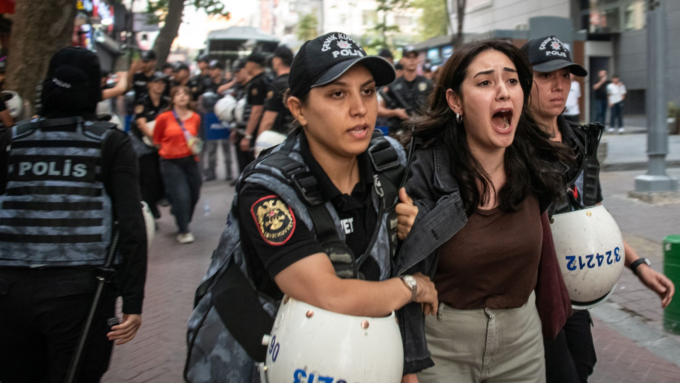
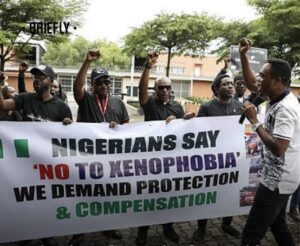
The announcement quickly became entangled with renewed outrage over xenophobic attacks against Nigerians in South Africa.
Some Nigerians are calling for the concert to be cancelled and others insisting that the singer should not be made to answer for the actions of people and institutions she does not control.
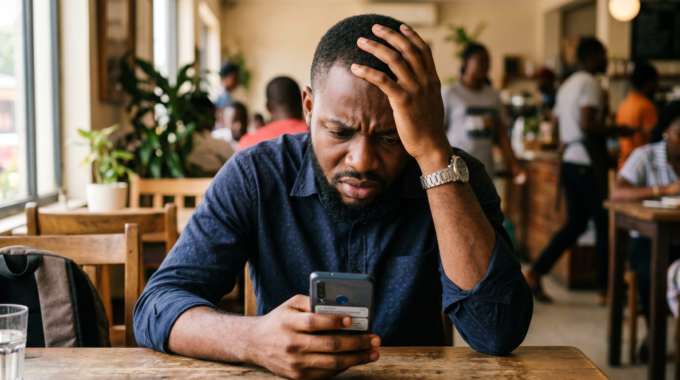
For many Nigerians, the anger did not begin with Tyla. It began with the familiar pain of watching Nigerians attacked, threatened or forced to leave places where they had gone to work, build businesses and make a living.
That pain has been made heavier by the feeling that xenophobia is not a new story but a wound that keeps reopening.
So the anger is real. The question is whether we are placing it at the right door.
Omoyele Sowore believes we are not. In the statement that has now entered the centre of the debate, he argued that Nigerians should direct their anger at political leaders rather than at Tyla, insisting that a talented musician should not be held responsible for xenophobic violence simply because she is South African.
He ended with a sentence that has become one of the clearest lines in the argument: “Tyla’s Lagos concert must go on.”
It is an uncomfortable position for some Nigerians because the wound is still fresh. Yet uncomfortable arguments are sometimes the ones worth having.

Tyla is South African, and Nigerians have every right to condemn xenophobia in South Africa. But those two facts do not automatically make the singer personally responsible for the actions of people she does not control.
She did not write South Africa’s laws, create its unemployment crisis or order attacks on Nigerian traders.
She is an artiste, while governments make policy, police borders, negotiate treaties, prosecute criminals and carry the responsibility of protecting their citizens. That is where the greater burden of accountability belongs.
There is nothing wrong with asking Tyla to speak. Nigerians can reasonably ask whether she believes Nigerians should be safe in South Africa, and they can question the silence of any influential African figure when fellow Africans are being harmed.
Public figures have platforms, and people are entitled to ask how those platforms are being used. But demanding a voice is different from assigning blame.
That distinction matters because anger has a way of blurring lines. When people feel repeatedly humiliated, nationality can begin to look like evidence of guilt. A passport can quietly become a sentence. That is where caution becomes necessary.
Nelson Mandela once observed that “No one is born hating another person because of the colour of his skin, or his background, or his religion.”
The statement, preserved in the Nelson Mandela Foundation archive, captures something important about the argument before us: hatred is learned, and because it is learned, it can also be challenged.
Nigerians therefore should not be silent about xenophobia. Silence in the face of injustice can become another kind of surrender.
Desmond Tutu’s warning is equally relevant here: “If you are neutral in situations of injustice, you have sided with the oppressor.”
But refusing to be neutral about injustice does not require blaming everyone who shares the nationality of those accused of committing it. We can condemn xenophobia without turning nationality into guilt.
The strongest response to xenophobia should be aimed at the people and institutions capable of stopping it.
That means demanding protection for Nigerians living and working in South Africa, demanding serious investigation and prosecution when Nigerians are attacked, and asking whether diplomatic promises are producing any real security for the people caught in the middle.
It also means asking Nigeria’s leaders difficult questions about how swiftly and effectively they protect citizens abroad when relations with another country become strained.
Those questions are harder than cancelling a concert because they require institutions to answer for themselves.
This is where the Tyla debate risks becoming a convenient hiding place for a much larger conversation. It is easier to focus public anger on a celebrity than to examine the political decisions that created the conditions for the crisis.
It is easier to argue over a stage in Lagos than to demand a serious diplomatic strategy from Abuja and Pretoria.
And it is easier to make one musician the face of a national grievance than to identify the people who actually possess the power to change the circumstances behind that grievance.
That is how anger can lose its address and begin knocking on the wrong doors.
There is another question Nigerians should ask honestly: What exactly would stopping Tyla’s concert achieve?
Would xenophobic attackers in South Africa suddenly abandon their hostility? Would Pretoria introduce stronger protections for Nigerians because a concert was cancelled in Lagos?
Would the families affected by the violence receive justice? Would Nigerian diplomats suddenly gain greater leverage?
Perhaps those calling for a boycott believe it would send a powerful symbolic message. They are entitled to make that argument.
A boycott can be a legitimate form of protest when people believe their money or participation should not support something they oppose. But symbolism should not be confused with strategy.
A protest becomes meaningful when it pushes a real conversation towards accountability or change. The difficulty here is that Tyla has very little power over immigration policy, policing, diplomacy or criminal prosecution.
She can use her voice, and perhaps she should. She cannot, however, do the work of a government.
She is an artiste, while governments make policy, police borders, negotiate treaties, prosecute criminals and protect citizens. The greater responsibility therefore rests with those who have the authority to act.
None of this places Tyla above criticism. Nigerians can ask her to acknowledge what is happening. They can question whether she believes Nigerian lives deserve the same dignity as South African lives.
They can tell her that, as one of Africa’s prominent young artists, her voice carries weight. Those are fair questions.
What should be avoided is turning those questions into a conviction simply because of where she comes from.
There is a difference between saying, “Tyla, use your voice,” and saying, “Tyla, you are responsible.” The first asks for solidarity. The second transfers guilt.
Africa has suffered enough from that kind of thinking. Our borders may divide countries, but African culture has always been much more stubborn than those lines on a map.
Nigerian Afrobeats and South African Amapiano have crossed borders with extraordinary ease. Musicians have travelled where politicians sometimes struggle to build trust. Songs have reached homes that diplomatic statements never will.
Music has often done what politics finds difficult, it has created a meeting place. That is why this moment deserves some wisdom.
A Lagos concert cannot solve xenophobia, just as a Lagos concert did not cause it. Tyla’s nationality should not become a substitute for governmental accountability, and her presence on a Nigerian stage should not be treated as an endorsement of every policy or failure associated with the country from which she comes.
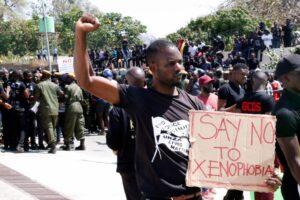
South Africa must answer for the safety of Nigerians within its borders. Nigeria must answer for how fiercely it protects its citizens beyond its borders. Political leaders must answer for their decisions, and those who commit xenophobic attacks must answer for their crimes.
Artists, too, can and should be challenged to use their voices when their influence can help push important conversations forward. But Tyla should not be asked to carry a country’s sins simply because she carries its passport.
Voices Behind the Debate: The controversy has produced two sharply different positions.
Omoyele Sowore has argued that Nigerians should direct their anger towards political leaders rather than Tyla.
He said artistes should not be held responsible for politicians’ failures unless there is evidence that they enabled those failures, and concluded that “Tyla’s Lagos concert must go on.”
VeryDarkMan, taking the opposite position, has called for the concert to be stopped and warned event organisers that he would oppose the show, framing the campaign as a response to xenophobic attacks against Nigerians in South Africa.
His public position has become one of the most visible parts of the boycott campaign.
The disagreement between the two men captures the larger national argument: should the concert become a platform for protest against South Africa, or should Nigerians separate an individual artiste from the actions and failures of governments?
That question is unlikely to disappear soon. The Lagos concert may eventually go ahead, or the controversy may change the circumstances before December.
For now, the argument remains deeply divided, with some Nigerians seeing the event as an unacceptable celebration of South Africa at a painful moment and others seeing the proposed boycott as anger aimed at the wrong person.
Whatever happens when the lights come on in Lagos, the larger question will remain after the music stops.
When a people are wounded, who should carry the blame: the person who caused the wound, or the person who merely comes from the same place? Nigeria must be careful with her answer.
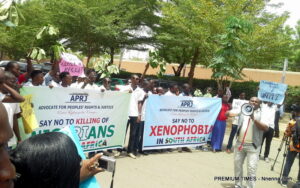
Justice should have a target, and anger should have a direction. Even when the wound is deep, we must be careful not to let pain choose its victim blindly.