

Japan Earthquake Death Toll Climbs as Rescuers Race to Reach Survivors
Rural communities in southwestern Japan are struggling to recover from a powerful earthquake that flattened homes, damaged key infrastructure and left rescuers racing against time to find people who may still be trapped beneath the ruins.
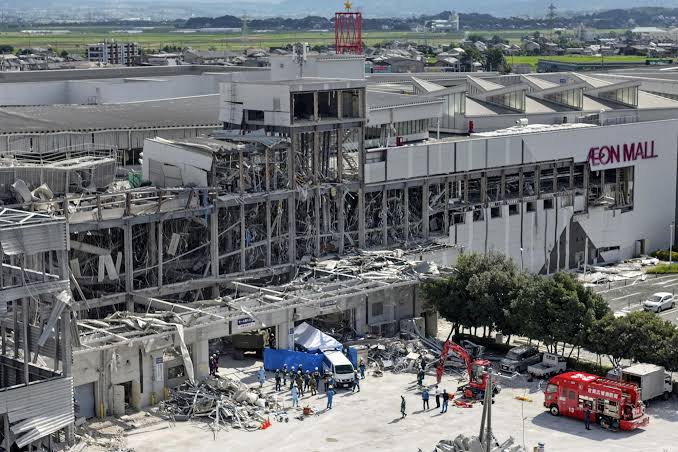
The magnitude 7.1 earthquake struck Japan’s southern island of Kyushu on Tuesday, causing widespread destruction across Kumamoto Prefecture. The disaster triggered an explosion at a busy shopping mall, brought down a factory chimney and destroyed buildings in several communities.
Authorities said 25 deaths had been confirmed as linked to the earthquake, while nine additional deaths were being investigated for possible connections to the disaster.
At least 86 people were injured, including five who suffered serious injuries.
The number of people still missing remained unclear as emergency crews continued their search on Thursday.
Thousands of survivors spent another night away from their homes in evacuation centres, schools, cars and tents.
Some communities were still without water or electricity, while others were too frightened to return home because of continuing aftershocks.
Nearly 19,000 homes remained without electricity, while more than 9,000 people were staying in about 400 evacuation centres across the affected region.
In Hikawa, one of the hardest-hit areas, residents gathered at the town hall to collect drinking water and emergency supplies. Some had resorted to sleeping in their vehicles in nearby parks and parking lots.
Yoshiaki Nakashima, 66, arrived at the town hall carrying two bottles of water and accompanied by his pet dog.
He said he had chosen to sleep in his car because he was uncomfortable staying at an evacuation centre and remained worried about more tremors.
“It’s difficult to turn over while sleeping in a car,” he said, adding that staying in a shelter was even more difficult.
Another resident, Akiko Inazaki, has been living in a tent in the yard of her home, which has had no running water or electricity since the earthquake.
“Fresh water is so valuable,” she said, explaining that she had been drinking so little that she nearly suffered heatstroke.
The intense summer heat has added another threat for people already dealing with the aftermath of the disaster.
Temperatures in Kumamoto were expected to reach 33 C (91 F) on Thursday, prompting authorities to warn residents about heatstroke and dehydration.
Medical teams have been visiting evacuation centres to check on vulnerable survivors, particularly elderly people and those recovering from injuries.
Yutaka Kobayashi, a doctor dispatched from Aichi Prefecture, said keeping elderly evacuees safe from the heat was a major concern.
“We have to make sure elderly people are not developing heatstrokes or dehydration,” he said.
Some residents in Hikawa have moved from open parking areas into public schools where air conditioning is available. But even as authorities try to improve conditions, emergency supplies are coming under pressure.
A local official, Yuzuru Tamura, said stocks of emergency food, including canned bread and instant rice, were beginning to run low.
One of the most difficult rescue operations is taking place at the Aeon Mall shopping centre in Kashima, where thousands of people were inside when the earthquake struck on Tuesday afternoon.
The mall operator said around 3,000 customers were evacuated into the parking area before an explosion occurred in another section of the building. Some workers were still inside, and part of the second floor later collapsed.
Kumamoto authorities said six people had been confirmed dead at the mall site by early Thursday, while 11 people had been pulled from the wreckage.
In the Yatsushiro area, a chimney at a Nippon Paper Industries factory also collapsed during the earthquake.
Ten people were rescued, while eight others died and one person remained missing, according to the prefectural disaster response team.
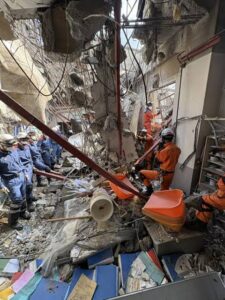
Images released by Japanese authorities showed rescuers drilling through piles of concrete and twisted debris as they searched damaged structures for anyone who might still be alive.
Prime Minister Sanae Takaichi said the national government would take the lead in coordinating the rescue and recovery operation.
She said restoring electricity, gas and water supplies, while ensuring adequate supplies of drinking water, remained among the government’s most urgent priorities.
“The needs on the ground are constantly changing,” she said. “To put to rest the people’s feelings of uncertainty, we will do all that needs to be done.”
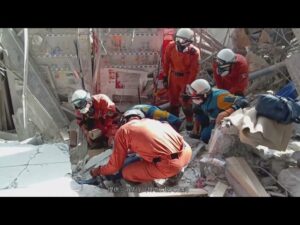
As rescue teams continue to search damaged buildings, thousands of survivors remain displaced, facing shortages of basic supplies and dangerous heat while waiting for their communities to begin the long road back to normal life.