

Fear and Division Grow Along Lebanon’s Border as Israeli Occupation Reshapes Daily Life
Residents of several communities in southern Lebanon say they are living under growing uncertainty as Israel maintains control over large swathes of territory seized during months of fighting with the Iran-backed Hezbollah movement.
Across villages near the occupied zone, families who once lived side by side now find themselves separated by military restrictions, destroyed homes and rising mistrust.
Entire Shiite-majority communities have been emptied, while neighboring Christian, Sunni and Druze towns remain inhabited but deeply affected by the conflict.
Many displaced residents say they have been unable to return home for months. Some villages have been reduced to rubble, while access roads remain blocked and heavily restricted.
For Milia el-Cheikh, a resident of the village of Dibbine, the war has brought heartbreak and uncertainty.
Forced to flee during the fighting, she can only look at what remains of her hometown from a distance, unsure whether her house is still standing.
The conflict erupted after Hezbollah launched attacks on Israel following the outbreak of war involving Iran.
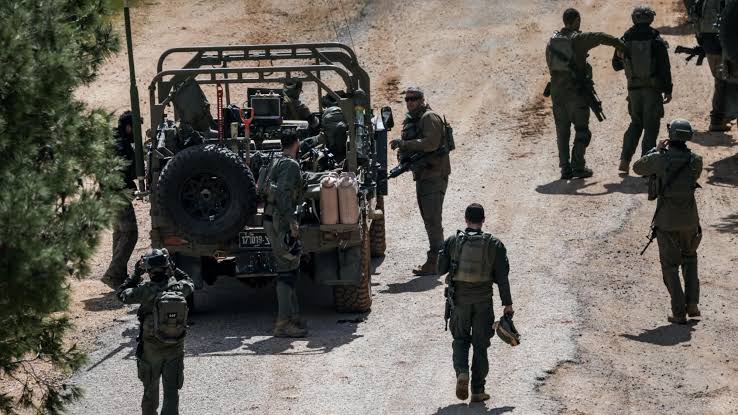
Israel responded with a military offensive that expanded its presence deep into southern Lebanon, creating a security zone that now stretches several kilometers inside Lebanese territory.
Israeli authorities insist the deployment is necessary to prevent future attacks, arguing that Hezbollah had established extensive military infrastructure inside civilian areas.
Lebanon’s government and Hezbollah, however, continue to demand a complete Israeli withdrawal.
Communities bordering the occupied areas say the conflict has altered every aspect of life. Farmers have lost access to orchards and agricultural land, businesses have suffered, and residents live with the constant fear of military activity nearby.
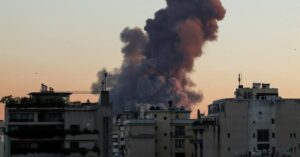
In several towns, homes, churches and public infrastructure have sustained damage from shelling and airstrikes. Local residents describe nights filled with explosions, uncertainty and repeated displacement.
The crisis has also strained relations between communities. Many displaced Shiite families seeking temporary shelter have reportedly been turned away by residents who fear their presence could attract military strikes or lead to further restrictions from Israeli forces.
Religious and community leaders warn that the situation is fueling tensions among groups that have largely coexisted peacefully for decades. Some fear the conflict could deepen political and sectarian divisions already present in Lebanon.
Residents also report increased military raids and arrests in villages close to the occupied zone. Families of those detained say they have received little information about their relatives’ whereabouts, adding to anxiety across the region.
Despite the uncertainty, many residents remain determined to stay in their communities. Yet with destroyed villages, restricted movement and no clear timeline for a withdrawal, people living along Lebanon’s southern frontier fear the conflict’s consequences could linger long after the guns fall silent.