


Meth Labs Linked to Mexican Cartels Found on South African Farms
Raids on remote farms in South Africa have uncovered illegal methamphetamine production sites linked to Mexican criminal networks, raising concerns about a growing shift in how international drug operations are being carried out.
In the North West province town of Swartruggens, authorities are handling a major case involving several suspects, including foreign nationals, accused of running a large-scale drug manufacturing operation on an isolated farm.
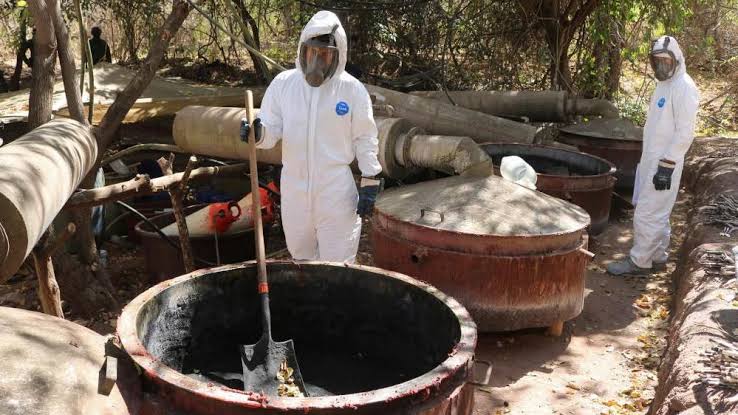
Police say the raid led to the discovery of a sophisticated meth laboratory valued at about one billion rand.
The suspects have appeared before a magistrate’s court on charges including drug manufacturing, possession of hazardous chemicals and violations of immigration laws, as prosecutors push for continued detention while investigations continue.
The Swartruggens case is one of several similar discoveries across South Africa in recent years, pointing to what investigators describe as an emerging pattern of rural-based synthetic drug production.
Law enforcement agencies say multiple meth laboratories linked to Mexican networks have been dismantled across different provinces, including Limpopo, Gauteng and Mpumalanga over the past two years.
These facilities are typically located on remote farms, far from urban centres, allowing large-scale drug production to take place with limited detection and minimal interference.
Authorities believe the trend reflects a broader shift in global drug trafficking strategies, where production is increasingly moved closer to consumer markets rather than relying solely on cross-border smuggling.
Security experts say Mexican-linked criminal groups are also working with local collaborators in parts of southern Africa, expanding their operational footprint beyond traditional regions.
Investigators trace early signs of this activity to West Africa before it spread through East and southern Africa, with South Africa now emerging as a key hotspot for detected meth production sites.
Experts warn that rural isolation, weak oversight and enforcement challenges have made certain areas attractive to organised criminal networks.
South African law enforcement agencies say recent raids show ongoing efforts to disrupt these operations, while international partners have provided intelligence linking some suspects to established cartel structures.
Despite repeated busts, analysts say the network is highly adaptable, with dismantled laboratories often replaced in new locations.
Authorities continue to investigate, as the Swartruggens case adds to growing concern over the spread of synthetic drug production networks within rural South Africa.