



Trump’s Deportation Flights Leave Thousands Stranded in Countries They Barely Know
For Nika, the journey out of a US immigration detention centre was supposed to mark the end of more than a year of uncertainty.
Instead, the 32-year-old Iranian woman found herself shackled aboard a plane bound for a country she had never visited and knew almost nothing about.
Nika was among a group of migrants flown thousands of miles from the United States to the Central African Republic (CAR), despite having previously obtained legal protection against being returned to Iran.
Her experience forms part of a major international investigation into the Trump administration’s use of agreements with countries that are neither the migrants’ homelands nor places with which they have established connections.
The investigation, involving the Guardian and 23 other media organisations under the Deportation Project coordinated by Forbidden Stories, found that more than 25,000 people have been removed from the US to third countries.
More than 5,000 were reportedly flown to countries across Africa, Latin America, the Caribbean and Central Asia, while about 20,000 others were sent to Mexico, according to figures cited from Refugees International and Human Rights First.
The investigation identified deportation flights involving at least 28 countries and found that the number of such operations increased sharply in August.
In one case, Nika said detainees were not told their destination before boarding. They only realised they were being taken to the Central African Republic after a map appeared on the aircraft’s video screens.
She said some detainees were restrained after resisting instructions to board the plane, while others were kept in handcuffs throughout the journey.
Nika had fled Iran after taking part in protests against the government. After spending more than a year in US immigration detention, an immigration judge granted her withholding of removal, meaning she could not legally be sent back to a country where she faced a serious threat.
She was released on May 28 and allowed to remain in the US and work.
According to her lawyer, Sahar Jalili, US Immigration and Customs Enforcement had already made arrangements to send Nika to Bangui, the capital of the Central African Republic, before her release.
Nika was rearrested on June 8 during what she believed was a routine check-in. She was later taken into custody and placed on a deportation flight.
Her lawyer said she and other attorneys tried to prevent the removal but were unable to stop the flight in time.
Nika eventually arrived in the Central African Republic, where she has largely remained indoors because of fears about her safety.
The investigation found that people from countries including Peru and Colombia were sent to the Democratic Republic of the Congo, while six migrants who refused to leave a deportation flight in Liberia were later taken to Equatorial Guinea.
The Trump administration has defended the deportation programme as part of its broader effort to remove migrants who have no legal right to remain in the US.
A Department of Homeland Security spokesperson said immigration enforcement remained a priority and that the US government would use legal means to remove people who were not entitled to stay.
However, the investigation found that the people being transferred were not all convicted violent criminals.
Documents reviewed during the investigation indicated that many countries involved in the arrangements had told US officials they would not accept migrants with violent criminal records.
The policy has also become the subject of a major legal battle.
On September 18, a three-judge panel of the US Court of Appeals for the First Circuit largely upheld a ruling that requires migrants facing removal to a third country to receive meaningful notice and an opportunity to raise concerns that they could face persecution or torture there. (The Washington Post)
The court rejected the administration’s position that people could be rapidly transferred without adequate opportunity to challenge the destination.
The ruling could affect a deportation programme that has already moved tens of thousands of people outside the United States.
The administration is expected to continue its legal challenge.
For people like Nika, however, the dispute is more than a courtroom argument.
She now remains thousands of miles from the country where she sought protection, uncertain whether she will eventually be allowed to remain in Africa or be sent back to Iran.
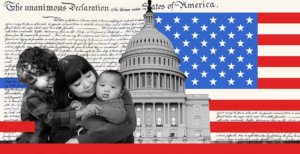
Her journey illustrates the human consequences of a policy that has transformed deportation from a return to a person’s country of origin into, in many cases, a transfer to somewhere they have never called home.






















Leave a comment