


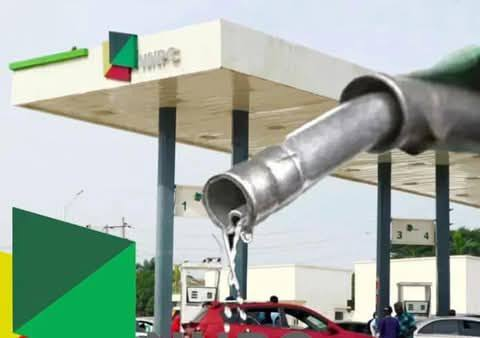
Petrol Depot Prices Hit N1,900 Per Litre Despite NNPC Price Reduction
Petrol depot prices have climbed to N1,900 per litre in Port Harcourt, while diesel prices reached the same level in Warri, despite lower petrol prices at some Lagos filling stations.
The latest increases were recorded on Friday across Lagos, Port Harcourt, Warri and Calabar, raising concerns about further fuel price adjustments in Nigeria’s downstream petroleum market.
NIPCO increased its petrol price in Port Harcourt by N170 per litre, from N1,730 to N1,900, while six other depots raised their prices to the same level.
African Terminal, Ascon, Eterna, Gulf Treasure, Ibachem and Ibeto also raised their petrol prices in Port Harcourt from N1,750 to N1,900 per litre.
Duport and Integrated implemented smaller increases, moving their petrol prices from N1,750 to N1,806 per litre, representing an additional N56 for each litre purchased.
In Lagos, Masters increased its depot price from N1,303 to N1,350 per litre, while Matrix raised its price from N1,330 to N1,360 during the same period.
Sigmund and T.S.L raised their prices from N1,300 to N1,350 per litre, while NIPCO adjusted its rate from N1,326 to N1,350.
Calabar also recorded an increase, with Matrix raising its petrol price from N1,315 to N1,370 per litre, reflecting the upward movement across several supply locations.
In Warri, Keonamex, Matrix, Nepal and Parker increased their petrol prices from N1,315 to N1,360 per litre, while Optima moved from N1,330 to N1,360.
Petrol Pump Prices Differ Across Lagos
Despite rising depot prices, petrol retail rates remained comparatively lower at some filling stations in Lagos and surrounding areas, although independent marketers continued charging varying amounts.
NNPC Limited sold petrol at N1,360 per litre, while MRS Oil Nigeria Plc retailed the product at N1,338 per litre at its filling stations.
11 Plc sold petrol at N1,338.80 per litre, while independent marketers charged between N1,368 and N1,400, depending on their locations and individual pricing decisions.
Motorists buying from MRS and 11 Plc therefore paid less than customers patronising independent outlets charging the higher rates.
The contrasting wholesale and retail prices highlight the differences within Nigeria’s fuel supply chain, where depot increases do not always translate into immediate, uniform adjustments at filling stations.
Diesel Prices Reach N1,900 Per Litre in Warri
The diesel market also experienced fresh increases, with Rain Oil and Matrix raising their Automotive Gas Oil prices in Warri by N180 per litre.
Both companies moved their diesel prices from N1,720 to N1,900 per litre, increasing the cost of a product widely used for transportation, industrial operations and electricity generation.
In Port Harcourt, Dangote increased its diesel price from N1,702 to N1,720 per litre, while Masters raised its rate from N1,788 to N1,825.
The increases could place additional financial pressure on manufacturers, transport operators and businesses that depend heavily on diesel to power equipment and maintain daily operations.
Higher diesel costs may also contribute to increased transportation and production expenses, potentially affecting the prices of goods and services if the trend continues.
Global Oil Prices Record Mixed Movements
International crude oil benchmarks recorded modest gains, with Brent crude rising from $104.28 to $104.50 per barrel, while West Texas Intermediate increased from $91.49 to $91.73.
The OPEC Basket also climbed from $108.59 to $109.50 per barrel, while WTI Midland rose from $92.32 to $92.74 during the period under review.
Natural gas prices increased from $3.168 to $3.235, while the Indian Basket advanced from $117.63 to $121.10 per barrel.
However, not every benchmark moved upward. Murban crude declined from $110.49 to $108.50 per barrel, reflecting mixed movements across the international energy market.
Refined products also recorded declines, with gasoline prices falling from $3.316 to $3.293, while heating oil dropped from $4.883 to $4.724.
These varying movements suggest that rising domestic depot prices cannot be explained by crude oil prices alone, as supply conditions, replacement costs and transportation expenses also influence local pricing.
Oil Market Developments Continue to Influence Fuel Prices
Speaking to Vanguard, Petroleumprice.ng Chief Executive Officer Olatide Jeremiah said Nigeria’s downstream petroleum sector would continue responding to developments in the international oil market despite domestic challenges.
His remarks highlight the connection between global energy market movements and local petroleum prices, although individual marketers may adjust their rates differently based on operating conditions.
With petrol depot prices reaching N1,900 per litre in Port Harcourt and diesel hitting the same level in Warri, the latest increases underline continuing pressures across Nigeria’s petroleum distribution network.























Leave a comment