


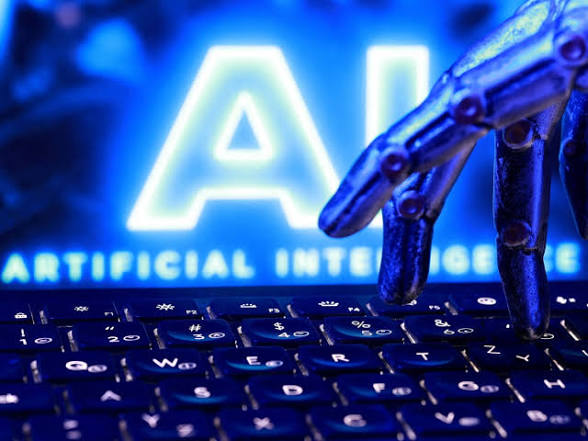
AI Breakthroughs Raise Fears of Exposed Bank and Government Secrets
Leading computer scientists have raised concerns that powerful artificial intelligence systems may have made mathematical discoveries capable of threatening encryption protecting sensitive information worldwide.
Experts believe some AI companies could be withholding major findings that might change how banks, governments and intelligence agencies protect confidential electronic communications.
Scott Aaronson, a prominent theoretical computer scientist, told The Guardian that credible reports suggest advanced AI models have made significant progress on longstanding mathematical problems connected with encryption.
These developments could eventually make it easier for hackers to access protected information, including banking transactions, diplomatic communications, government records and private electronic correspondence.

If the suspected breakthroughs are confirmed, organisations relying on existing security systems could face enormous pressure to replace their encryption technologies before sensitive information becomes vulnerable to exposure.
Steven Murdoch, a computer science professor at University College London, said recent developments had challenged earlier assumptions about artificial intelligence’s mathematical capabilities and its potential limitations.
“The people who thought AI couldn’t do any interesting maths are definitely wrong at this stage, and so it’s no longer clear where the limit is,” Murdoch said.
Mathematician Marcus du Sautoy also expressed concerns during an interview with BBC Radio 4’s Today programme, questioning whether researchers had already resolved mathematical problems central to protecting digital information.
He suggested that the possible consequences were so significant that discoveries capable of affecting global encryption systems might not immediately become public knowledge.
Governments and financial institutions have spent years preparing for another technological threat: quantum computers, which could eventually break widely used encryption algorithms and expose protected information.
However, experts previously expected such machines to pose a serious threat several years from now, making the possibility of AI-driven breakthroughs considerably more concerning.
Murdoch explained that many governments and technology companies had been preparing stronger encryption systems, with 2032 previously considered a possible target for widespread implementation.
The latest developments, however, suggest that artificial intelligence could accelerate discoveries surrounding encryption far earlier than researchers and security institutions anticipated.
Aaronson believes AI laboratories may have achieved important cryptographic breakthroughs, although the precise nature and practical implications of these discoveries remain unclear.
One possibility is that AI has discovered mathematical shortcuts capable of weakening existing encryption methods, potentially allowing previously protected information to become accessible.
Alternatively, advanced AI systems might establish that certain mathematical shortcuts cannot exist, providing stronger evidence that some encryption technologies are more secure than researchers previously understood.
Alan Woodward, a computer science professor at the University of Surrey, cautioned that mathematical progress would not automatically translate into immediate global security failures.
He explained that the important development was the speed at which artificial intelligence was tackling complicated problems that mathematicians had struggled to resolve for decades.
Meanwhile, Bank of England Governor Andrew Bailey recently addressed concerns surrounding possible cryptographic advances by AI companies, including OpenAI and Anthropic, urging caution over releasing new models.
Aaronson also noted that recent mathematical proofs published by AI companies had challenged established thinking among researchers who previously considered such problems extremely difficult.
Nevertheless, experts stressed that human mathematicians and computer scientists must independently examine and verify these proofs before their wider implications can be established.
Woodward said there was little reason to expect encryption systems to collapse immediately, adding that organisations would still face practical challenges before implementing any discovered methods.
He warned that financial institutions and governments must respond quickly to emerging developments, particularly those whose security arrangements depend heavily on existing encryption technologies.

According to Woodward, organisations capable of upgrading their security infrastructure promptly would be better positioned to withstand potential threats, while slower institutions could face serious consequences.

























Leave a comment