


FG Warns Over Carbide-Ripened Fruits, Paracetamol-Treated Meat in Markets
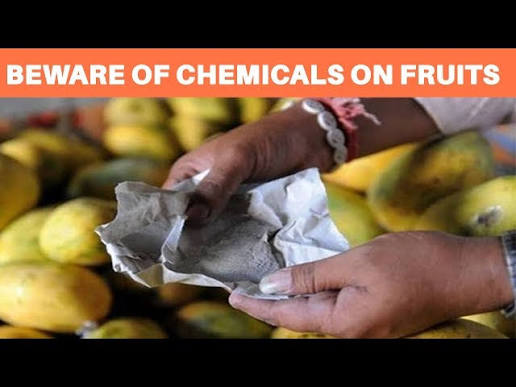
The Federal Government has raised concerns over dangerous food processing practices in Nigerian markets, warning consumers about harmful chemicals used to ripen fruits, soften meat and preserve food.

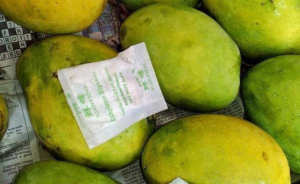
The warning includes using calcium carbide to ripen fruits, adding paracetamol to meat, applying detergents during cassava processing and treating beans and grains with unauthorised chemicals.
Minister of Innovation, Science and Technology, Dr Kingsley Udeh, disclosed this on Tuesday in Abuja during the 2026 World Science Day for Peace and Development celebration.
He also identified the adulteration of palm oil with prohibited artificial colourants, including Sudan IV, as another dangerous practice threatening food safety across the country.
Udeh described food adulteration, unsafe handling and unhygienic processing as growing national concerns, exposing unsuspecting consumers to substances capable of causing serious health complications.
He warned that these practices endangered lives, weakened consumer confidence and threatened food security, insisting that food should nourish people rather than expose them to danger.
Citing figures attributed to the World Health Organisation, Udeh said approximately 866 million people worldwide suffer foodborne illnesses annually, resulting in 1.52 million deaths.
He added that children under five account for approximately 143,000 of these deaths, while the global economic burden of foodborne diseases reaches $310bn annually.
According to the minister, contaminated food can cause more than 200 diseases, while Nigerian health authorities estimate approximately 50 million foodborne illnesses annually.
He further disclosed that Nigeria records more than 53,000 deaths associated with foodborne diseases yearly, highlighting the urgent need for stronger food safety enforcement.
To address the situation, the Federal Government plans to strengthen food monitoring by deploying qualified food science and technology professionals, particularly across local government administrations.
Udeh also announced plans to establish a recognised professional cadre within the public service, ensuring trained specialists participate in food inspection and quality control.
He expressed concern that Nigeria produces approximately 3,000 food science and technology professionals annually across 70 tertiary institutions, yet their expertise remains inadequately utilised.
According to him, the absence of an established professional structure has prevented qualified practitioners from undertaking appropriate responsibilities within government food safety departments.
He pledged to pursue the necessary engagements towards establishing the cadre, with personnel audits and skills-gap assessments forming part of the process.
The minister urged food businesses to employ qualified professionals for production supervision, quality assurance, raw material management, processing and finished-product storage.
He equally encouraged regulatory inspectors to verify practitioners’ professional registration and valid annual licences before assigning them responsibilities involving food production and safety.
Udeh identified the Nigerian Council of Food Science and Technology, established by an Act of the National Assembly in 2019, as the profession’s regulatory body.
He commended the council for developing an operational food safety manual for food businesses, market traders and street-food vendors across the country.

He urged local governments to adopt the manual and strengthen inspections across markets, restaurants, abattoirs and other establishments involved in food production and distribution.
The government is also promoting locally developed technologies for safer food processing, preservation, storage and packaging, particularly among small-scale operators.
Udeh listed improved fish-smoking kilns, solar dryers, grain storage systems, cassava-processing equipment and food-grade grinding machines among available indigenous technologies.
He identified the Federal Institute of Industrial Research, Oshodi, as one institution developing equipment to improve food processing and preservation practices.
The ministry is equally promoting shared community processing facilities, allowing small-scale operators without individual equipment to access affordable or free production facilities.
Garri packaging was highlighted as an area requiring urgent attention because the popular staple is frequently displayed openly, exposing it to dust, insects and contamination.
Udeh said appropriate packaging technologies would protect garri from environmental contaminants, preserve its quality and remain affordable for small-scale traders.
He also announced plans to convene a national food systems stakeholders’ meeting within one to two months to improve coordination across the food supply chain.
Supporting the government’s position, Registrar of the Nigerian Council of Food Science and Technology, Veronica Ezeh, called for stronger grassroots food safety regulation.
Ezeh explained that some qualified professionals employed by local governments were not performing regulatory duties because the necessary professional cadre remained unestablished.
She argued that deploying trained specialists would help identify unsafe processing and handling practices before contaminated products reached consumers in local markets.
Addressing concerns about packaging alone guaranteeing food safety, Ezeh maintained that proper packaging must be supported by professional inspection and effective regulation.
She said qualified food science officers should examine products before they reach consumers, helping restore public confidence in food purchased across Nigerian markets.
























Leave a comment