


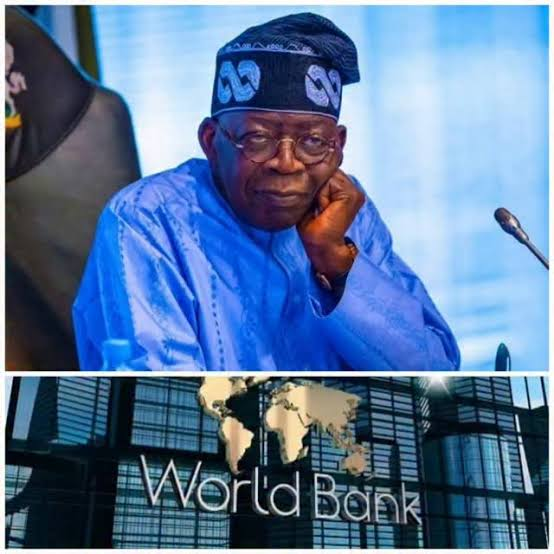
FG Seeks Fresh $500m World Bank Loan for Nigeria
A proposed $500 million World Bank financing package could channel new investment into Nigerian infrastructure, as federal authorities pursue funding beyond domestic revenue sources nationwide.
The Federal Ministry of Finance would act as borrower, while the Nigeria Sovereign Investment Authority (NSIA) would serve as the agency responsible for implementation nationwide.
The World Bank has scheduled a technical design review for January 21, 2027, with May 25, 2027, listed as the estimated approval date for now.
That date falls four days before the May 29 presidential inauguration, although approval has not been granted and the review timetable remains subject to change.
Even if approved, the financing would not automatically trigger immediate disbursement or project implementation, which would depend on subsequent conditions and arrangements under agreed terms.
The World Bank package comprises $400 million from the International Bank for Reconstruction and Development (IBRD) and $100 million from the International Development Association (IDA).
It forms part of a wider $3.85 billion financing structure intended to combine government-backed resources, private investment, commercial borrowing and guarantees for infrastructure projects nationwide.
Under the proposed structure, NSIA would provide $200 million in equity, private investors another $200 million, while commercial debt is also projected at $600 million.
Payment guarantees from IDA are estimated at $100 million, while guarantees from other international financial institutions could contribute another $2.25 billion to the financing package.
Together, the proposed guarantees would total $2.35 billion, supporting efforts to reduce investment risks and attract private capital into projects considered commercially viable in Nigeria.
The programme is expected to operate through four dedicated specialised subsidiaries: the Project Preparation Facility, Viability Gap Fund, Risk Capital Facility and Credit Guarantee Vehicle.
The International Finance Corporation is being considered as a potential co-investor, while the Multilateral Investment Guarantee Agency is expected to provide essential political risk insurance.
The proposed investment comes against an estimated annual infrastructure funding gap of about $100 billion, highlighting the scale of financing required across Nigeria’s infrastructure sector.
However, the programme has been assigned high environmental and social risk ratings because investments could potentially involve energy, transport and water infrastructure projects across Nigeria.
Potential concerns include land acquisition, community displacement, environmental damage, workplace hazards and social consequences that may arise during project development and implementation in affected areas.





















Leave a comment