


Ebola: FG Plans State Treatment Centres as Nigeria Tracks 53 Contacts
The Federal Government is preparing additional Ebola treatment facilities across states with designated ports of entry as the number of identified contacts linked to Nigeria’s confirmed case rises to 53.
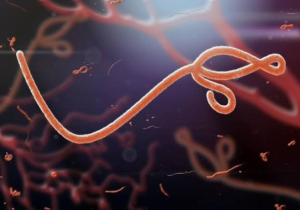
The preparations are intended to improve Nigeria’s readiness to contain possible transmission, with health authorities assessing hospital isolation capacity, strengthening laboratory services and expanding disease surveillance.
A situation report obtained on Sunday indicated that the University of Abuja Teaching Hospital had completed a needs assessment to improve its readiness for isolation and treatment.
Authorities are also planning an infection prevention and control assessment at Karu General Hospital in Abuja to determine whether the facility can accommodate additional patients if isolation requirements increase.
The government is further developing referral arrangements to ensure that suspected Ebola cases can be transferred promptly from the locations where they are detected to designated treatment facilities.
Under the planned measures, states with designated ports of entry will be assessed to identify suitable treatment centres and improve their capacity to respond to possible infections.
The Nigeria Centre for Disease Control and Prevention is also strengthening preparedness across the country through surveillance, laboratory testing, infection prevention and control, and public awareness.
The latest developments come as the agency introduces a weekly financial allowance of ₦100,000 for each person placed under isolation or quarantine to ease the financial pressure associated with complying with public health requirements.
The NCDC Director-General, Dr Jide Idris, announced the intervention during a press briefing on Sunday, explaining that some contacts had raised concerns about the costs of feeding, accommodation and supporting their families while under monitoring.
According to Idris, the agency decided to provide the allowance after recognising that financial difficulties could make compliance with isolation and quarantine arrangements more challenging.
He explained that the payment was not included in the original response plan but became necessary because of the emergency.
Idris also stressed that supporting people affected by public health restrictions should not become the responsibility of the Federal Capital Territory alone, urging other state governments to prepare for similar emergencies.
The NCDC situation report confirmed that 53 contacts had been identified, documented and categorised, with health officials continuing to trace and monitor people who may have been exposed to the virus.
The figure represents an increase from the initial 44 contacts announced after the confirmed case was reported in the Federal Capital Territory.
Idris said 44 of the identified contacts were linked to the health facility where the patient received treatment, while nine others included household members and people who attended to her during an earlier visit to an emergency room.
Investigations have consequently expanded beyond the hospital, with officials working to establish whether additional individuals may have encountered the virus before the patient was isolated.
The agency is also identifying secondary contacts who might have been exposed through people already included in the initial contact-tracing exercise.
Health officials are conducting daily follow-ups, while anyone who develops symptoms is expected to undergo prompt assessment.
Idris disclosed that one contact who reported feeling unwell had tested negative for Ebola, although monitoring and other surveillance activities remained ongoing.
The NCDC has also revised its case definition to help healthcare workers and surveillance teams identify suspected Ebola infections more effectively.
Under the revised criteria, suspected cases may include people who develop sudden fever and specified symptoms alongside relevant travel or exposure histories, individuals experiencing unexplained bleeding, and people who develop symptoms after contact with a confirmed or probable case.
Community members have also been encouraged to report unexplained deaths and symptoms consistent with Ebola, particularly where there is a possible history of exposure.
Genomic Sequencing Completed
The situation report disclosed that genomic sequencing of the confirmed case had been completed by the NCDC National Reference Laboratory and the African Centre of Excellence for Genomics of Infectious Diseases.
Authorities are expected to share the sequencing findings, continue diagnostic testing and maintain laboratory records as part of the ongoing investigation.
The NCDC also plans to distribute additional laboratory reagents and essential testing supplies across the national laboratory network to support the diagnosis of suspected Ebola infections.
Laboratory capacity remains important to the response because suspected cases require timely investigation and appropriate testing to guide treatment and public health decisions.
The government is simultaneously strengthening infection prevention and control measures in healthcare facilities to reduce the possibility of transmission among medical personnel, patients and other people who may encounter suspected cases.
According to the report, assessments have been conducted across states and health facilities, while the facility managing the confirmed patient has received guidance on appropriate procedures and safety standards.
The next phase includes implementing an infection prevention and control strategy across designated zones to improve screening, isolation and other protective measures.
Healthcare workers are also expected to receive additional training and sensitisation, particularly in facilities that may be required to identify, stabilise or refer suspected Ebola patients.
Idris acknowledged that infection prevention and control capabilities at subnational levels required improvement, adding that strengthening the skills of healthcare personnel remained a priority.
He explained that assessment teams visit facilities to examine existing safety procedures, identify weaknesses and recommend corrective measures.
The NCDC has also increased the national stockpile of personal protective equipment and other essential supplies in preparation for a possible expansion of response activities.
The report stated that 500 donated laboratory testing kits had been added to the stockpile, while additional protective equipment and medical commodities would be distributed to high-risk states.
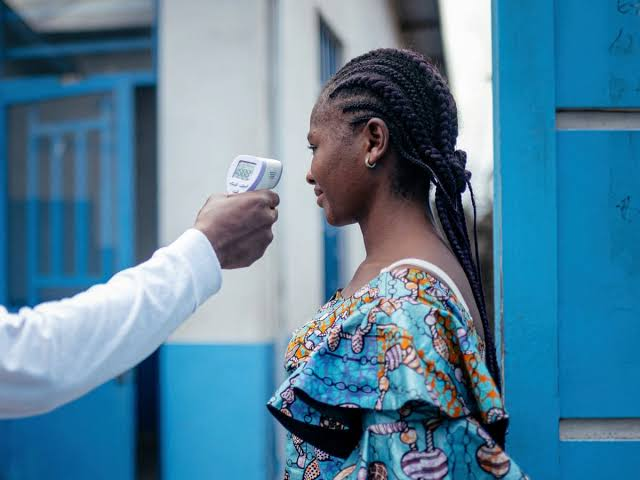
Surveillance at airports and other designated ports of entry is also being strengthened to improve the detection of possible infections among travellers.
Port Health Services has conducted investigations with aviation stakeholders, while enhanced monitoring at entry points is expected to continue.
Beyond medical preparedness, the NCDC is maintaining public communication activities and monitoring discussions about Ebola to identify misinformation and respond to public concerns.
The agency has advised Nigerians to rely on official health information, avoid spreading unverified claims and cooperate with personnel conducting contact tracing.
How the Confirmed Case Was Detected
The confirmed case involves a woman who travelled to Nigeria after visiting Uganda, following an earlier trip to the Democratic Republic of the Congo.
Health authorities previously reported that she developed symptoms on October 7 and sought medical attention in Abuja on October 11. She subsequently tested positive for the Bundibugyo strain of Ebola virus on October 20.
The World Health Organisation has indicated that investigations are continuing to establish the likely source of the infection.
The Bundibugyo strain belongs to a group of Ebola viruses associated with outbreaks in parts of Central and East Africa. Its identification has reinforced the need for effective surveillance, prompt diagnosis and cooperation among countries responding to the disease.
Nigeria has previous experience managing Ebola outbreaks. During the 2014 outbreak, coordinated case detection, isolation, contact tracing and other public health interventions helped the country contain transmission.
The current response is drawing on those lessons, with authorities working to improve hospital readiness, expand laboratory capacity and ensure states have appropriate facilities and resources should further cases emerge.
The NCDC has urged Nigerians to remain calm while observing preventive measures, including regular handwashing and avoiding direct contact with the blood, body fluids or tissues of people or animals suspected of carrying the virus.
The virus can spread through direct contact with infected people or animals and contaminated materials.
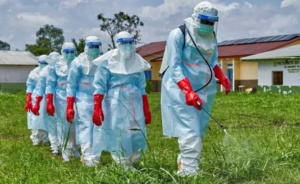
Health authorities have also warned against stigmatising individuals placed under monitoring, emphasising that public cooperation is essential to containing the outbreak.






















Leave a comment