

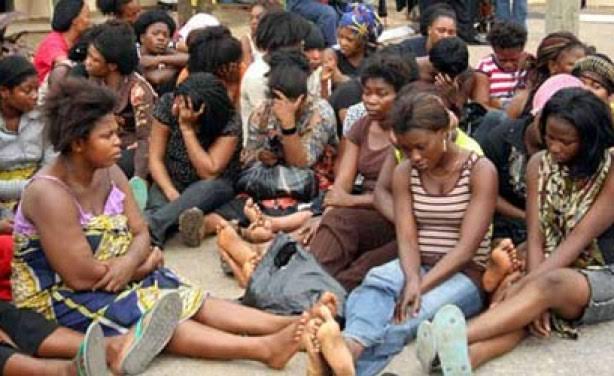
By: Chioma Madonna Ndukwu
The Way We Live: Grace Left Home for a Job in Mali. She Didn’t Know It Was a Trap
When Grace told her parents she had found an opportunity to work in Mali, nobody celebrated wildly. They simply felt relieved.

Her father had spent months looking for work after the factory where he loaded goods reduced its workforce.
Her mother sold vegetables in the market, but every evening she returned home with more unsold tomatoes than profit. Grace had finished secondary school two years earlier and had watched one application after another disappear into silence.
So when a woman from a nearby town introduced herself through a respected church member and spoke about housekeeping jobs for young women abroad, the offer sounded ordinary enough.
“You’ll have accommodation,” the woman explained, sliding photographs across the table. “You’ll earn enough to support your family and even save for your own business.”
Grace looked at the neat buildings in the pictures.
Her mother asked the question every careful parent should ask.
“Which company is employing them?”
The woman smiled without irritation.
“My sister runs the arrangement. Everything is legal. We have taken many girls already. Ask around.”
That last sentence settled the family’s doubts more than any document could have. They did ask around. People mentioned girls who had travelled. Some had sent money home.
Others had simply stopped calling, but nobody wanted to imagine the worst. In communities where unemployment presses against every household, hope often arrives dressed like certainty.
The journey began quietly. Grace crossed into another country with several other young women, each carrying a small bag and much larger expectations.
Only after they arrived did the promises begin to disappear.
The jobs they had discussed no longer existed. Their phones were taken “for safekeeping.” The debt they supposedly owed for transportation grew larger each day, although nobody had explained it before they travelled.
One evening, after the lights had gone out, the girls lay awake on thin mattresses.
“Do you think your mother knows?” one whispered.
Grace swallowed before answering.
“She thinks I’m working.”
Another girl turned toward the wall.
“My younger brother keeps sending messages. I cannot even tell him I’m alive.”
Silence filled the room until someone began crying as quietly as possible, careful not to attract attention.
Days became difficult to separate from one another. The girls learned not to ask too many questions because every question was treated as disobedience. They held onto one another instead.
“When we get home,” Grace whispered one night, “I’m going back to school.”
A girl beside her managed a tired smile.
“When we get home,” she replied, “I’ll first sleep in my own mother’s house.”
Nobody laughed. Yet for a few seconds, imagining home made the room feel less frightening.
Back in Nigeria, Grace’ parents noticed that her calls became shorter before stopping completely. Whenever they asked the recruiter for answers, fresh explanations arrived.
“Network problems.”
“She’s adjusting.”
“Don’t worry too much.”
Months later, another family whose daughter had disappeared after accepting a similar offer came forward. Then another.
As more families came forward, the differences in names and places became less important than the disturbing similarities in how every promise had been carefully designed to earn trust before breaking it.
The police, community leaders, and anti-trafficking officers eventually became involved. What had appeared to be isolated cases revealed something much larger: criminal networks often hide behind legitimate opportunities, trusted introductions, and familiar faces.
They understand that people rarely believe strangers, so they borrow credibility from communities that value trust.
When Grace was finally rescued through a cross-border operation involving Nigerian authorities and international partners, she looked older than the months she had spent away. Her mother embraced her without asking a single question.
Later that evening, while neighbours quietly visited, Grace spoke only when she was ready.
“I wasn’t foolish,” she said softly.
Her father shook his head.
No,” her father replied quietly. “You believed the wrong people. That isn’t the same as being foolish.”
That sentence stayed with everyone in the room because it carried no blame, only truth.
In the weeks that followed, Grace began speaking to other young women in nearby communities. She never told her story to frighten them. She told it so they would know which questions to ask before accepting any overseas offer.
“Who is the employer?”
“Can I speak directly with people already working there?”
“Which government agency has verified this?”
“If someone becomes angry because you ask questions,” she would say, “walk away.”
During one of those meetings, a teacher stood and read words once spoken by Kofi Annan: “Knowledge is power. Information is liberating.” The room grew quiet because everyone understood that information is not merely something we possess; sometimes it is what keeps us alive.
An elderly community leader added another reminder from Desmond Tutu: “If you are neutral in situations of injustice, you have chosen the side of the oppressor.” He looked around the gathering before continuing. “When we hear suspicious recruitment stories and keep silent because they do not involve our own children, we leave another family to face tomorrow’s grief alone.”
Trafficking survives where there’s desperation and deception must exist. Yet communities are not powerless. Parents who verify offers instead of trusting rumours, religious leaders who ask difficult questions, neighbours who report suspicious recruiters, survivors who find the courage to speak, and authorities who work together across borders all become part of the same protection.
That evening, after the visitors had gone home, Grace sat outside with her parents. Nobody felt obliged to fill the silence.
The crickets sang beyond the fence, the steam rose gently into the cooling air, and for the first time in many months, every member of the family knew exactly where the others were.

Personal Thoughts
Human traffickers rarely introduce themselves as criminals. They often look like opportunity.
One Thing Worth Remembering
Before anyone leaves home for work abroad, verify every offer through the appropriate authorities, ask difficult questions, and never mistake familiarity for proof. A few careful conversations today may prevent a lifetime of regret tomorrow.
Let’s Talk
What questions do you believe every family should ask before trusting an overseas job offer?
EDITOR’S NOTE:
Grace is a fictional name used to protect the identity of survivors and represent the experiences shared by many victims.