


By: Chioma Madonna Ndukwu
British TV Host, 59, Pregnant Again Nearly 40 Years After First Birth: The Story Behind Her Pregnancy
For many women, the thought of welcoming a newborn comes with sleepless nights, hospital visits, tiny clothes and the excitement of preparing a nursery.
But for one British television presenter, that experience is returning nearly four decades after motherhood first began.
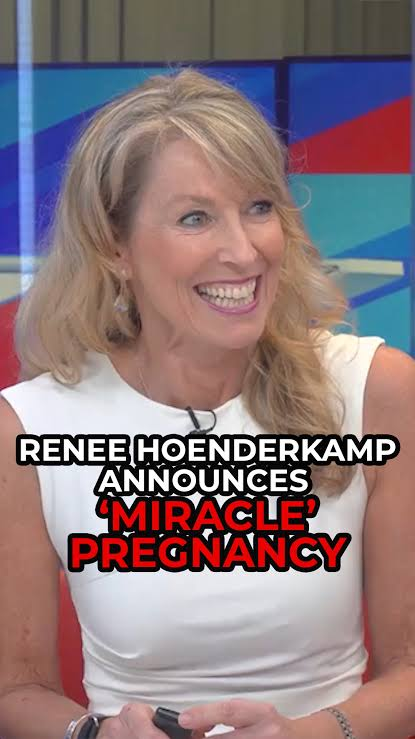
At 59, Dr. Renée Hoenderkamp is preparing to welcome her third child, a development that has surprised television viewers and opened conversations about fertility, ageing and motherhood.
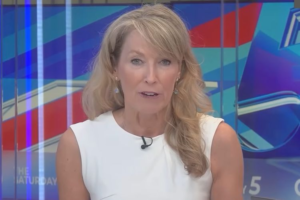
Her announcement came during a live broadcast on November 14, when the GB News presenter revealed to her colleagues that she was already 12 weeks pregnant.
The announcement caught the studio off guard. Her fellow panellists struggled to contain their surprise as she explained that she would soon become a mother of three.
Hoenderkamp, a National Health Service nurse practitioner, already has a 37-year-old son and an eight-year-old daughter. By the time her expected baby arrives, she will have celebrated her 60th birthday.
For many people, pregnancy at this stage of life raises an obvious question: how did it happen?
The answer lies in a medical decision she made years earlier. Hoenderkamp explained that she conceived through in vitro fertilisation (IVF), using eggs she had frozen during her thirties.
Her experience highlights one of the developments that has changed reproductive medicine: fertility preservation.
A Decision Made Decades Earlier
Egg freezing, medically known as oocyte cryopreservation, allows women to preserve their eggs for possible use later in life. The process involves collecting mature eggs and storing them at very low temperatures.
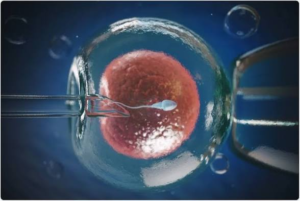
When a woman decides to use the eggs, they are thawed, fertilised with sperm in a laboratory and developed into embryos for possible transfer into the uterus.
The technology has given some women additional reproductive options, particularly those who wish to delay motherhood because of career plans, personal circumstances or medical reasons.
However, freezing eggs does not guarantee pregnancy. Their age and quality when frozen, the number preserved and other medical factors can influence the chances of success.
For Hoenderkamp, a decision made in her thirties became an important part of her journey towards another pregnancy.
Her story also demonstrates why egg freezing is often discussed as an option to preserve fertility rather than a promise that motherhood can happen at any age.
What Does Medical Science Say About Pregnancy Later in Life?
While her announcement has attracted congratulations, pregnancy at an advanced maternal age comes with medical considerations that cannot be ignored.
The American College of Obstetricians and Gynecologists (ACOG), in its guidance on pregnancy at age 35 and older, explains that the risks of complications increase progressively with maternal age.
These include gestational diabetes, high blood pressure, pre-eclampsia, premature delivery and certain complications affecting the baby.
ACOG also emphasises that individual health conditions matter when assessing pregnancy risks. Its guidance recommends that healthcare professionals consider a woman’s specific age, medical history and circumstances when planning appropriate care.
At 59, specialist obstetric supervision is particularly important. Regular assessments allow doctors to monitor the mother’s health and the baby’s development throughout pregnancy.
It is also important to understand that using younger frozen eggs does not make the woman’s body younger.
The age of the eggs and the age of the person carrying the pregnancy are separate medical considerations.
This distinction is central to understanding Hoenderkamp’s experience.
When Motherhood Challenges Society’s Expectations
Beyond the medical discussion, her pregnancy has stirred another conversation about how society judges women who choose motherhood later in life.
Following her announcement, Hoenderkamp received both congratulatory messages and criticism from people questioning her decision to have another child at 59.
Some critics raised concerns about whether she would live long enough to watch the child grow into adulthood.
Others questioned the responsibilities associated with raising a young child while approaching retirement age.
However, the presenter has defended her decision, describing the baby as deeply wanted and explaining that her experience of motherhood has changed over the years.
She also questioned the different standards applied to men and women who become parents later in life, arguing that older fathers rarely attract the same level of public criticism.
Her argument touches on an uncomfortable social reality: women often face intense scrutiny over reproductive decisions, even when those decisions involve personal circumstances outsiders may not fully understand.
Nevertheless, concerns about a child’s long-term welfare deserve thoughtful consideration, just as the mother’s happiness and reproductive choices deserve respect.
A Different Chapter of Motherhood
Hoenderkamp’s experience also challenges the familiar idea that motherhood follows one fixed timetable.
She first became a mother at 21, welcomed her second child at 50 and is now preparing for another baby at 59.
Each experience represents a different stage of life, with its own responsibilities, challenges and expectations.
For some women, motherhood begins early. Others encounter circumstances that delay their plans, while medical developments offer additional possibilities for those who preserve their fertility.
However, her experience should not be mistaken for a guarantee that pregnancy at 59 is achievable or medically advisable for everyone.
Fertility treatment remains expensive and inaccessible to many women, while pregnancy at an older age requires careful medical evaluation and specialised care.
Still, her announcement has placed an important subject before the public: the relationship between reproductive choices, advancing medical technology and the changing expectations surrounding motherhood.
As Hoenderkamp prepares to welcome another child, her story reminds us that family journeys do not always follow the timelines society expects.
Yet every new beginning deserves both celebration and an honest understanding of the responsibilities involved.


























Leave a comment