


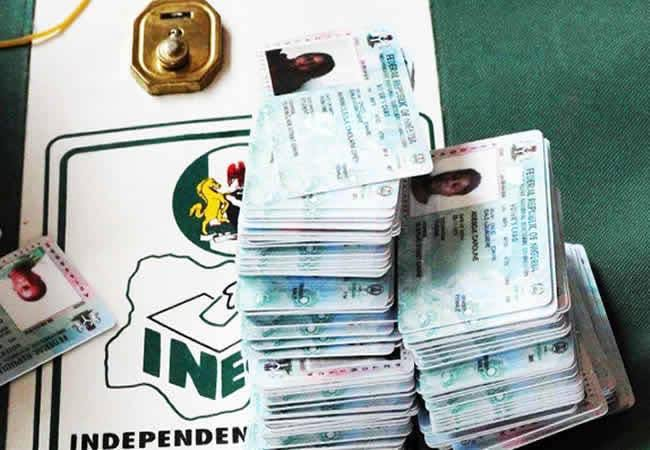
10 States Lead Nigeria’s 2027 Voter Register as INEC Records 103m
Lagos, Kano and Kaduna are leading Nigeria’s voter register ahead of the 2027 general elections, as the number of registered voters nationwide has crossed 103 million.
The latest figures released by the Independent National Electoral Commission (INEC) put Lagos at the top with 7,488,633 registered voters, followed by Kano with 6,000,570.
Kaduna ranks third with 4,000,640 registered voters, while Katsina occupies fourth position with 3,876,051 voters.
Oyo follows with 3,588,111 registered voters, while Delta recorded 3,525,988 to take sixth position among the states with the largest voter population.
Benue ranks seventh with 3,057,225 registered voters, followed by Ogun with 3,037,981.
Rivers occupies ninth position with 3,000,734 registered voters, while Bauchi completes the top 10 with 3,000,047.
The latest figure represents an increase of about 10 million compared with the 93,469,008 registered voters recorded ahead of the 2023 general elections.
INEC Chairman, Professor Joash Amupitan, announced the figures during the commission’s World Press Conference and stakeholders’ meeting in Abuja.
Despite the growth in voter registration, analysts have questioned whether the increase will translate into stronger voter turnout during the 2027 elections.
Professor Kabiru Sani Fage said the larger register should not automatically be interpreted as evidence that more Nigerians would vote.
He identified voter apathy, insecurity, poverty, inflation and dissatisfaction with political leadership among factors that could keep turnout low.
Fage noted that while the actual number of voters could increase because the register is larger, the percentage of registered voters who eventually vote may remain similar.
Professor Saleh Dauda, however, offered a more positive outlook, saying stronger mobilisation by INEC and political parties could encourage more Nigerians to participate.
Dauda also stressed the importance of civic awareness and public confidence that votes would count in determining election outcomes.
He pointed to the recent Osun governorship election as an indication that voter participation could improve ahead of the 2027 presidential and other elections.
Meanwhile, INEC will display the 2027 Register of Voters nationwide from October 9 to 15, allowing Nigerians to check their details and raise claims or objections.
The commission said the exercise was required by the Electoral Act 2026 and would give voters an opportunity to correct errors before the final register is produced.
INEC also announced that distribution of Phase One Permanent Voter Cards to Local Government Centres would begin on October 9.
The commission said it had introduced an online registration portal during the third phase of Continuous Voter Registration to make registration easier for prospective voters.
It has also introduced printable Permanent Voter Cards, which the commission said would reduce delays associated with waiting for physical cards.
INEC expects to present the final Register of Voters for the 2027 general elections to political parties on December 15, 2026.
The commission is also reviewing a recent Supreme Court judgment involving INEC and the Zenith Labour Party after receiving the Certified True Copy on October 6.
The September 24 judgment restored Sections 77(5), 77(6), 77(7) and 84(2) of the Electoral Act 2026, covering political party membership registers and procedures for nominating candidates.
Amupitan said INEC had received complaints from political parties, aggrieved aspirants and members of the National Assembly over the implications of the judgment for the 2027 elections.
He said the commission was studying the judgment before deciding what action should be taken.
The development has generated questions about candidates who moved from one political party to another after nomination exercises had already started or been completed.
However, legal opinions on the judgment have cautioned against treating the Supreme Court decision as an automatic disqualification of individual candidates.
With the 2027 elections drawing closer, attention is now focused on INEC’s handling of the voter register, PVC distribution and the legal issues surrounding political party nominations.





















Leave a comment