


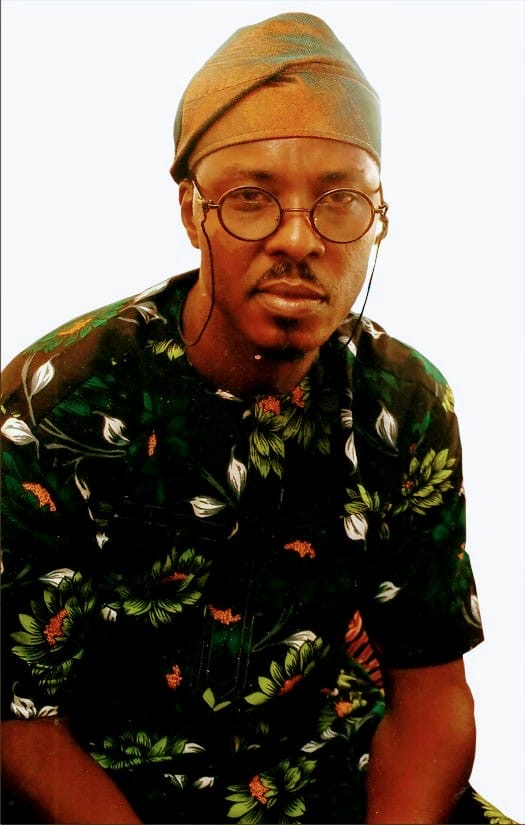
By: Chioma Madonna Ndukwu
Interview: Oluyomi-Lords Opens Up on Childhood Abuse, Family Separation and the Pain He Refused to Become
In this deeply personal conversation with Orbits News, OLUYOMI-LORDS, Oluwatomisin Oluwakemi, opens up about a childhood marked by separation, hardship and abuse, the discovery of his biological mother, the values that shaped his choices, and his determination to become “an agent of goodness and love.”
Interviewed by Oma for Orbits News
Orbits News: Good afternoon, sir. Please, can we meet you?
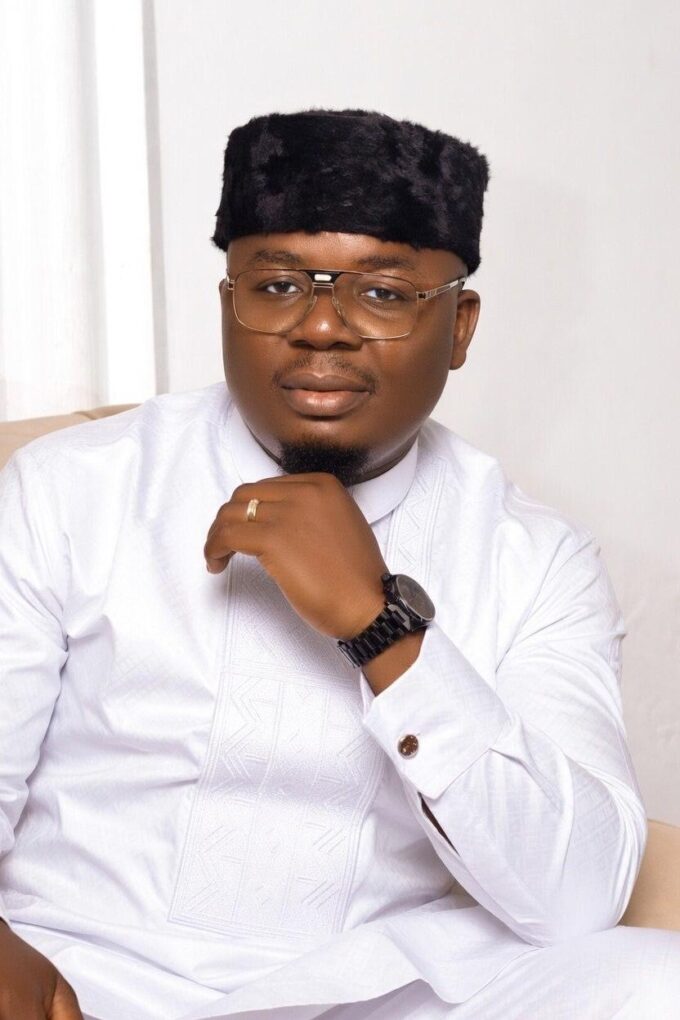
Oluyomi-Lords: I am OLUYOMI LORDS, Oluwatomisin Oluwakemi I work with the National Broadcast Academy, where I am the Head of the General Studies Department. That makes me a civil servant.
Orbits News: During one of your classes, I discovered that you are not only a broadcaster and media professional, but also a lawyer specialising in media law. Can you tell us more about that side of you?
Oluyomi-Lords: My first degree is law, but I did not want to be just any kind of lawyer. I wanted to specialise. I chose communication, media and the creative industry, particularly the laws regulating those areas.
Before my law degree, I was a master’s student at the Polytechnic, Calabar. After law school and my service, I worked in media as a journalist. I later moved into the creative industry and worked as a copywriter in advertising for several years, handling some major brands in Nigeria.
I later moved into content and joined the Federal Radio Corporation of Nigeria, where I work till date in the training school, the National Broadcast Academy. I had also been a student there in 2003, where I took journalism courses.
Beyond being a lawyer, I am a qualified journalist, advertising practitioner and public relations practitioner. I have also obtained professional certifications in different aspects of media law.
Orbits News: You have spoken about your childhood in class, and it is quite a remarkable story. What was growing up like for you?
Oluyomi-Lords: I was born outside wedlock.
I was raised by a foster mother who, according to the story I later learned, had saved my mother when she was contemplating suicide while pregnant with me. After I was born, the woman named me after her late son and took responsibility for raising me.
I grew up around the coastal part of Lagos, close to the Atlantic Ocean. That environment influenced my creativity. I would sometimes sit by the ocean for hours, thinking about nature and life. I call it creative meditation.
I also began putting my thoughts on paper. Writing became an outlet whenever I was angry or troubled. My thoughts and my writing became companions.
I grew up without siblings in my foster home and was well cared for. When my foster mother died around 1982 or 1983, I returned to my biological mother, whom I had initially thought was simply a relative.
It was during a conversation that I discovered she was actually my mother.
I later learned that she had left Oyo State for Lagos in search of my biological father after being betrothed at a young age.
Living with my biological mother and stepfather was not easy. I was treated almost like a house help. I was often the last to sleep and the first to wake up. I washed clothes, scrubbed floors, cleaned toilets and handled many household responsibilities while schooling.
Eventually, one of my mother’s friends intervened and told my stepfather that some of those responsibilities should be shared with my half-siblings.
Looking back, those experiences also built my independence. Today, there is hardly anything I cannot do at home. If my wife returns late from work, I can cook, take care of the children and handle the house.
Orbits News: You also spoke about childhood abuse. What happened?
Oluyomi-Lords: My foster mother had an adopted daughter who sometimes took me to clubs because I was good at dancing. She would make me dance for people and collect money.
Afterwards, she would take me home and ask me to bathe or massage her while she was naked. At the time, I did not understand what those things meant.
It was many years later, during adolescence, that some of those memories returned to me. I began to understand them differently, and I struggled with the memories.
I did not tell my mother until more than 20 years later. At that time, in the late 1970s and early 1980s, child molestation was not something people talked about as openly as they do today.
Orbits News: Having experienced all that, what stopped the pain from determining the person you became?
Oluyomi-Lords: My faith played a huge role. But I also made a decision after learning what my mother had gone through.
I told myself that I would never reproduce a version of myself without a father, and I would not put a woman through what my mother went through.
That decision affected my education, relationships and lifestyle.
I was not born with extraordinary academic ability. I disciplined and trained myself. In primary school, nobody really saw me as exceptional, but in secondary school I began to excel and eventually became one of the top arts and commercial students in my set.
I also decided not to involve myself in smoking, drinking or other social vices. I have never smoked or taken alcohol.
Orbits News: You have mentioned the importance of values. What are the values that have guided you?
Oluyomi-Lords: I have what I call core values, and respect is number one.
I always tell people that respect is not what people give you; it is what you give yourself first. If you do not want to smoke, you should not deliberately put yourself in an environment where people smoke. If you do not want to become a womaniser, you should not put yourself in places that encourage that behaviour.
Self-awareness and self-determination are important.
When I got married for the first time at 31, I was still a virgin. I had been tempted and had seen things that could have influenced me, but I had made a decision about the kind of person I wanted to be.
Orbits News: How did these values affect your marriage and family life?
Oluyomi-Lords: They affected everything — my marriage, academics, social life and spirituality.
I believe that by wisdom a house is built, by understanding it is established, and by knowledge its chambers are filled.
I did not want the absence of my own father to become an excuse for my own absence as a father. I wanted to be present and responsible.
Orbits News: Beyond your personal story, what lesson do you think your experience offers other people?
Oluyomi-Lords: Humanity is one. Whatever you do to another human being has a ripple effect.
Communication does not really have a beginning and an end. Every encounter leaves something in people, and they may carry what you gave them into their encounters with others.
I have been hurt. I have been denied some things that are good. But I chose to say, “I want to be an agent of goodness and love.”
I do not want to carry the memory of people who hurt me and use it to hate everybody else. I want to build a world where people experience love, care and good memories.
Orbits News: You also look remarkably youthful. What do you do to maintain yourself?
Oluyomi-Lords: At 47, I decided to pay more attention to my physical health. I researched different sports and chose cycling and swimming.
I swim regularly, especially on weekends, and I cycle during the week. I believe people should not make excuses for taking care of their bodies.
Orbits News: Your faith seems to run through many aspects of your life. How important is it to you?
Oluyomi-Lords: My faith is very important to me. I pray and fast regularly and pray over my family.
I encourage people to take their faith seriously, provided it teaches values that make us better human beings.
Fear can affect the body, and I believe in consciously fighting fear. The joy of the Lord is my strength.
Orbits News: Finally, if you had to leave one message with someone struggling with a painful past, what would it be?
Oluyomi-Lords: Be an agent of goodness. Be an agent of love.
What you sow in people, somebody else will eventually receive. You may not reap from the person you sow into, but whatever you sow, you will reap.
Your past may explain some things about you, but it does not have to become the thing you reproduce.
Editor’s Note
Oluyomi-Lords’ story is a conversation about pain, choice, faith and the decision to become more than the circumstances that shaped him. He speaks about experiences many people would rather keep hidden, yet his central message remains simple: choose what you leave in people.
His story is a reminder that a painful past does not have to become a person’s present identity. He chooses not to carry his past into his present or allow what he suffered to determine how he treats others; instead, he chooses to live as the person he has deliberately become.









Leave a comment