
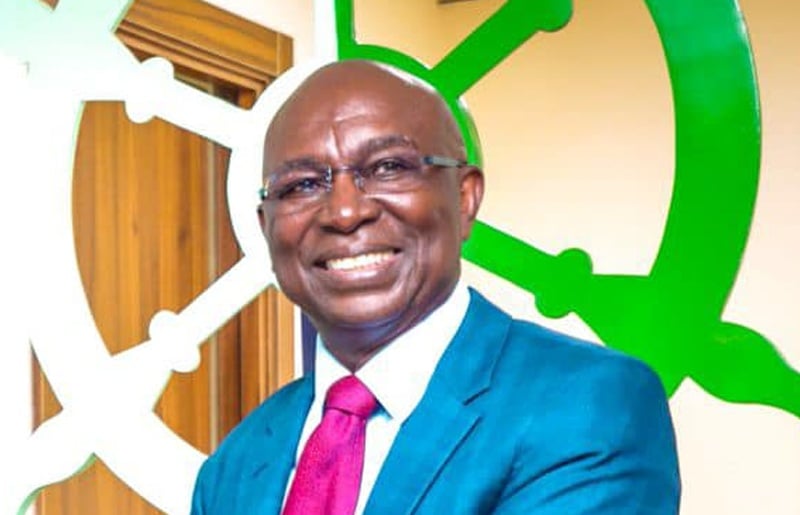
The Director General of the Nigerian Maritime Administration and Safety Agency (NIMASA), Dr. Dayo Mobereola, has lamented that women’s participation in maritime affairs has been limited by socio-cultural and institutional barriers.
He spoke at a symposium organised by the Kofi Annan International Peacekeeping Training Centre (KAIPTIC), which had as its theme: Digitalisation and Empowerment of Women in the Maritime Sector in West Africa: Opportunities, Challenges and Pathways Forward.
The NIMASA DG explained that while access to technology and digital infrastructure remains uneven, gender gaps persist in STEM education and professional training.
Dr Mobereola stated that he was delighted to address the important symposium on women and digital transformation in the Gulf of Guinea Maritime Domain in Lagos.
“The theme of this gathering—exploring opportunities and challenges for women in this critical sector—resonates deeply with the mission of the Kofi Annan International Peacekeeping Training Centre (KAIPTC) to promote peace, security, and sustainable development in the region.
“Ladies and gentlemen, the Gulf of Guinea is a maritime domain of immense strategic importance, rich in resources, and a hub for international trade. However, it also faces complex security challenges, including piracy, illegal fishing, and trafficking. Digital transformation presents a unique opportunity to enhance maritime domain awareness, improve coordination, and strengthen response capabilities. It is imperative that women are not only included but empowered to lead and innovate within this evolving digital ecosystem, ensuring that technology serves as a tool for inclusive growth and security,” he said.
“Women’s participation in maritime affairs has historically been limited by socio-cultural and institutional barriers. Yet, their involvement brings diverse perspectives and solutions vital for holistic maritime governance.
“Digital transformation can act as a catalyst to break these barriers by providing platforms for education, networking, and leadership development. It is encouraging to witness increasing numbers of women engaging in digital skills acquisition, policy formulation, and operational roles within maritime security institutions across the Gulf of Guinea. Despite these positive trends, challenges remain.
“For example, access to technology and digital infrastructure is uneven, and gender gaps persist in STEM education and professional training. Moreover, digital threats such as cyber-attacks and misinformation campaigns pose new risks that require specialised knowledge and vigilance. Addressing these challenges demands concerted efforts from governments, industry, academia, and civil society to create enabling environments where women can thrive as digital leaders and innovators in maritime security.”