

Zambia Heads to Polls as Lungu’s Legacy Shapes Hichilema’s Re-election Bid
Zambians are voting today in an election overshadowed by the lingering political rivalry between President Hakainde Hichilema and the late former president Edgar Lungu, whose death last year has failed to end the bitter dispute between their camps.
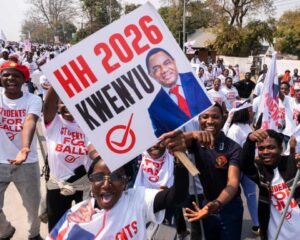
Hichilema, 64, is seeking a second term after defeating Lungu by a wide margin in the 2021 presidential election.
But tensions between the two political camps have continued, with Lungu’s family and supporters remaining at odds with the government.
The dispute became particularly intense over Lungu’s burial. The Zambian government challenged the family’s decision over how and where the former president should be buried, leading to a prolonged legal battle.
In June, South Africa’s Supreme Court of Appeal ruled in favour of Lungu’s family, overturning an earlier judgment that had supported the Zambian government.
Lungu’s political legacy has now become part of the opposition campaign. Hichilema is facing the Tonse Alliance, a coalition led by Brian Mundubile, a former government chief whip under Lungu.
Mundubile’s running mate, Makebi Zulu, previously served as a spokesperson for Lungu’s family during the burial dispute.
The opposition has promised to return Lungu’s remains to Zambia and give him what it describes as a dignified burial.
Christopher Vandome, a senior research fellow at Chatham House, said the controversy could affect how some voters view Hichilema, noting that respect for the dead carries significant weight in Zambia.
The opposition has also accused Hichilema’s administration of using heavy-handed tactics during the campaign, including alleged raids on its offices and the detention of 36 members of Mundubile’s campaign team.
The ruling United Party for National Development has rejected the allegations, arguing that the opposition enjoys far greater political and media freedom than Hichilema experienced under Lungu before the 2021 election.
The party pointed to Hichilema’s previous arrests, the closure of Prime TV and The Post newspaper, as well as an internet shutdown during the 2021 election.
However, Transparency International Zambia has reported instances of police disrupting opposition rallies.
Tamika Halwiindi, a coordinator with the organisation, said such interruptions appeared to affect opposition and independent candidates more frequently than supporters of the ruling party.
Civil society activists have also accused the government of restricting peaceful protests.
Mputa Ngalande of the Fight Inequality Alliance recalled being detained for more than 12 hours in July 2024 while protesting against the state power company during severe electricity shortages.
Despite the political tensions, Hichilema enters the election with some economic gains to highlight. Zambia’s economy has stabilised since the debt crisis that culminated in the country’s 2020 default under Lungu.
Inflation has fallen sharply, while the government introduced free primary and secondary education in 2022.
The country has also attracted increased foreign investment, particularly around its vast copper reserves, as demand grows for the metal used in renewable energy and other green technologies.
Hichilema has also targeted young voters with new incentives. Earlier this month, he announced a 50 per cent increase in accommodation allowances for university students.
But economic improvements may not be enough to guarantee an easy victory. Rising living costs remain a major concern among voters.
Although average annual income increased between 2021 and 2025, prices rose considerably during the same period.
For many Zambians, the central question is whether the country’s improving economic indicators are translating into better living conditions.
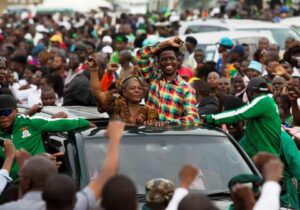
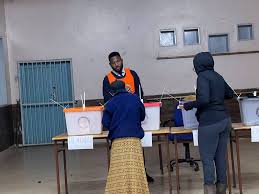
As voters choose their president, members of parliament and local councillors, Hichilema’s record, the unresolved controversy surrounding Lungu’s legacy and the pressure of everyday living costs will all shape the outcome.