


US, Google, Meta Join $1.8bn Push to Transform Health Research
The US government, Google and Meta have joined a $1.8 billion initiative to use artificial intelligence and biological data to advance health research and drug development.

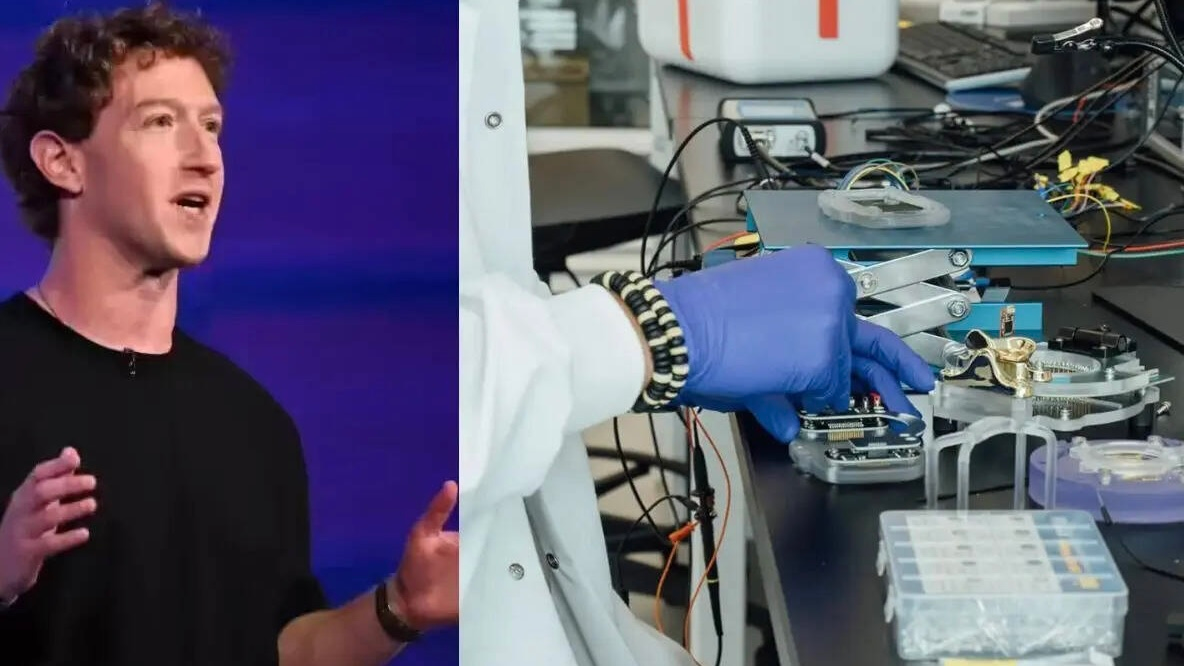
The project is being led by nonprofit Biohub, which wants to create large datasets that can help AI systems understand how cells behave under different conditions.
Google DeepMind, Meta and drug discovery company Isomorphic Labs are jointly investing $300 million in the initiative.
The US Department of Energy will invest more than $500 million over five years in laboratory measurements, scientific modelling and computing for the project.
The National Institutes of Health will also coordinate datasets and repositories created through more than $500 million in earlier federal funding.
Biohub plans to standardise the data so researchers can use it to train artificial intelligence models for biological research.
The initiative builds on a $500 million commitment made by Biohub in April. The organisation was founded by Meta CEO Mark Zuckerberg and his wife, Dr Priscilla Chan.
Known as the Virtual Biology Initiative, the project aims to gather detailed information on how cells respond to changes in their environment.
Researchers hope AI models trained with the data will help predict biological changes and shorten the time needed to develop new medicines.
Chan said the project was intended to serve as a shared resource for scientists, allowing researchers to build on the data over time.
Biohub’s head of science, Alex Rives, said companies funding the project would get early access to some datasets before they are released publicly.
However, government-funded research under the initiative will not have the same restrictions, Rives said.
Biohub also plans to seek funding from pharmaceutical companies and philanthropic organisations as the project expands.
Current cell datasets contain hundreds of millions of cells, but Biohub believes accurate predictive models will eventually require data from billions and even trillions of cells.
The project will use technologies such as spatial transcriptomics, which helps researchers track molecular activity inside intact tissue.
It will also use experiments that record how cells respond to changes in their environment.
Biohub aims to complete work that could normally take decades within five years. The first dataset is expected to be ready in about a year.
The initiative comes as major AI companies increase their focus on biology and healthcare. Anthropic has expanded its biology programme with a wet laboratory.
The OpenAI Foundation has also launched a programme worth more than $125 million to support biological and medical datasets for AI research.

The growing investment could give researchers more data to study diseases, improve drug discovery and develop new approaches to healthcare.






















Leave a comment