


Plateau Attacks Persist as 28 Die Despite Curfew
At least 28 people have been killed in a fresh wave of violence across parts of Plateau State, despite a government-imposed dusk-to-dawn curfew aimed at stopping attacks and restoring calm.
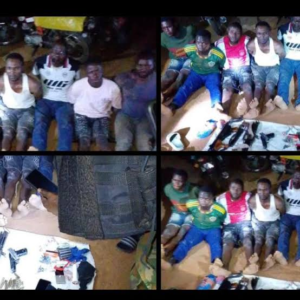
The latest bloodshed has affected Mangu, Bokkos and Barkin Ladi, where recurring attacks have heightened fear, disrupted farming and cattle rearing, and forced residents to abandon economic activities.
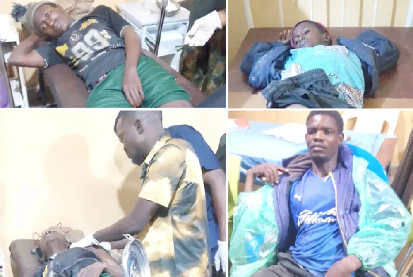
The most recent incident occurred on Sunday evening in Bukuru, Jos South Local Government Area, where gunmen attacked a vehicle carrying Fulani herders near Total filling station.
Two people were killed and six others injured in the attack, while another victim was reportedly missing after the assailants opened fire on the vehicle.
The chairman of the Miyetti Allah Cattle Breeders Association of Nigeria in Plateau State, Ibrahim Yusuf Babayo, confirmed the incident in Jos.
Babayo said the victims were returning from the cattle market to Bassa Local Government Area when the gunmen attacked them at about 5:30pm.
He condemned the assault as unprovoked and urged security agencies to identify and prosecute those responsible, adding that the injured victims had been taken to hospital.
The latest attack came less than two weeks after five Fulani herders were reportedly killed and another injured around Kassa community in Barkin Ladi.
The continuing attacks have raised questions over the effectiveness of the curfew introduced by the Plateau State Government on September 21 following worsening insecurity across several communities.
The government imposed the restriction in Barkin Ladi, Bokkos and Mangu, ordering residents to remain indoors between 6pm and 6am until further notice.
Security personnel were directed to enforce the measure, alongside a ban on motorcycles in the affected areas, as authorities sought to prevent further attacks and restore order.
However, killings have continued since the curfew began, with victims reportedly including farmers, herders, miners, vigilantes, women and children in different communities.
Attacks Continue Across Plateau
On September 20, five Fulani herders were reportedly killed at Kassa while moving cattle from Bokkos towards Jos South. The curfew was announced the following day.
On September 22, gunmen reportedly attacked security personnel attached to Operation Rainbow along Gagshi Road, killing a police officer.
Three Berom farmers were also reportedly killed at Rakok community in Barkin Ladi on the same day, while three Mwaghavul vigilantes were ambushed and killed around Kyikyau-Gyambwas in Mangu.
Two Berom miners were killed at Gangare community in Barkin Ladi on September 23 while carrying out mining activities.
A day later, a 27-year-old Fulani herder was killed around Banka village in Mangu, while about 30 cattle were reportedly rustled.
On September 25, three vigilantes, including a youth leader, were killed in Kassa after gunmen allegedly attacked the community around 1am.
The killings triggered protests from residents who expressed frustration over repeated attacks despite the presence of security personnel in the area.
Five miners were killed and two others injured on September 26 when gunmen reportedly ambushed them at Marit community in Barkin Ladi.
The violence continued on September 27 when gunmen attacked a herding community in Lamor, Pushit District of Mangu, reportedly killing more than 20 cattle and leaving several others injured.
More than 70 cattle were also reported missing, while another Fulani herder was killed around Rakung village in Barkin Ladi the same day.
Three women working at a mining site in Rakum community, Barkin Ladi, were killed on September 28, while another person sustained injuries during a reported gun attack.
On October 1, a 14-year-old Fulani herder, Aliyu Ismail, was reportedly killed around Wereng community in Riyom Local Government Area.
The latest killings before the Bukuru incident occurred on October 3, when two Berom men from Heipang District were reportedly shot dead at a mining site around Kuru Jenta.
Curfew Yet To Stop Rural Violence
The attacks have persisted despite assurances from security authorities, including a visit by the Inspector-General of Police, Olatunji Disu, to Plateau State on September 16.
During the visit, Disu pledged stronger police operations and cooperation with community stakeholders to address the insecurity and work towards lasting peace.
Yet subsequent attacks have continued to expose the difficulty of securing remote communities where residents say they remain vulnerable despite security deployments.
The situation has also affected livelihoods, as farmers and herders increasingly avoid areas considered unsafe because travelling to distant farms or grazing locations can expose them to attack.
Paul David, a resident of Dorowa Babuje in Barkin Ladi, said farmers had become afraid of working on farms located far from their communities.
“We cannot go to the farm freely like before because you don’t know who is hunting for your life,” he said, adding that distant farmlands were becoming inaccessible.
A herder in Lugere, Barkin Ladi, Habibu Ibrahim, similarly said cattle owners could no longer move around as freely because of the risk of attacks and rustling.
Christopher Rafan, a farmer from Bokkos, said the insecurity had also changed how farmers cultivated their land, particularly around communities where visibility was important for personal safety.
He said his cousin was killed while returning from the farm and urged the government to improve security coverage in rural settlements not adequately protected by the curfew.
Long-Running Farmer-Herder Tensions
The Plateau crisis has deep historical roots, involving disputes over land, farming and grazing, the indigene-settler question and longstanding tensions between Berom and Fulani communities.
The conflict also carries an ethno-religious dimension linked to the violence that erupted in Jos in 2001, which resulted in deaths, displacement and deep mistrust between communities.
Over the years, violence has increasingly extended into rural areas, with attacks resulting in loss of lives, destruction of homes and farmlands, displacement and disruption of local economies.
A committee established by Governor Caleb Mutfwang and headed by retired General Nicholas Rogers reportedly found that about 11,000 people had been killed in Plateau over two decades.
Successive governments have introduced committees, security measures and peace initiatives, while civil society organisations have supported dialogue, mediation and community-based reconciliation programmes.
Groups including the Centre for Humanitarian Dialogue, Youth Initiative Against Violence and Human Rights Abuse, CLEEN Foundation and Justice, Development and Peace Commission have supported peacebuilding efforts.
Some interventions have produced agreements in conflict-prone areas such as Riyom and Barkin Ladi, with communities committing themselves to responsible grazing, early warning and reporting of threats.
However, the latest violence has renewed concerns about the durability of those agreements and the ability of existing mechanisms to prevent fresh attacks.
The Executive Director of YIAVHA, Pwakim Jacob Choji, called for greater investment in social cohesion and community dialogue, saying public frustration with government was affecting confidence in security efforts.
The Director of the Civil Liberties Organisation, Steve Aluko, identified weak enforcement, inadequate security coverage and what he described as improper profiling of criminals among the issues requiring attention.
Aluko also advocated state policing and a regional security structure capable of combining intelligence gathering, analysis and strategic deployment of security personnel.
The Vice Chancellor of Plateau State University, Bokkos, Professor Shedrack Best, meanwhile, said young people should be more directly involved in peacebuilding programmes.
Best, a professor of International Relations and Peace Building, noted that many interventions focused heavily on traditional, religious and community leaders, while youths at grassroots level were often excluded.
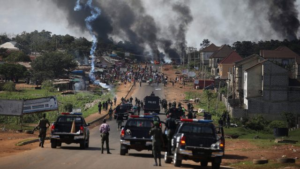
As Plateau records more deaths despite the curfew, residents continue to seek stronger protection for vulnerable communities while government, security agencies and peacebuilding organisations search for a lasting way out of the violence.













Leave a comment