


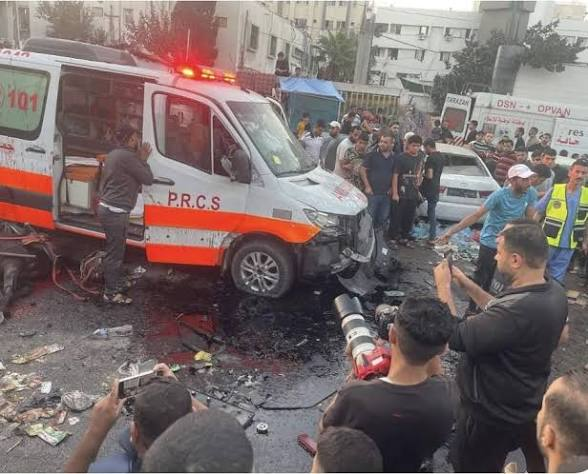
West Bank Ambulances Under Fire as Paramedics Face Deadly Attacks
Palestinian emergency medical workers in the occupied West Bank are facing increasing attacks from Israeli settlers and soldiers, raising serious concerns about access to healthcare.
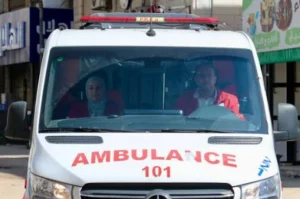
Paramedics attending to wounded Palestinians have reportedly been shot at, assaulted and prevented from reaching emergency scenes, according to international human rights organisations.
One of the victims of these attacks is Yousef Diriyeh, a 50-year-old ambulance driver who has worked in the region for several years.
Diriyeh recalled an incident on October 11, 2023, when he and his son, Hadi, were transporting an injured woman following an attack in Qusra village.
Armed Israeli settlers had reportedly killed three Palestinians and wounded several others before opening fire on the medical workers who arrived to provide assistance.
The ambulance came under gunfire as the two men attempted to move the injured woman to safety, with bullets striking the vehicle’s windscreen.
Diriyeh said the experience made him realise that emergency responders were increasingly becoming targets while carrying out their humanitarian responsibilities.
According to Physicians for Human Rights Israel, attacks against Palestinian healthcare workers increased by more than 350 per cent between 2022 and 2024.
Similarly, Geneva-based humanitarian research organisation Insecurity Insight documented 1,020 attacks against health workers across the region between October 7, 2023, and September 15, 2026.
Footage obtained by The Guardian from Physicians for Human Rights Israel reportedly shows settlers throwing stones at ambulances, blocking emergency vehicles and shooting at medical workers.
The recordings also reveal damaged ambulances, bloodstained seats and injured emergency responders following reported confrontations with Israeli settlers.
Diriyeh, who works around Aqraba village near Nablus, said attacks had become increasingly frequent, with several incidents sometimes happening simultaneously.
He also recalled the death of his colleague, Mohammed Awad Allah Musa, an ambulance driver killed on April 21, 2024, while transporting wounded Palestinians.
Insecurity Insight reported that Musa was among 13 Palestinian healthcare workers killed in the West Bank since October 7, 2023.
Beyond physical attacks, ambulance crews reportedly encounter military checkpoints, roadblocks and restrictions that delay their access to injured people requiring urgent medical attention.
By December 2025, the United Nations had documented 925 movement obstacles across the occupied West Bank, including checkpoints, road gates and roadblocks.
Diriyeh explained that some settlers deliberately obstruct emergency vehicles by driving slowly ahead of ambulances or positioning other vehicles to prevent them from passing.
He added that gates at the entrances of Palestinian communities are sometimes locked, leaving emergency teams unable to respond promptly to distress calls.
According to him, these restrictions have created dangerous situations for pregnant women, including cases where expectant mothers have delivered babies inside ambulances.
An emergency medical worker identified as Omar also described an incident involving a woman in labour who was delayed at an Israeli military checkpoint in Awarta.
He said soldiers initially refused to allow the ambulance through, and the woman eventually delivered her baby while they were still travelling.
Researcher Imran Anati of Physicians for Human Rights Israel described the reported incidents as a systematic attack on Palestinian emergency medical services.
He argued that Israel must accept responsibility for protecting medical personnel and ensuring ambulances can reach people requiring urgent treatment.
However, the Israeli military rejected allegations that its forces obstructed Palestinian paramedics or prevented them from reaching injured people.
The military maintained that it facilitates movement for medical teams across Palestinian territory and condemned violence against healthcare workers and ambulances.
Meanwhile, Diriyeh said the growing dangers surrounding his profession forced him to make the difficult decision of asking his 20-year-old son to stop working alongside him.
Despite the experiences, he maintained that his responsibility as a medical worker remained the same, regardless of the identity or nationality of patients.
He recalled providing emergency assistance to Israeli settlers and soldiers during his career, insisting that humanitarian responsibilities should never be determined by religion or nationality.
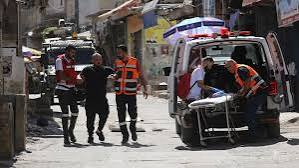
For Diriyeh, the purpose of emergency medical services remains saving lives, even as attacks and movement restrictions continue to threaten the safety of those providing assistance.















Leave a comment