


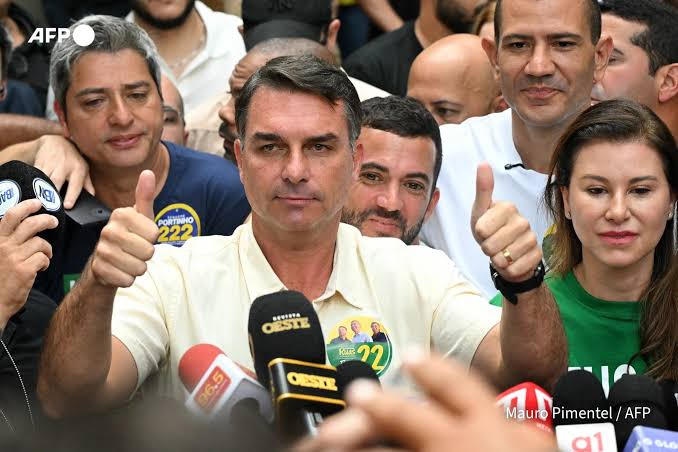
Bolsonaro’s Son Takes Lead Over Lula in Brazil Election
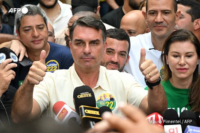
Senator Flávio Bolsonaro has finished ahead of incumbent President Luiz Inácio Lula da Silva in Brazil’s presidential election, sending the two candidates into a second-round contest on October 25.

Results from Brazil’s Superior Electoral Court showed Bolsonaro securing 47.03 per cent of valid votes, equivalent to more than 56.1 million votes, while Lula recorded 45.16 per cent, with about 53.9 million votes.
Neither candidate crossed the 50 per cent threshold required to win the presidency outright in the first round, making a runoff necessary in Latin America’s largest democracy.
The result places Flávio Bolsonaro, 45, in first position after a closely contested election in which economic concerns, public security, corruption and political divisions featured prominently.
Bolsonaro, a senator representing Rio de Janeiro and the son of former President Jair Bolsonaro, entered the race seeking his first presidential mandate.
His father, Jair Bolsonaro, is serving a 27-year sentence after being convicted over a plot to overturn the 2022 election result, which he lost to Lula.
Flávio has built his campaign around the conservative political movement associated with his father while also seeking support from voters dissatisfied with the current government.
Lula, 80, is seeking another term in office after previously serving as president from 2003 to 2010 before returning to power in 2023.
The veteran Workers’ Party leader had hoped to secure victory in the first round but acknowledged that the result was different from what his campaign expected.
Speaking after the vote, Lula said the second round would provide an opportunity for voters to examine the differences between the two candidates and their proposals for the country.
The first-round result also reflected the strength of Brazil’s conservative movement, with Bolsonaro-aligned politicians making gains in congressional and state-level contests.
The election was held amid concerns over living costs and public security, issues that became central to the campaign as candidates sought to win over voters facing economic pressures.
Brazilian voters also elected governors, members of the Chamber of Deputies and senators during Sunday’s nationwide poll.
The Senate results were particularly significant for Bolsonaro’s supporters, who have sought greater influence over the country’s judiciary and other major institutions.
The election has also attracted international attention because of Bolsonaro’s relationship with US President Donald Trump and Lula’s criticism of perceived American influence in Brazilian affairs.
With the first round concluded, both campaigns now face the task of attracting voters who supported other candidates, particularly those on the political right and centre.

The decisive vote on October 25 will determine whether Lula secures another term or whether Flávio Bolsonaro becomes Brazil’s next president.











Leave a comment