


Trump Denies Iran Sanctions Offer As Tehran Calls For Talks
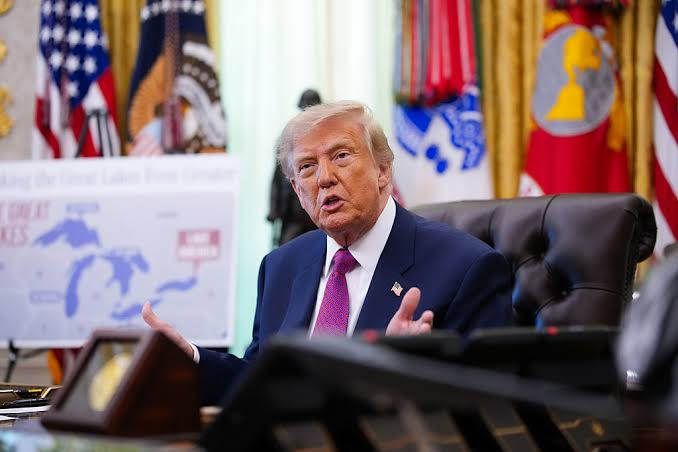
US President Donald Trump has denied reports that his administration is prepared to ease sanctions on Iran and release frozen Iranian funds as part of an agreement aimed at ending the conflict.
Trump rejected the reports on Monday, saying he had made no such offer to Tehran.
“This is untrue. I offered them NOTHING,” Trump wrote on Truth Social.
The denial followed reports by Axios and CNN, citing unidentified US officials, that Washington was willing to consider sanctions relief and access to frozen Iranian funds if Tehran made concrete progress on its nuclear programme.
Trump has identified preventing Iran from obtaining a nuclear weapon as one of the main objectives of the conflict. He has also said the United States wants to limit Iran’s ability to attack neighbouring countries and create conditions for change in Tehran.
Iran, however, denies seeking nuclear weapons and maintains that its nuclear programme is for peaceful purposes. Tehran has also insisted on its right to develop nuclear energy.
Iranian President Masoud Pezeshkian said his country was ready to negotiate with the United States over its nuclear programme and other issues, but ruled out talks conducted under pressure.
“Iran is not seeking war, but will defend itself against pressure, threats and attacks,” Pezeshkian said during an interview with CBS programme Face the Nation.
He added that Iran had already agreed that it should not develop nuclear weapons.
The comments came as US and Iranian officials held separate discussions through mediators on Monday in a renewed effort to find a diplomatic solution to the conflict.
Tehran has maintained that diplomacy is the only way to resolve the confrontation and has linked any agreement to the reopening of the Strait of Hormuz, a major route for international oil shipments.
Iranian Foreign Minister Abbas Araqchi said reopening the waterway would depend on certain conditions being met.
“Our conditions are clear, and any move toward reopening the Strait of Hormuz is contingent on these conditions being met,” Araqchi said in a social media post.
Araqchi had earlier told reporters at the United Nations that an Iranian proposal would trigger a seven-day countdown towards reopening the strait and include a pause in regional fighting.
Trump rejected the proposal on Saturday, saying Iran was seeking an immediate reopening of the waterway because of the pressure it was facing.
“They want to make a deal to open the Hormuz Strait immediately because they’re losing so badly,” Trump told reporters at the White House.
Araqchi later said Tehran had not received an official communication confirming Washington’s rejection of the proposal.
He said Iranian officials were waiting for mediators to communicate the United States’ definitive position before deciding how to proceed.
Meanwhile, the continuing conflict has kept pressure on global energy markets, with oil prices rising for a second consecutive session on Tuesday.
Brent crude futures gained $1.49, or 1.4%, to $106.77 a barrel by 0326 GMT, while US West Texas Intermediate rose $1.34, or 1.5%, to $93.94.
The price increases came despite signs that crude exports from parts of the Middle East were beginning to recover.
The conflict has disrupted regional energy supplies and contributed to higher inflation, while attacks involving Iran and its allies have extended the crisis across the Middle East.
Iran has launched drone and missile attacks against US allies in the Gulf, while Houthi forces in Yemen have targeted Saudi interests.
Saudi Arabia has also been drawn deeper into the conflict as Houthi fighters have advanced against the Saudi-backed government in Yemen, raising concerns about the security of Saudi oil exports through the Red Sea.





















Leave a comment