

Record Heat Grips South Korea, Sparks Emergency Alert
South Korea has recorded its highest temperature since modern weather observations began more than a century ago, as an intense heatwave pushed temperatures above 42°C and forced authorities to issue emergency warnings across parts of the country.
The Korea Meteorological Administration (KMA) said the southeastern city of Yangsan reached 42.5°C on Sunday, setting a new national record since weather monitoring began in 1904.
The city has now experienced temperatures above 40°C for five consecutive days, while several other cities, including Busan and Daegu, continue to endure sweltering conditions.
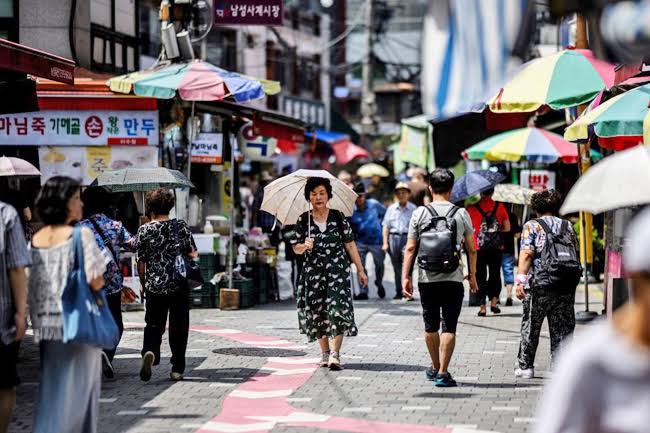
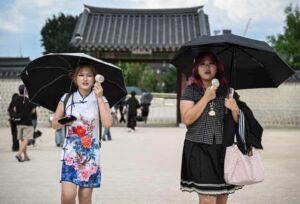
The scorching weather has driven residents into shopping malls, cafés and other air-conditioned buildings, while cooling mist stations have become a common refuge in Seoul.
Many people say remaining indoors is the only way to cope with the relentless heat.
Authorities placed more than 20 areas under emergency heatwave alerts, a warning category introduced this year to respond to increasingly dangerous temperatures.
The KMA urged residents to stop all outdoor activities immediately, warning that indoor spaces without air conditioning could also become hazardous.
People have been advised to stay hydrated, seek shelter in designated cooling centres or shaded locations, and avoid unnecessary exposure to the sun.
Prime Minister Han Seong-sook directed local governments to strengthen welfare checks on vulnerable residents and ensure uninterrupted electricity and water supplies as the heatwave continues.
Forecasters expect the extreme weather to persist, with Seoul forecast to reach 37°C, while parts of South Jeolla and South Gyeongsang provinces could see temperatures exceed 39°C, levels officials described as life-threatening.
Meteorologists are also monitoring Typhoon Dolphin, whose path could determine how long the heatwave lasts.
If the storm tracks closer to eastern China, higher humidity could worsen conditions across the Korean Peninsula.
A route nearer southern Korea, however, may bring cloud cover, stronger winds and rainfall capable of providing temporary relief.
The record-breaking temperatures have already disrupted daily life.
South Korea’s professional baseball league cancelled another game in Changwon after temperatures climbed to 39.5°C, citing the safety of players and spectators.
According to the KMA, the country’s average number of heatwave days has more than doubled over the past five years, reflecting a growing trend of extreme summer weather.

Scientists continue to warn that climate change, combined with the return of the El Niño climate pattern, is making heatwaves more frequent and more intense around the world.