


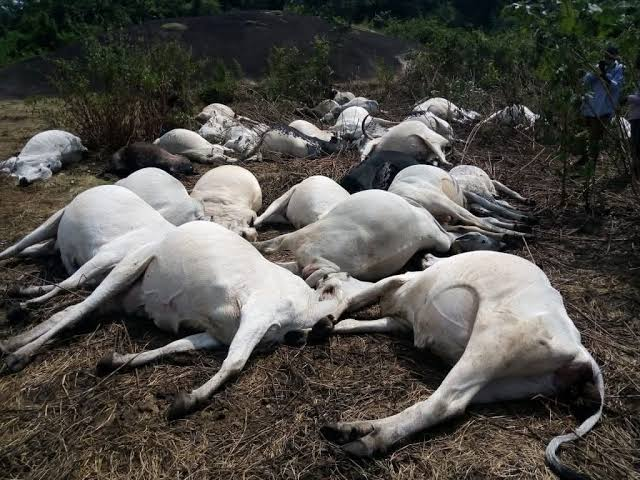
340 Homes, 186 Livestock Lost As Mambilla-Fulani Clash Leaves Many Dead
At least seven people have been killed and more than 1,000 residents displaced after renewed violence between Mambilla residents and Fulani pastoralists in Sardauna Local Government Area of Taraba State.
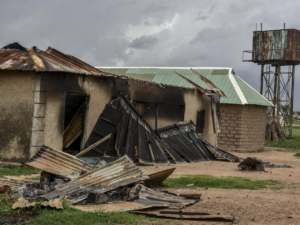
The clash, which began in Geroji settlements of Mbamnga Ward, also left 186 cattle, sheep and horses dead or missing, while more than 340 houses were reportedly destroyed in the violence.
Residents and community leaders said the casualty figure could rise as several people remained unaccounted for after the attacks.
The violence reportedly started penultimate Friday night following a dispute between a Mambilla woman and a Fulani man. It later spread to Geroji and Mbara communities and several surrounding settlements.
The affected settlements include Wuro Buba, Wuro Ardo Bashiru, Wuro Wakili Idrisa, Wuro Saleh Petel, Wuro Hassan Jaji, Wuro Alhaji Jibo, Wuro Alhaji Manu and Wuro Mbarkal.
Community leader, Ardo Bashiru, said residents had lost their homes and major sources of livelihood.
“We have lost everything. Our houses were burnt, our livestock; cattle, sheep and horses were either dead or stolen. With the rainy season at its peak, we are facing a humanitarian crisis. We have no shelter, no food and no means of survival,” he said.
Another resident said hundreds of people, including women and children, fled across the border into Nyang in Cameroon’s Donga-Mantung Division.
He alleged that an unidentified group entered the community, opened fire on residents and set several structures ablaze.
The Chairman of Sardauna LGA, Alhaji Mohammed Umar, confirmed that many residents had fled the affected settlements and said efforts were underway to facilitate their return.
He also confirmed the deployment of security personnel to the troubled communities.
According to Umar, the crisis began as a personal disagreement before escalating into wider communal violence.
“This unfortunate incident started from a personal dispute that spiraled out of control. Anyone who threatens the peace that our communities have enjoyed for decades will face the full force of the law,” he said.
The council chairman said additional troops and police personnel had been mobilised to prevent further attacks.
He appealed to the Federal Government, non-governmental organisations and international agencies to assist with the resettlement and rehabilitation of victims.
The Chief of Mbamnga, Alhaji Abubakar Saleh, also appealed for calm, stressing that the communities had lived together for generations.
“We are brothers and sisters who have lived together for generations. This is the first time such a tragedy would strike our land. All hands are on deck to ensure it never happens again,” he said.
A public affairs analyst, Alhaji Ahmadu Ibrahim of the Department of Sociology, Yobe State University, said the loss of livestock had further worsened the economic situation of affected families.
He noted that the destruction of hundreds of homes in the mountainous area had left many residents without shelter, while the loss of livestock had deprived families of an important source of food and income.
Ibrahim called for immediate government intervention and warned that failure to address the crisis could lead to further insecurity in the state and the wider region.
The Taraba State Police Command and the Nigerian Army have deployed a joint security team to the affected communities to assess the damage and restore order.
The Commissioner of Police, CP Edwin Ogbeghagha, accompanied by the Army Brigade Commander and other security officials, visited the area as part of efforts to assess the situation and engage community stakeholders.
The police said the visit focused on strengthening security operations, improving intelligence gathering and protecting lives and property.
The command also announced additional manpower and aerial surveillance through a police helicopter deployed by the Nigeria Police Air Wing.
Ogbeghagha urged residents to remain calm and provide credible information that could assist security agencies in identifying those responsible for the violence.
Meanwhile, the Taraba State Emergency Management Agency has announced the dispatch of food, medical supplies and temporary shelter for families affected by the crisis.
The latest violence has revived concerns over recurring clashes on the Mambilla Plateau, an area that has witnessed communal conflicts in previous years.
Similar confrontations in 2017 and 2018 resulted in significant loss of lives and destruction of property.
Earlier this year, another conflict involving Wurkum, Karimjo, herders and the Bandawa community in Karim-Lamido Local Government Area reportedly claimed more than 20 lives and displaced several families.
Former Nigerian Ambassador to Trinidad and Tobago, Hassan Jika Ardo, urged Mambillas, Fulanis, Kakas, Pansos and other communities on the plateau to reject further violence.
Ardo called for restraint and dialogue, while commending residents who reportedly protected members of another community during the recent crisis.
He also urged security agencies to intensify efforts to restore peace and called on politicians to avoid actions capable of worsening tensions.
Governor Agbu Kefas has meanwhile ordered security agencies to identify, arrest and prosecute those responsible for the violence.
The governor, through the Office of the Secretary to the State Government, said nobody involved in the attacks should be shielded because of social or political status.
The state government also postponed the Taraba Tourism Day celebration scheduled for Gembu, the headquarters of Sardauna LGA, until the security situation improves.
Former diplomat and columnist, Ilyasu Gadu, attributed the recurring clashes to unresolved disputes involving land, grazing rights and the interests of farmers and pastoralists.
Gadu said previous conflicts had exposed the failure to settle fundamental disagreements between the communities, leaving tensions capable of erupting whenever a fresh dispute occurs.
He called for stronger action against those responsible for attacks and urged authorities to address the underlying disputes rather than relying on temporary measures after violence breaks out.
Social commentator Jamilu Muhammad identified impunity, unemployment, poor education and the wider farmer-herder crisis as contributing factors.
He said similar tensions existed across parts of the region, including Cameroon and the Central African Republic, and called for cooperation among affected countries.
Muhammad also referred to a 2024 ECOWAS Court judgment concerning victims of the 2017 violence, saying issues surrounding resettlement, compensation and investigation remained unresolved.
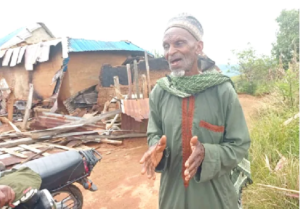
For the thousands affected by the latest violence, the immediate challenge is survival, as families remain displaced, homes lie in ruins and livestock that supported many households have been lost.

















Leave a comment